
Plants
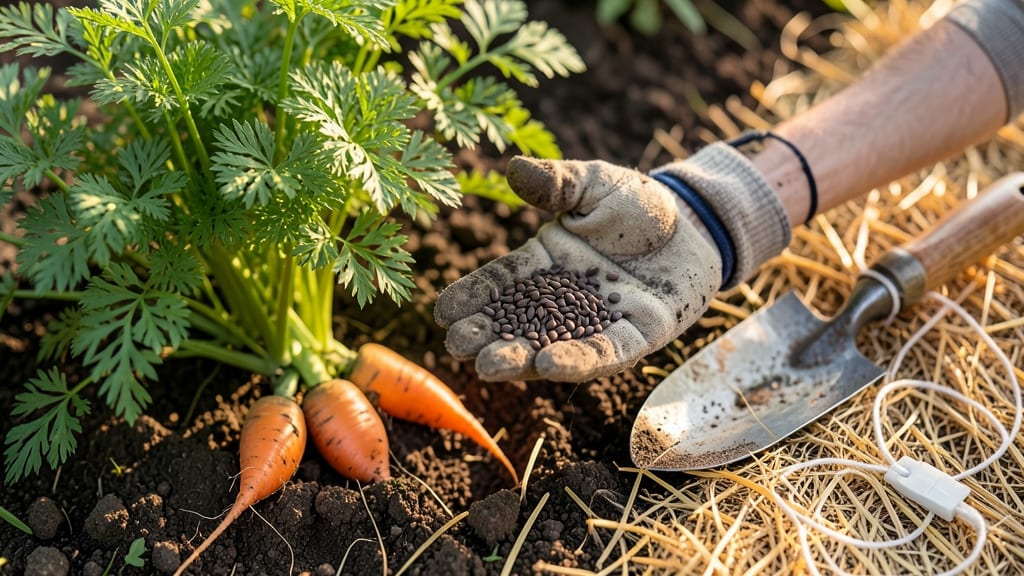
Timing your fall carrot planting right is the secret to harvesting sweet, crisp 🥕 roots that stay tender through winter. Plant too early, and you risk bolting—those bitter, flowery stalks that ruin your harvest.
But get it just right, and you’ll enjoy fresh carrots straight from the garden even when snowflakes start to fall.
For most gardeners in USDA Zone 6a, the perfect window opens 4-8 weeks before your first frost. That means if your last frost hits around mid-November, you’ve got until early October to get seeds in the ground.
This timing ensures your carrots mature before winter sets in, giving you that ideal 60-day harvest window without woody roots or frost damage.
Here’s the game-changer: cooler fall temperatures actually sweeten your carrots, making them taste better than spring-planted varieties. But you’ll need to adjust based on your microclimate—whether you’re in a cooler northern region or a milder southern area.
I’ll break down exactly how to time your plantings for your specific zone, so you can avoid common mistakes like planting too late or too early.
Ready to grow carrots that stay perfect through fall? Let’s dive into the exact deadlines, soil prep tips, and companion plants that’ll keep your harvest bountiful. You’ll learn how to stretch your growing season and why succession planting in fall can give you carrots well into winter.
Fall carrot planting deadlines by USDA Zone: avoid bolting and frost damage
Fall carrots thrive when planted at the perfect moment—4 to 8 weeks before your region’s first frost. This window ensures roots mature before winter sets in, delivering sweet, crisp harvests.
But timing varies dramatically by USDA zone, soil temperature, and local microclimates. Get it wrong, and you’ll end up with bitter, woody roots or plants that bolt too early.
For example, in Zone 3 (like Minnesota or Maine), your last planting should wrap up by mid-August to allow 60 days of growth before frost. Meanwhile, in Zone 10 (like Southern California), you can plant through October or even November thanks to milder winters.
The key? Calculate backward from your first frost date using your carrot variety’s maturity time.
Most fall carrots need 60 to 80 days to reach harvest size. If you’re growing Danvers or Chantenay varieties, aim for the shorter end of that range (60 days).
For slower-growing Nantes or Purple Haze, push toward 70–80 days. Always check seed packets—they list days to maturity under ideal conditions, but fall’s cooler temps slow growth.
Soil temperature also plays a critical role. Carrot seeds won’t germinate well below 50°F (10°C). If your soil cools faster than expected, opt for fast-maturing varieties or use a cold frame to extend the season.
In colder climates, plant in warmed soil (like a raised bed with black plastic) to jumpstart germination.
Regional adjustments matter too. In the Pacific Northwest, where frost can sneak in early, plant early September. In the Southeast, where winters are mild, you can stretch planting until mid-October. Always monitor local weather forecasts—unexpected cold snaps can derail your harvest.
🌱 Fall Carrot Planting Deadlines by USDA Zone
| USDA Zone | Last Planting Date | Ideal Variety | Days to Maturity | Soil Temp Threshold |
|---|---|---|---|---|
| Zones 3-4 (e.g., Minnesota, Maine) | Mid-August | Danvers, Early Nantes | 60-70 days | 50-60°F (10-15°C) |
| Zones 5-6 (e.g., Chicago, NYC) | Late August - Early September | Chantenay, Paris Market | 65-75 days | 55-65°F (13-18°C) |
| Zones 7-8 (e.g., Atlanta, Dallas) | September - Early October | Nantes, Purple Haze | 70-80 days | 60-70°F (15-21°C) |
| Zones 9-10 (e.g., Los Angeles, Miami) | October - November | Rainbow, Solar Yellow | 60-75 days | 65-75°F (18-24°C) |
💡 Pro Tip: Use a seedling heat mat in cooler zones to speed germination if soil temps dip below 55°F (13°C).
Don’t overlook succession planting to maximize your fall harvest. In warmer zones, stagger plantings every 2–3 weeks from August through October. This ensures a steady supply of fresh carrots instead of a single bumper crop.
For example, plant one batch in early September for a late-October harvest, then another in mid-September for a November pick.
If you’re in a transition zone (like Zone 7b), where frost dates vary wildly, err on the side of earlier plantings. Cooler fall nights can trick carrots into bolting—long-day varieties like Danvers are less likely to bolt than short-day types.
Always choose bolt-resistant varieties labeled for fall planting.
Finally, protect your investment with row covers or mulch if early frosts threaten. A lightweight frost blanket can extend harvests by 2–4 weeks, giving you time to dig carrots before the ground freezes.
In my Zone 6 garden, this extra protection lets me harvest into December—far longer than I’d get without it!
🌱 Key Takeaway: Your fall carrot success hinges on zone-specific deadlines, soil warmth, and variety selection. Plan backward from frost, test soil temps, and choose fast-maturing types to avoid disappointment.
Signs your fall carrot planting timing is perfect (or disastrous)
Getting your fall carrot planting timing right means watching for subtle but critical clues in your garden. The first sign of perfect timing is rapid seedling emergence within 7-14 days of planting.
If your seeds sprout quickly and uniformly, your soil temperature is just right—typically between 50°F and 75°F—for fall carrots. Slow germination? You might’ve planted too early when soil was still warm, or too late when temperatures dropped.
Next, check your carrot leaf growth. Healthy fall carrots develop deep green, feathery foliage with no yellowing between veins. If you notice purple streaks on leaves, your soil might be too alkaline (aim for pH 6.0-7.0), or your plants are stressed from inconsistent moisture.
These are red flags your timing is off.
Pay attention to weather patterns too. If you planted in late September but a heatwave hits, your carrots may bolt—sending up flower stalks instead of growing roots. Similarly, planting in October but getting an early frost?
Your harvest will suffer. The ideal window balances cool nights and warm days, which sweetens the roots naturally.
🚨 Common Mistakes to Avoid
Planting too early (before August 15) risks bolting from long daylight. Planting too late (after October 1 in most zones) means frost damage before harvest. Always check your last frost date and count back 60 days for maturity.
One of the best indicators of perfect timing is root development speed. If your carrots reach 1-2 inches in diameter by early November, you’ve nailed it.
You’ll also see the shoulders of the roots (the top few inches) emerging from the soil—this means they’re ready for harvest before winter sets in. If roots stay tiny or woody, you either planted too late or didn’t provide enough consistent moisture.
Finally, watch for pest pressure. Fall carrots planted at the right time attract fewer pests like carrot rust flies, which thrive in warm summer soil.
If you see tiny white eggs on leaves or chewed foliage, your timing might be off, or you need to use row covers to protect your crop.
Remember, microclimates matter. A south-facing bed stays warmer longer, while a north-facing spot may need earlier planting. Use these signs to adjust your strategy year after year—your future harvests will thank you! 🥕