
Plants
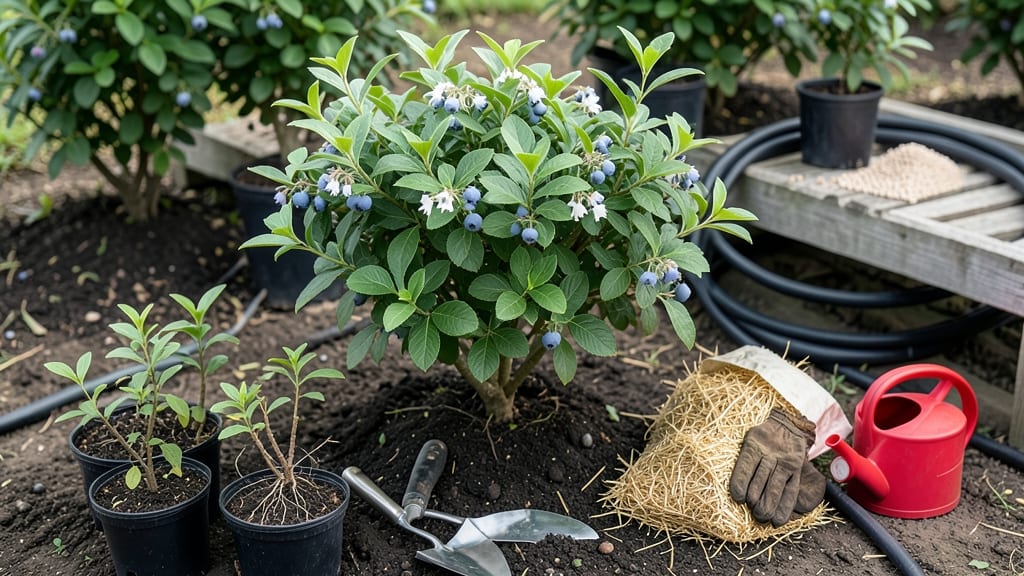
Timing your blueberry bushes planting in Georgia isn't just about the calendar—it's about syncing soil warmth with chill hours to guarantee those sweet, juicy 🫐 harvests.
Too early, and your roots might rot in Georgia's lingering winter dampness; too late, and your bush could miss critical dormancy needs before summer's brutal heat arrives.
Most Georgia gardeners swear by planting in late winter to early spring (February-March) or fall (October-November), but here's the catch: your USDA zone (7b-9a) dictates the perfect moment.
Southern Georgia's longer growing season means you can push spring planting slightly later, while northern regions need that early window to avoid heat stress.
Whether you're working with bare-root plants or containers, the key is preparing acidic soil (pH 4.5-5.5) and choosing varieties that match your local chill hours. I'll walk you through exactly when to dig in, how to adjust for Georgia's humidity challenges, and which varieties thrive best in our unique climate.
Ready to transform your yard into a blueberry bonanza? Let's break down the science behind Georgia's planting windows and give your bushes the perfect start for years of bountiful harvests.
Georgia’s ideal blueberry planting window: chill hours vs soil temperature
Blueberries thrive in Georgia’s USDA zones 7b-9a, but their success hinges on two critical factors: chill hours and soil temperature. Most Georgia varieties need 300-600 chill hours (temperatures between 32°F-45°F) to trigger spring blooms.
Without enough chill, buds fail to open, leaving you with no berries—despite all your hard work.
Georgia’s humid subtropical climate means soil warms quickly in spring. Planting too early (before soil reaches 60°F) stresses roots, while waiting too long risks late-season heat stress after buds break.
The sweet spot? Late winter to early spring (February-March) or fall (October-November) when soil temps are ideal and chill hours are already met.
Here’s the science: Blueberries enter dormancy when nights drop below 45°F. In Georgia, this typically happens by mid-November, making fall the best time to plant. Spring planting works too, but only if you order bare-root bushes early (by January) to avoid root desiccation in Georgia’s drying winds.
🌱 Pro Tip: Use a soil thermometer to confirm temps. Aim for 60°F+ at 6-inch depth before planting. If soil is too cold, roots won’t establish—leading to winter dieback.
In northern Georgia (USDA 7b), chill hours are plentiful, but southern regions (USDA 8a+) may need low-chill varieties like ‘Powderblue’ or ‘Tifblue’.
🌡️ Georgia Blueberry Planting Conditions Comparison
| Factor | Spring Planting (Feb-Mar) | Fall Planting (Oct-Nov) |
|---|---|---|
| Chill Hours Needed | 300-600 (already met by Feb) | 300-600 (accumulating) |
| Soil Temperature | 60°F+ (ideal for root growth) | 55-65°F (roots establish before freeze) |
| Risk of Heat Stress | High (late spring heat) | Low (cooler temps) |
| Best For | Bare-root plants (order early!) | Container-grown plants (less transplant shock) |
| Watering Needs | Deep weekly (drought risk) | Moderate (rainfall helps) |
💡 Why It Matters: Fall planting gives roots 6-8 weeks to establish before winter, while spring planting requires immediate watering to combat Georgia’s dry winds.
Georgia’s microclimates complicate things further. Coastal areas (e.g., Savannah) have warmer winters and fewer chill hours, while the mountains (e.g., Blue Ridge) get more frost.
Use this rule of thumb: North GA (USDA 7b) can handle high-chill varieties like ‘Duke’, while South GA (USDA 8a+) needs low-chill types like ‘Emerald’.
🌿 Soil Prep Check: Before planting, test your soil’s pH (4.5–5.5)—blueberries hate alkaline soil. Amend with sulfur or peat moss if needed.
Georgia’s native clay soil often needs organic matter (compost, pine bark) to improve drainage. Poor drainage = root rot, and that’s a death sentence for your bush.
Timing isn’t just about the calendar—it’s about reading your local climate. Check your last frost date (typically March 15 in North GA, February 15 in South GA) and first frost date (November 15 north, December 1 south).
Plant 4-6 weeks before the first frost to give roots time to anchor.
🪴 Bare-Root vs Container: Bare-root bushes are cheaper and easier to plant in fall or early spring, but they need immediate watering. Container-grown plants cost more but transplant better in late spring when soil is warm. For Georgia’s heat, container plants often outperform bare-root in summer.
Finally, mulch is non-negotiable. Use pine straw or wood chips to retain moisture and regulate soil temps. In Georgia’s heat, mulch can lower soil temps by 10°F, protecting roots from late-spring heat stress that causes bud drop.
Step-by-step planting timeline for Georgia’s spring vs fall seasons
Georgia’s two prime planting windows—late winter/early spring and fall—each come with unique challenges. Spring planting (February-March) gives your blueberries a head start, but Georgia’s late frosts can still sneak in. Fall planting (October-November) avoids summer heat stress but requires careful timing to beat the first frost.
I’ve broken down the month-by-month deadlines for both seasons, including when to order plants, prep soil, and protect your bushes from Georgia’s unpredictable weather. Pro tip: Bare-root plants are best for spring, while container-grown bushes give you more flexibility in fall.
📅 Spring Planting Timeline (February - March)
- 📌 February (Early): Order bare-root plants and test soil pH (aim for 4.5-5.5). Amend with sulfur or peat moss if needed.
- 📌 Late February: Soak bare-root plants in water for 2-4 hours before planting. Choose a well-draining, sunny spot (6+ hours of sun).
- 📌 March (After last frost, ~March 15): Plant 6-12 inches deep, spacing bushes 4-6 feet apart. Mulch with pine needles or wood chips to retain acidity.
- 📌 April: Apply acid-loving fertilizer (10-10-10) and water deeply. Watch for late frost damage—cover young plants if temps dip below 28°F.
For fall planting, the goal is to establish roots before winter dormancy. Start in October and wrap up by mid-November (before the first frost). Container-grown plants are ideal because they’re easier to handle in Georgia’s heavy clay soils. Here’s how to nail the timing:
🍂 Fall Planting Timeline (October - November)
- 📌 October (Early): Test and amend soil for acidity (pH 4.5-5.5). Choose container-grown bushes for easier transplanting.
- 📌 Mid-October: Plant 4-6 weeks before first frost (aim for soil temps above 60°F). Dig holes twice as wide as the root ball.
- 📌 Late October: Mulch heavily with pine straw or acidic mulch to protect roots. Water deeply but reduce frequency as temps drop.
- 📌 November (Before frost): Apply a slow-release fertilizer to support root growth over winter. Avoid heavy watering to prevent root rot in Georgia’s damp winters.
Georgia’s humidity and heat can throw off your planting plans if you’re not careful. For example, planting too late in spring means your bushes might bolt to flower before establishing roots, while fall planting too early risks new growth freezing before winter.
The key is to monitor soil temperatures—use a soil thermometer to confirm it’s above 60°F before planting.
Pro move: If you’re in Northern Georgia (USDA Zone 7b), lean toward early spring planting to avoid late frosts. Southern gardeners (Zone 8a+) can push fall planting into early December if soil stays warm.
Either way, stagger your planting by a few weeks to extend your harvest season—plant some bushes in spring and others in fall for a continuous berry supply from May to July.