
Plants
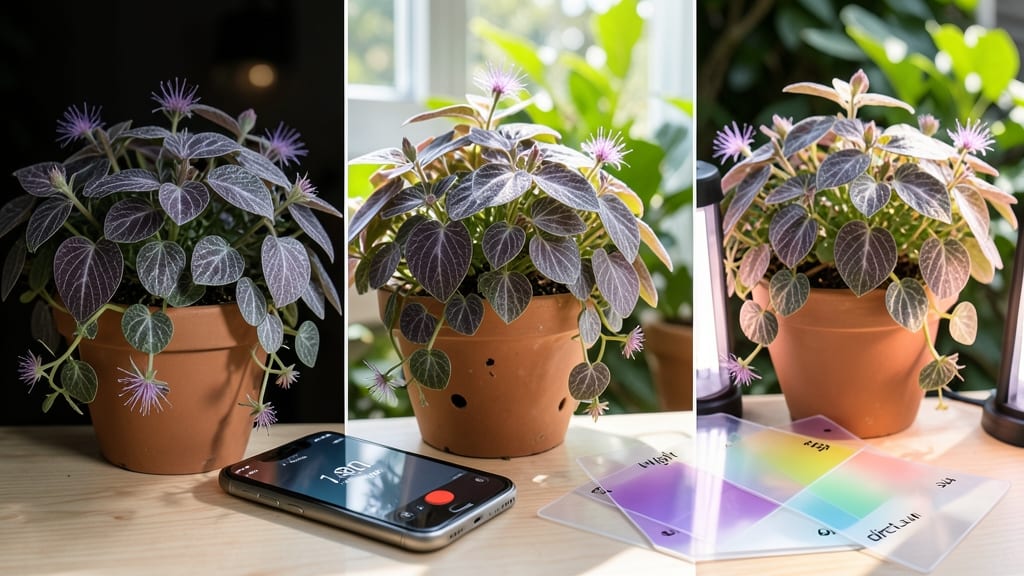
If your Inch Plant (Tradescantia) 🌿 needs how much light does an inch plant need to thrive, you’re not alone—most people underestimate just how much sunlight this little gem truly craves.
The answer isn’t complicated: 3-4 hours of bright, indirect sunlight is the sweet spot, but too little leaves it weak, and too much fries those delicate leaves faster than you can say "sunburn."
Here’s the thing: this plant thrives in partial shade, especially in Zone 6a climates where spring sunshine can be intense. Whether you’re growing it indoors near a window or outdoors in a shaded spot, getting the balance right makes all the difference.
Too little light? You’ll spot those telltale signs—long, spindly stems and sparse leaves—before you know it.
Don’t worry if your space lacks natural light—we’ll cover easy fixes like grow lights and strategic window placement to keep your plant happy year-round. The key is observing how it reacts and adjusting before those leggy stems take over.
Let’s break down exactly what your Inch Plant needs to stay lush and vibrant, no guesswork required.
Ready to transform that sad, stretched-out plant into a bushy, thriving beauty? Stick with me, and you’ll learn the simple tricks to give it the perfect light conditions—whether you’re a beginner or a seasoned plant parent. Your Inch Plant’s future starts with just a few adjustments.
 Best Window Placement
Optimal light requirements for inch plants: the sweet spot for growth
Your inch plant (Tradescantia sillamontana) thrives in bright indirect light, making it perfect for east or north-facing windows. This tropical beauty tolerates 3-4 hours of morning sun but burns easily in harsh afternoon rays.
Think of it like a sunbather—just enough to glow, not enough to fry!
Direct sunlight for more than 2-3 hours daily causes leaf bleaching or crispy edges, while low light leads to leggy, sparse growth. The key is mimicking its natural understory habitat—bright but diffused light. A sheer curtain can filter harsh rays during summer months when sun intensity peaks.
Seasonal adjustments matter! In winter, when natural light weakens, supplement with 4-6 hours of artificial grow light to maintain vibrancy. Rotate your plant quarter-turns weekly to ensure even light exposure and prevent lopsided growth. Uneven light causes one side to stretch toward the source while the other stays weak.
For indoor growers, south-facing windows require partial shade (like a sheer curtain) during peak hours (11 AM–3 PM). Outdoor inch plants in USDA Zone 6a should be acclimated gradually to prevent sun shock—start with 1-2 hours of morning sun, then increase weekly.
Test your plant’s light conditions with a simple shadow test: Place a white sheet of paper near your plant at midday. If the shadow is sharp and dark, the light is too intense.
For bright indirect light, the shadow should be soft and diffused. Adjust placement or add a sheer curtain if needed.
Pro tip: Use a light meter app (like Light Meter for smartphones) to measure 1,000–3,000 lux—the ideal range for inch plants. Most office spaces hit this mark, so if your plant struggles, relocate it near a well-lit workspace.
Fluorescent bulbs (6,500K color temp) are a great backup for cloudy days.
Outdoor inch plants in containers benefit from dappled shade under trees. Avoid placing them in full sun gardens—their delicate leaves crisp faster than you’d think. Instead, pair them with hostas or ferns for mutual shade benefits.
In USDA Zone 6a, bring potted plants indoors before first frost (October 30) to preserve their light-sensitive foliage.
Remember: Consistency is key. Sudden light changes (like moving from a bright window to a dim corner) shock inch plants. If you must relocate, do it gradually over 3-5 days, moving the plant closer to its new spot each time.
Patience pays off with thicker stems and richer purple undersides on leaves!
For indoor growers, a south-facing window with a sheer curtain is ideal. If your space lacks natural light, LED grow lights (12-15 watts per square foot) can replicate sunlight.
Just keep them 6-12 inches above the plant and run them for 12-14 hours daily. Your inch plant will thank you with lush, inch-long leaves—hence the name!
🌿
Optimal light requirements for inch plants: the sweet spot for growth
Your inch plant (Tradescantia sillamontana) thrives best with bright indirect light for 3-4 hours daily. This means placing it near an east-facing window where morning sun gently filters through, or a north-facing window that avoids harsh afternoon rays.
Direct sunlight can scorch its delicate leaves, while too little light causes etiolation—those sad, stretched-out stems reaching for any light source.
Think of it like Goldilocks: not too hot, not too cold, but just right. West or south windows can work, but only if you use a sheer curtain to diffuse the intensity.
Even a spot 2-3 feet from a bright indoor space (like a well-lit kitchen) can provide the perfect balance. The goal? Keep those leaves deep green and compact, not pale or leggy.
| Light Condition | Hours Needed | Ideal Placement | Leaf Color |
|---|---|---|---|
| Bright Indirect | 3-4 hours | East/west window, 2-3 ft away | Deep green |
| Low Light | <2 hours | North window, dim corner | Pale yellow |
| Direct Sun | >4 hours | South window, no curtain | Brown patches |
Seasonal adjustments are key! During spring and summer, your inch plant can handle slightly more light—up to 4-5 hours daily—but always avoid the harsh midday sun (11 AM–3 PM).
In fall and winter, when natural light dims, supplement with a grow light for 6-8 hours to maintain its vigor. Rotate your plant quarter-turns weekly to ensure even growth and prevent it from leaning toward the light source.
Pro tip: Test your plant’s light tolerance by moving it gradually. Shift it 1-2 feet closer to a window every 2-3 days to acclimate it to brighter conditions. Watch for new growth—this is your cue that it’s happy!
If leaves start curling or developing brown edges, it’s a sign to move it back a few inches.
Outdoor enthusiasts can place their inch plants in partial shade gardens during warmer months, but always provide afternoon shade to prevent sunburn. Even a dappled light spot under a tree can work, as long as it gets filtered sunlight rather than harsh beams.
Just remember: consistency is key. Sudden changes in light can stress your plant, so monitor its response closely.
If you’re unsure about your space’s light levels, try this quick test: Hold a white sheet of paper near your plant’s spot. If the light casts soft shadows, it’s ideal. If it’s too dark (hard to see shadows), your plant needs brighter conditions.
If the paper looks bleached or scorched after an hour, move it away from direct sun. Your inch plant will thank you with lush, vibrant growth! 🌿