
Flowers
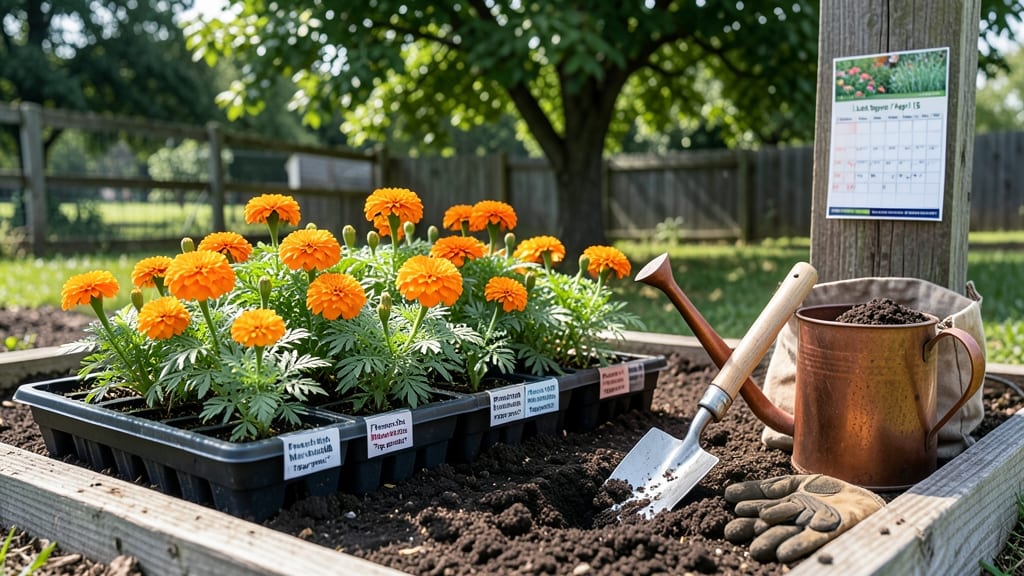
Knowing when it's safe to plant flowers in Ohio can mean the difference between a vibrant garden and a sad pile of frozen seedlings. Ohio's Zone 6a climate brings unpredictable springs, where last frost dates can shift from mid-April to late May depending on the year.
If you've ever rushed to plant your 🌸 annuals only to watch them wilt under a surprise frost, you're not alone. The key isn't just waiting for the calendar date—it's understanding your local microclimate and soil temperature.
Let me show you exactly how to time your planting for success, whether you're in Columbus, Cincinnati, or Cleveland.
We'll break down the 10-day rule for safe planting, when to start heat-loving flowers like marigolds versus frost-tolerant pansies, and how to use simple tools like frost clocks and soil thermometers. By the end, you'll know exactly when to grab that trowel without guessing.
Ohio's varied planting zones mean your neighbor's perfect timing might not work for you. I'll help you decode the data so you can plant with confidence—no more second-guessing or wasted seed packets. Let's get those blooms growing!
Ohio’s last frost dates by planting Zone: exact deadlines for annual flowers
Ohio’s last frost dates vary dramatically across the state, with Zone 5b areas like Toledo seeing frost as late as May 15, while Zone 6b regions like Athens can plant safely by April 20. These differences mean your neighbor’s planting schedule might not work for you.
To avoid frozen seedlings, I recommend using the 10-day rule: Wait until 10 days after your average last frost date before planting warm-season flowers.
For most Ohio gardeners, this means holding off until at least mid-April for frost-tolerant flowers like pansies, but waiting until late May for heat-lovers such as marigolds.
The USDA Plant Hardiness Zone Map is a great starting point, but local microclimates—like urban heat islands or lake-effect cooling—can shift these dates by 2-3 weeks. Always check your specific city’s historical data.
Here’s a quick reference for Ohio’s major cities and their historical last frost averages. Use these as your baseline, then adjust based on your yard’s specific conditions. A soil thermometer (below $15) is your best friend for confirming readiness—50°F soil is the magic number for most annual flowers.
Pro tip: If you’re starting seeds indoors, begin 6-8 weeks before your last frost date. For example, Columbus gardeners should start marigolds indoors by March 1 to have them ready for late May planting. Use a seedling heat mat ($10-$15) to speed up germination in Ohio’s cool springs.
Don’t rely solely on dates—watch for leaf buds swelling on trees like maples or lilacs. When these buds burst, it’s a sure sign spring is here. Pair this with your frost clock (available at garden centers) for the most accurate local predictions.
I’ve found that Cleveland’s last frost can vary by 10 days from year to year, so flexibility is key.
For perennials and bulbs, the rules change slightly. Plant spring-blooming bulbs like tulips in fall (October-November), while summer-blooming perennials (like coneflowers) can go in as early as March if the ground isn’t frozen.
The key is soil workability—you should be able to dig a hole without compacting the dirt.
Ohio’s first frost typically arrives between October 15-30, but some years it can sneak in as early as September 20. Mark your calendar for September 15 to start hardening off tender annuals like petunias.
If you’re growing winter-hardy flowers (e.g., pansies, snapdragons), you can plant them as late as September 1 for fall color.
Remember: No two springs are alike in Ohio. Even if your neighbor planted zinnias on May 1 last year with success, this year’s 50°F soil temperature might not arrive until May 15.
Always verify with a soil thermometer or check the Old Farmer’s Almanac for your specific county. Your garden will thank you for the patience!
How to adjust planting times for Ohio’s unpredictable spring weather
Ohio’s spring weather can be as unpredictable as a toddler’s mood—one day it’s 70°F and sunny, the next, a freezing night hits out of nowhere. That’s why relying on calendar dates alone is a recipe for disappointment.
Instead, I’ve learned to use a mix of historical frost data, soil temperature, and simple tools to fine-tune my planting schedule.
For example, even if your last frost date is April 15, don’t rush to plant tender annuals like marigolds or zinnias. Wait until you’ve passed the 10-day rule: add 10 days to your average last frost date to account for late surprises.
In Columbus, that might push you to early May for heat-lovers.
Another trick I swear by? Using a soil thermometer. Flowers like petunias and impatiens need soil temps of at least 55°F to thrive, while frost-tolerant pansies can handle 40°F. Check the soil in the morning—if it’s cooler than your plants’ tolerance, hold off.
🌱 5 Key Strategies for Ohio’s Unpredictable Spring
- Use the 10-day rule: Add 10 days to your average last frost date before planting heat-loving flowers.
- Monitor soil temps: Aim for 50°F+ for most annuals; 40°F+ for frost-tolerant varieties.
- Stagger your planting: Sow cool-season flowers (pansies, snapdragons) in early spring, then warm-season flowers (marigolds, zinnias) 2-3 weeks after last frost.
- Extend the season: Use row covers or cold frames to plant earlier or push fall blooms later.
- Watch for false springs: If temps spike in March but nights stay cold, wait for consistent warmth before planting.
False springs are another Ohio gardener’s nemesis. I’ve seen 60°F days in March followed by a 28°F night just days later. To avoid this trap, I track nighttime lows for at least 3-5 days before planting.
If temps dip below 32°F, cover your seedlings with frost cloth or move them to a sheltered spot.
For those who want to push the envelope, cold frames and row covers are game-changers. I’ve successfully planted calendulas and stock in early April under a simple hoop tunnel, giving me a 4-6 week head start on the season. Just
Finally, choose your flowers wisely. Frost-tolerant varieties like pansies, violas, and snapdragons can handle light frosts and even bloom in cooler weather. Plant these in early spring for colorful blooms even if summer flowers take longer to establish. On the flip side, marigolds, zinnias, and sunflowers need warmth—wait until late May in northern Ohio to give them the best shot.
With these strategies, you’ll beat Ohio’s unpredictable spring and enjoy a garden bursting with color—no matter what Mother Nature throws your way. 🌷