
Plants
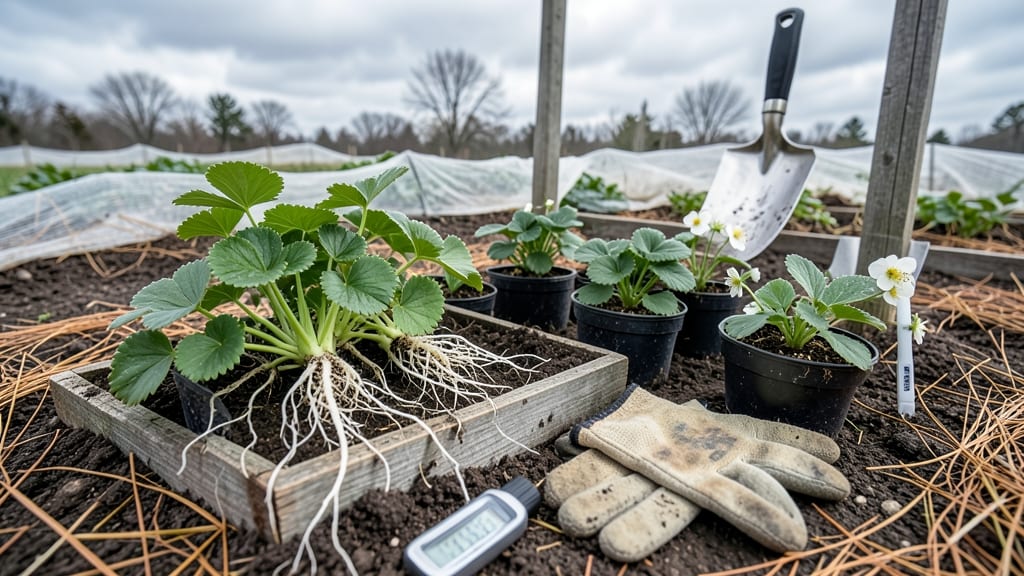
Planting strawberries in Kansas isn't just about the calendar—it's about beating the unpredictable frost that can turn your 🍓 dreams into a frozen disappointment.
With USDA zones ranging from 5b to 7a, your neighbors in Douglas County might have a 3-week head start over gardeners in Saline County, where late frosts linger longer.
Timing matters because strawberries planted too early can get nipped by frost, while waiting too long risks stunted growth before harvest. The key is knowing your microclimate—whether you're in humid eastern Kansas or the drier western plains—and adjusting your March-April or July-August planting window accordingly.
I’ll break down exactly when to plant in your specific county, including how soil temperature and elevation shifts can change your ideal dates by weeks. Plus, discover whether bare-root plants or potted varieties give you the edge in Kansas’ variable climate.
Ready to turn frost risks into a bountiful harvest? Let’s get your strawberries in the ground at the perfect moment—no guesswork, just results.
Kansas strawberry planting dates by microclimate zone (County-specific last-frost averages)
Kansas gardeners know timing is everything when planting strawberries. The state’s last-frost dates vary by 10-14 days between eastern and western regions, creating a county-specific puzzle for optimal planting.
Eastern counties like Douglas and Johnson typically see their last frost around April 10-15, while western areas like Hamilton or Greeley often wait until April 20-25.
This means a June-bearing variety planted in late March in Leavenworth County might face frost, while the same variety thrives in Rice County.
For everbearing varieties, the window shifts slightly—planting in late July to early August works best across most zones, but fall frosts arrive earlier in higher elevations (e.g., Cherokee County vs. Sedgwick County).
The Kansas State University Research and Extension (KSRE) recommends using bare-root plants in early spring for June-bearers and potted plants in late summer for everbearers to avoid transplant shock during extreme temperature swings.
Here’s the critical data you need to plan your strawberry planting by county, including last-frost averages and ideal planting windows for both spring and fall:
| County | Last Frost (Avg.) | Spring Planting Window | Fall Planting Window | Best Variety |
|---|---|---|---|---|
| Douglas | April 10 | March 15–April 5 | August 1–15 | Jewel, Honeoye |
| Johnson | April 12 | March 20–April 10 | July 25–August 10 | Seascape, Chandler |
| Sedgwick | April 18 | March 25–April 15 | August 5–20 | Albion, Ozark Beauty |
| Saline | April 22 | April 1–15 | July 30–August 10 | Chandler, Fort Laramie |
| Rice | April 5 | March 10–April 1 | August 1–10 | Honeoye, Allstar |
If you’re in a transition zone like Sedgwick County (where last frosts can fluctuate by a week), opt for everbearing varieties like Seascape or Chandler.
These produce two harvests per year—one in early summer and another in fall—reducing the risk of losing your entire crop to a late frost. For June-bearing varieties, plant bare-root plants as soon as the soil reaches 50°F (use a soil thermometer to check).
Pro tip: In western Kansas, where dry winds can delay soil warming, use black plastic mulch to raise soil temperatures by 5-10°F and plant 2 weeks later than the average window. This trick works especially well for Hamilton County gardeners, where April frosts are more common than in the
5 Critical factors that determine your exact planting window (beyond the calendar)
Kansas’ microclimates can shift your ideal strawberry planting date by 3+ weeks, even between neighboring counties. While the calendar suggests March-April for spring planting, factors like soil temperature, elevation, and wind exposure often override those dates.
For example, gardeners in Sedgwick County (Wichita) might plant 2 weeks earlier than those in Douglas County (Lawrence) due to urban heat islands.
Soil temperature is your first clue—strawberries need 50°F+ soil to root properly. In eastern Kansas, this typically happens by mid-March, but western counties like Finney may wait until late March or early April. Use a soil thermometer to confirm: cold soil = delayed growth and frost vulnerability.
Elevation is another game-changer. Kansas spans 1,400ft in elevation, from the Smoky Hills to the Flint Hills. Higher elevations (like Ellis County) experience frost 1-2 weeks later than lower areas (like Riley County).
Check your USDA zone—if you’re in Zone 5b, delay planting until April 15; Zone 7a gardeners can start as early as March 1.
Wind exposure can also delay your planting by 2+ weeks. Gardens in open plains (e.g., Kearny County) lose heat faster at night, increasing frost risk. If your yard is windy, opt for low-growing varieties like 'Chandler' or use windbreaks (like corn stalks or evergreens) to create a microclimate.
In Sedgwick County, this means pushing planting back to late March instead of early March.
Finally, your mulch choice can shift your planting window by 10 days. Black plastic mulch absorbs sunlight and warms soil 2-3°F faster than straw, letting you plant 'Albion' or 'Jewel' varieties 10 days earlier in cold zones.
Straw mulch, while organic, keeps soil cooler—ideal for June-bearing varieties in Johnson County where early planting risks frost damage.
Pro tip: Combine these factors with your local KSRE Extension frost data.
For example, in Saline County, the average last frost is April 22, but if you’re using black plastic mulch and planting potted varieties, you could safely plant March 25—just monitor nighttime temps and be ready to cover plants if frost is forecasted.