
Trees
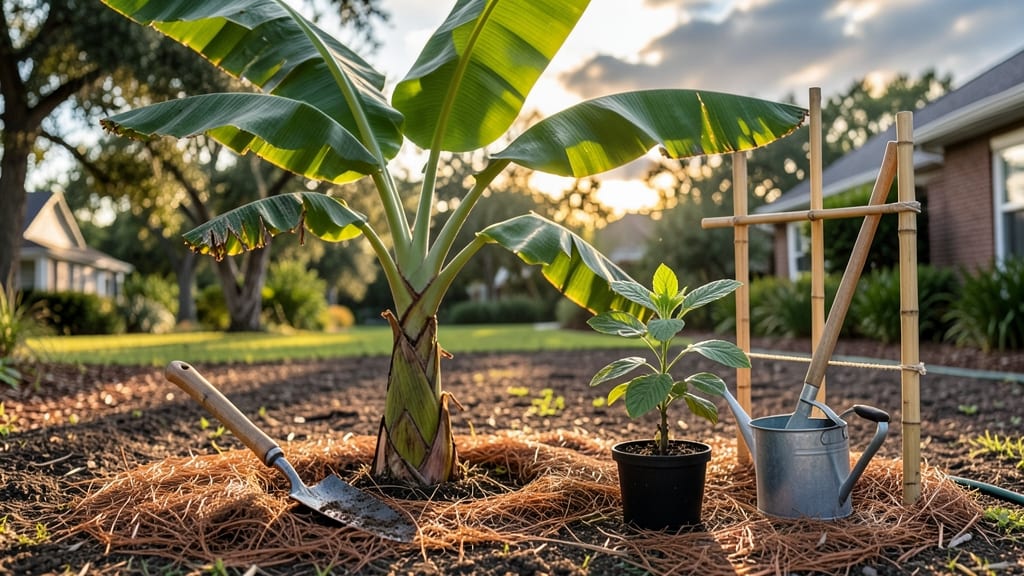
Planting a banana tree 🍌 in Florida might seem like a no-brainer—after all, who needs seasons when you’ve got endless sunshine? But timing actually makes all the difference between a thriving tropical giant and a struggling underachiever.
While Florida’s frost-free climate lets you plant year-round, the best months for zero stress and maximum growth are spring and fall. Why? Because these windows align with Florida’s natural rainfall patterns and humidity levels, giving your banana tree the perfect head start without battling extreme heat or drought.
Whether you’re in North Florida’s 9a zone or basking in South Florida’s 11, microclimates play a bigger role than you’d think.
I’ll break down exactly when to dig in for your specific corner of the state—plus, how to spot the signs your banana tree is ready to thrive (or needs a time-out).
Ready to grow a banana tree that’s taller than your roof and packed with fruit? Let’s get you planting at the perfect moment—no guesswork, just guaranteed success.
Best planting months in Florida’s 3 microclimates (North, Central, south)
Florida’s frost-free climate might make you think banana trees can be planted anytime—but that’s not quite true. Microclimates across North, Central, and South Florida create ideal planting windows that maximize growth and fruit production.
In North Florida, where humidity drops slightly in winter, fall planting (September-November) gives roots time to establish before cooler months. Meanwhile, South Florida’s year-round warmth allows spring planting (March-May) to align with natural rainfall patterns.
Central Florida sits in the middle, offering flexibility with two prime windows: early spring (February-March) and late summer (August-September). The key difference? Soil temperatures and rainfall intensity. Planting in summer means battling Florida’s afternoon thunderstorms, while spring planting benefits from gentler rains and warming soils.
Let’s break down the best months for each region to avoid common pitfalls like transplant shock or pests.
🌱 Florida Banana Tree Planting Guide by Region
| Region | Best Planting Months | Soil Temp | Rainfall | Key Consideration |
|---|---|---|---|---|
| North Florida (Zone 8a-9a) | Sep-Nov (Fall) or Feb-Mar (Spring) | 65°F+ (Fall) / 70°F+ (Spring) | Moderate (Oct-Nov) / Low (Feb-Mar) | Avoid summer heat; cooler temps reduce pest pressure |
| Central Florida (Zone 9a-9b) | Feb-Mar (Spring) or Aug-Sep (Late Summer) | 70°F+ (Spring) / 80°F+ (Summer) | High (Summer) / Moderate (Spring) | Spring avoids storm damage; summer needs shade protection |
| South Florida (Zone 10a-11) | Mar-May (Spring) or Sep-Oct (Early Fall) | 75°F+ (Year-round) | High (Summer) / Moderate (Spring/Fall) | Spring aligns with natural blooming cycles; fall avoids hurricane season |
In North Florida, where temperatures can dip below 60°F at night even in winter, fall planting (September-November) is ideal. The soil stays warm enough for root growth, and you avoid the intense humidity of summer that can encourage fungal diseases like banana wilt.
If you plant in spring (February-March), focus on well-draining soil to prevent waterlogging during Florida’s spring rain season. Pro tip: Use mulch to retain soil moisture without suffocating roots.
For Central Florida, the choice between spring and late summer depends on your patience. Spring planting (February-March) gives you a 12-18 month head start on fruit production, but you’ll need to protect young trees from afternoon sun with shade cloth.
Late summer planting (August-September) avoids the peak pest season (think banana aphids and spider mites), but requires consistent watering during Florida’s monsoon-like downpours. I recommend drip irrigation to keep roots evenly moist.
South Florida’s tropical climate makes it the easiest region for banana trees, but timing still matters. Plant in spring (March-May) to sync with the natural blooming cycle of local banana varieties, or in early fall (September-October) to avoid hurricane season (June-November).
Avoid planting in June-July, when heavy rains and high humidity create perfect conditions for Fusarium wilt, a deadly fungal disease. If you must plant then, choose a high, well-drained site to reduce water pooling.
One common misconception is that Florida’s year-round warmth means banana trees can be planted anytime. But soil temperature and humidity levels fluctuate enough to make a difference. For example, planting in December-January might seem safe, but cooler nights (especially in North Florida) can stunt root growth.
Similarly, planting in July-August risks heat stress for young trees, even in South Florida. The best approach? Monitor soil temps—aim for 65°F+ for optimal root development.
Another factor to consider is banana tree variety. Dwarf Cavendish (the most common grocery store variety) thrives in all Florida regions but benefits from spring planting for faster fruiting. Red Dacca (a striking red banana) prefers Central/South Florida and does best with fall planting to avoid summer pests.
Always check the USDA zone of your county—North Florida’s Zone 8a can handle cold-hardy varieties like Bluggo
Best planting months in Florida’s 3 microclimates (North, Central, south)
Florida’s frost-free climate lets you plant banana trees 🍌 any time, but the best months depend on your region’s humidity, rainfall, and temperature swings. North Florida’s cooler winters and South Florida’s intense summer heat create distinct planting windows—ignoring them can lead to transplant shock or slow growth.
For North Florida (USDA Zones 8a-9a), aim for spring (March-May) when soil warms to 65°F+ and afternoon humidity rises. Fall (September-October) is also ideal—just avoid late October’s occasional light frosts (rare but possible in Panhandle areas).
In Central Florida (Zone 9b), you’ve got flexibility: plant in early spring (February-April) or late summer (August-September). The key is avoiding peak summer heat (June-August), which stresses young roots.
South Florida (Zones 10a-11) is the easiest—plant anytime! But September-November is prime because hurricane season’s extra rain gives young trees a hydration boost. Even in summer, afternoon showers help, but avoid planting during active storms (wind can uproot saplings).
Pro tip: Check your county’s historical rainfall data (via FSU Climate Center)—if your area gets 3+ inches of rain weekly, delay planting until drier spells. Waterlogged soil = root rot risk.
For container-grown banana trees, timing shifts slightly: spring planting lets you move pots outdoors gradually, while fall planting avoids summer’s container-drying heat. Always harden off plants for 7-10 days before full exposure.