
Plants
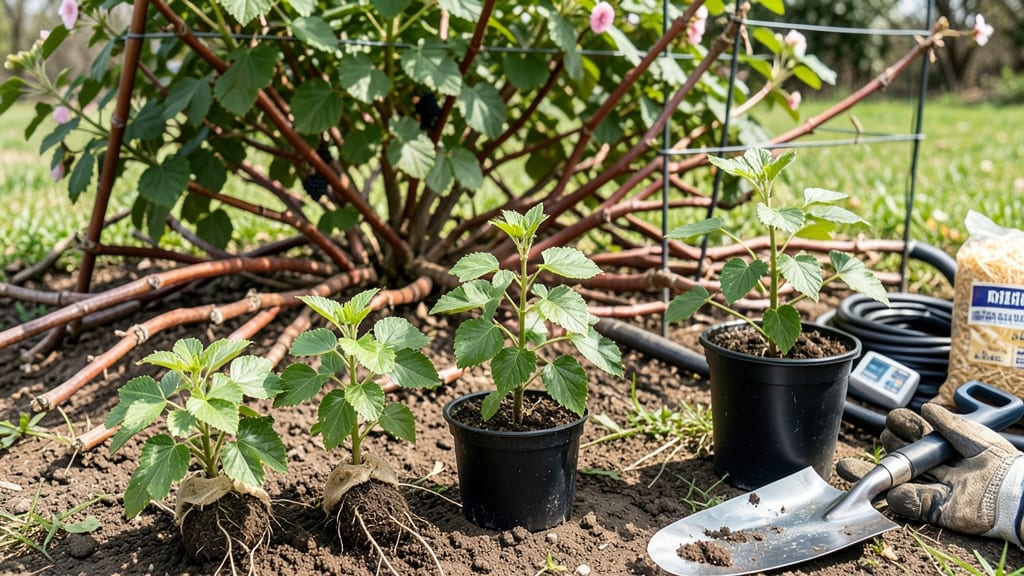
Timing your blackberry 🫐 planting in Colorado wrong could mean bolting—those lush canes shooting up flowers and fruit before they’re ready, leaving you with bitter disappointment instead of juicy harvests.
The key to avoiding this common mistake? Planting at the precise moment when your local microclimate and elevation align with the plant’s needs.
Colorado’s diverse zones—from the Front Range’s 5-7 to the Western Slope’s cooler highlands—demand different strategies. Whether you’re in Denver’s urban heat or the shadow of the Rockies, knowing when to plant bare-root canes or dormant plants makes all the difference between a thriving bush and a thorny failure.
I’ll break down the exact late March to early May window (or fall’s September-October alternative) tailored to your elevation, soil prep secrets for cold-hardy varieties like ‘Arapaho,’ and how to protect your investment from hail and wildlife. Let’s get those canes in the ground the right way.
Ready to turn your backyard into a blackberry oasis? Skip the guesswork—here’s how to time it perfectly for zero bolt risk and a harvest bursting with flavor by summer.
Colorado blackberry planting zones: exact timing by elevation and USDA zone
Colorado’s diverse USDA zones 4-7 and elevation shifts (5,000–9,000 ft) create unique planting challenges for blackberries. Your last frost date shifts dramatically—Denver’s average is April 10, while Steamboat Springs may see frost until May 15.
Planting too early risks cold damage, while late planting delays fruit production. Let’s break down the perfect 2-week windows for each zone to avoid bolting and maximize yields.
For low-elevation areas (5,000–6,500 ft, USDA 6-7), like Denver or Colorado Springs, aim for late March to early April—once soil temps hit 55°F.
Higher elevations (7,000–9,000 ft, USDA 4-5), such as Aspen or Leadville, need to wait until mid-April to early May when frost risk drops below 20%. Fall planting (September–early October) is also viable but requires 6+ weeks before first frost to establish roots.
🌱 Pro Tip: Use a soil thermometer—blackberries need 55–65°F soil temps to thrive. Cold soil slows root growth, making plants vulnerable to winter dieback.
| Elevation Zone | USDA Zone | Spring Planting Window | Fall Planting Window | Key Risk |
|---|---|---|---|---|
| 5,000–6,500 ft | 6-7 | Late March–Early April | September 1–15 | Late frost |
| 6,500–7,500 ft | 5-6 | Mid-April–Early May | September 15–30 | Slow root growth |
| 7,500–9,000 ft | 4-5 | Early May–Mid-May | October 1–10 | Early frost |
🌡️ Note: Adjust for microclimates—urban areas warm faster than rural zones.
Microclimates matter! Urban Denver’s heat islands can push spring planting back by 1–2 weeks compared to rural areas. Check local Almanac frost dates and add 10–14 days as a buffer.
For container planting, extend your window by 2 weeks—pots warm faster and are easier to protect with row covers if frost sneaks in.
🌿 Colorado-Specific Hack: Plant thornless varieties like Arapaho or Cheyenne in high-elevation zones. Their bolting resistance and earlier ripening give them an edge over traditional types in short seasons.
Fall planting is a game-changer for Colorado gardens. Plant bare-root canes in September to let roots establish before winter. Water deeply once a week until first frost, then mulch with 4–6 inches of straw to insulate roots. This method doubles survival rates in zones 4–5.
⚠️ Warning: Avoid planting in late May or June. Blackberries planted too late may not harden off before winter, leading to cane dieback. If you miss spring/fall windows, opt for container growing—you can move pots to a garage or shed in winter.
For high-altitude gardens (7,000+ ft), consider earlier-maturing varieties like Triple Crown. These ripen 2–3 weeks faster than standard types, giving you a longer harvest window before Colorado’s early October frosts.
🌱 Final Tip: Mark your calendar for May 15—this is the absolute latest you should plant in most of Colorado to ensure root establishment before winter.
How to choose the perfect planting window: moon phases, soil temps, and weather watch
Selecting the right 2-week window for planting blackberries in Colorado isn’t just about avoiding frost—it’s about aligning with soil temperatures, moon phases, and your local microclimate.
I’ve planted blackberries across Denver’s urban heat islands and the cooler Front Range, and these factors make all the difference between success and bolting.
Start by checking your soil temperature—it should consistently reach 55-65°F at least 6 inches deep. Use a soil thermometer (they’re cheap and lifesavers!) to confirm.
In Denver, this typically happens by late April, while higher elevations like Boulder or Estes Park may need to wait until early May.
Next, sync your planting with the moon’s rooting phase. This isn’t superstition—it’s about leveraging the moon’s gravitational pull to encourage strong root development. Plant during the waxing gibbous phase (7 days before the full moon) for maximum root growth.
Check a lunar calendar or use an app like Farmers’ Almanac to time it perfectly.
Here’s a quick