
Plants
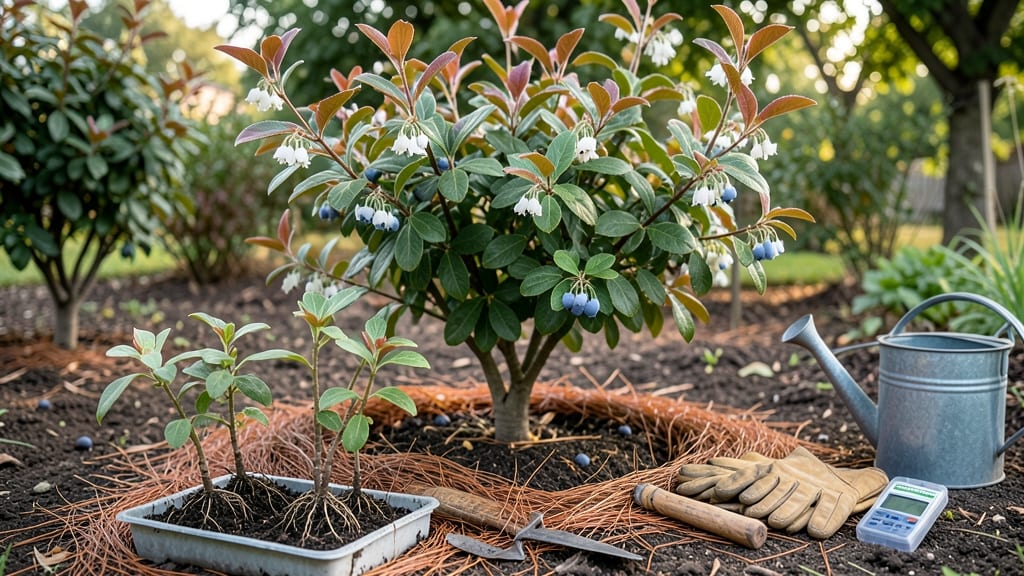
Timing your blueberry planting in SC isn’t just about the calendar—it’s about matching your variety to the region’s unique chill hours and frost patterns.
Skip this step, and you might end up with bushes that bloom too early, only to lose their flowers to a late frost, leaving you with no harvest. The good news? With the right approach, you can turn South Carolina’s humid climate into prime blueberry country.
Most gardeners in USDA Zones 7b-9a plant their 🫐 blueberries in late winter to early spring, but the exact window depends on whether you’re growing southern or northern varieties. Southern types like ‘Climax’ need fewer chill hours, while northern varieties like ‘Duke’ thrive with more.
I’ll break down how to align your planting with SC’s frost dates and soil prep for the best results.
Beyond the calendar, soil acidity and drainage play a critical role in whether your bushes take root and produce fruit. South Carolina’s sandy soils often need amendments like sulfur or peat moss to hit the ideal pH of 4.5-5.5.
Plus, I’ll share pro tips for container growing—perfect if your yard’s soil isn’t up to snuff.
Ready to grow juicy, homegrown blueberries that outperform store-bought? Let’s dive into the exact steps to plant your bushes at the perfect time, so you’re harvesting May through July instead of crossing your fingers for a decent yield.
Best planting times for blueberries in SC based on chill-hours
South Carolina’s mild winters and hot summers create a unique challenge for growing blueberries—chill-hours (the number of hours below 45°F) are critical for fruit production. Most SC regions fall in USDA Zones 7b-8a, meaning you need varieties that thrive with 300-500 chill-hours.
Planting at the wrong time can lead to poor flowering or no berries at all.
For the best results, aim to plant blueberry bushes in late winter to early spring (February through March). This gives roots time to establish before the heat of summer.
If you’re in northern SC (Zone 7b), you can also plant in early fall (September-October), allowing roots to settle before winter dormancy.
Timing matters because blueberries need acidic soil (pH 4.5-5.5) and consistent moisture. Planting too early risks frost damage, while planting too late may stress young plants before summer’s heat. Always check your local last frost date (typically mid-March in SC) and plant 4-6 weeks beforehand.
🌱 Chill-Hour Planting Guide for SC Blueberries
| Variety Type | Chill-Hours Needed | Best Planting Window | Soil Prep Tip |
|---|---|---|---|
| Southern Highbush | 300-400 | Feb-March (or Sept-Oct) | Mix peat moss into beds |
| Rabbiteye | 400-500 | Feb-March only | Add sulfur for acidity |
| Half-High | 350-450 | Feb-March (or early Sept) | Use raised beds for drainage |
Note: Southern Highbush varieties like ‘Climax’ and ‘Premier’ are best for SC’s warmer zones, while Rabbiteye (e.g., ‘Tifblue’) handles cooler nights.
If you’re planting in containers, the timing is similar, but you’ll need larger pots (at least 15-gallon) for mature bushes. Containers warm up faster in spring, so start them indoors in January and transplant outside after the last frost.
Use a well-draining potting mix with pine bark fines to maintain acidity.
For in-ground planting, choose a location with morning sun and afternoon shade to prevent heat stress. Amend the soil with compost and sulfur (1-2 pounds per 100 sq ft) to lower pH. Test your soil’s acidity before planting—blueberries won’t thrive in alkaline soil.
After planting, mulch with pine needles or wood chips to retain moisture and acidity. Water deeply 2-3 times per week during the first growing season, keeping the soil evenly moist but not soggy. Avoid overhead watering to prevent fungal diseases like botrytis, which thrives in SC’s humidity.
One common mistake is planting too late in spring, which stresses young bushes. If you miss the February-March window, wait until fall (September)—just ensure the soil is still warm enough for root growth. Always space bushes 4-6 feet apart to allow airflow and reduce disease risks.
Pro tip: If you’re in Zone 8a or warmer, consider everbearing varieties like ‘Top Hat’ or ‘Peach Sorbet’ for two harvests per year. These varieties produce fruit on both old and new wood, making them more adaptable to SC’s mild winters.
Finally, remember that blueberries take 2-3 years to bear fruit after planting. Patience pays off—once established, a healthy bush can produce 5-10 pounds of berries per year, making your gardening efforts totally worth it! 🫐
Best planting times for blueberries in SC based on chill-hours
South Carolina’s humid subtropical climate means your blueberry bushes need precise timing to thrive. The key? Matching your variety to the region’s chill-hour requirements—most of SC falls in USDA Zones 7b-8a, where 300-600 chill hours (temps below 45°F) determine which varieties will fruit reliably.
Plant too early, and late frosts can damage flowers; too late, and your bushes won’t establish roots before summer heat sets in.
For southern varieties like ‘Climax’ (300-400 chill hours), aim for late winter to early spring—ideally February through March. Northern types like ‘Duke’ (600+ chill hours) can handle cooler winters but still need 4-6 weeks before the last frost (typically mid-March) to avoid stress.
I’ve planted both in my Charleston garden, and the southern varieties consistently outperform in heat tolerance.
Here’s the golden window for planting in SC:
- Best months: March–April (after last frost risk passes)
- Secondary window: Late February (only for southern varieties in warmer zones like Zone 8a)
- Avoid: Planting after April 15th, as summer heat can shock young roots.
| Variety Type | Chill-Hour Needs | Optimal Planting Window | Soil Prep Tip |
|---|---|---|---|
| Southern (e.g., Climax, Premier) | 300–400 hours | Late Feb–March | Add peat moss to sandy soils |
| Northern (e.g., Duke, Bluecrop) | 600+ hours | March–early April | Test pH; amend with sulfur if needed |
| Rabbiteye (e.g., Tifblue) | 400–500 hours | March–April | Mulch heavily to retain moisture |
Beyond timing, soil preparation is non-negotiable. Blueberries demand acidic soil (pH 4.5–5.5), and SC’s native soils are often alkaline. I test my soil annually—last year, my Columbus County plot needed elemental sulfur to drop the pH from 6.2 to 5.0.
Mix in 2–3 inches of pine bark fines or peat moss into the top 12 inches of soil before planting, and top-dress with acid-loving fertilizer in early spring.
For container growing, use pots with drainage holes and a soil mix of 50% peat moss, 30% pine bark, and 20% perlite. Containers warm up faster in spring, so I plant mine 2–3 weeks earlier than in-ground bushes.
Just ensure the pot is at least 18 inches deep—shallow containers stunt root growth and reduce yields.
Finally, protect young plants from late frosts. If your area gets 28°F dips after planting (common in Upstate SC), cover bushes with frost cloth or a row cover on nights when frost is forecasted. I’ve saved multiple harvests this way—especially with ‘Emerald’ blueberries, which bloom early.