
Plants
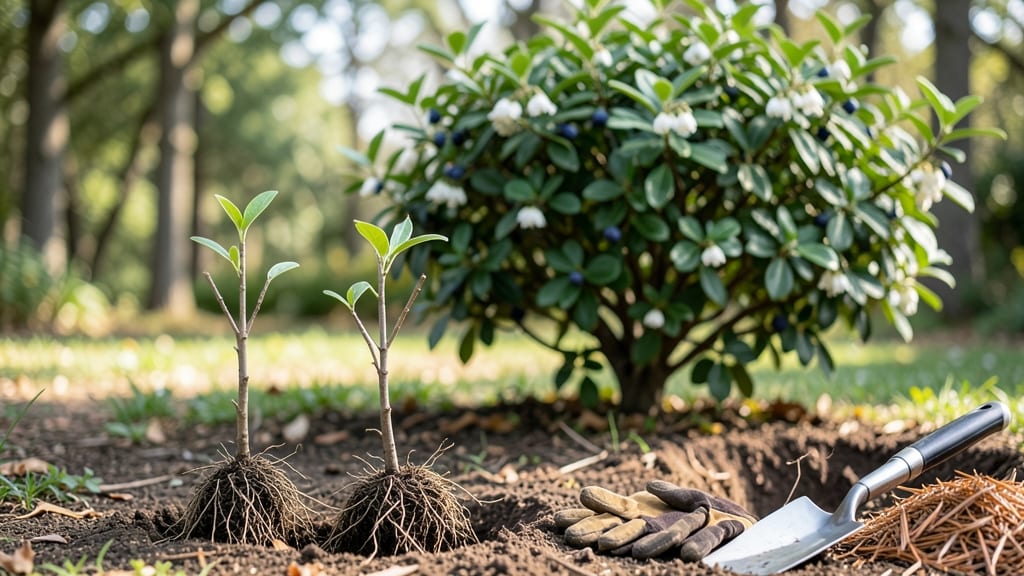
Timing your blueberry bush 🫐 planting in Michigan could mean the difference between a thriving harvest and years of frustration. The wrong window risks stunted growth or winter damage, while the perfect moment sets your bushes up for decades of sweet berries.
Michigan's 5b-6b climate gives you two ideal planting seasons: early spring (April) or fall (September-October). But with frost dates varying dramatically from the Upper Peninsula to southern Michigan, getting this right matters more than you might think.
I'll break down exactly when to plant in your specific region, how to prepare your soil for these acid-loving shrubs, and what to watch for after you put them in the ground. Let's make sure your blueberries get the best possible start.
Whether you're dealing with Michigan's heavy clay soils or unpredictable spring weather, these strategies will help you avoid common pitfalls. You'll discover how to time your planting with local frost patterns and create the perfect conditions for robust growth.
Michigan’s blueberry planting zones: frost-date timeline by region
Michigan’s diverse climate—from the Upper Peninsula’s harsh winters to Southern Michigan’s milder zones—means blueberry planting windows vary dramatically. Understanding your USDA Zone (4-6) and last-frost dates is critical to avoid transplant shock or winter damage.
Northern varieties like ‘Northblue’ thrive in Zone 4, while ‘Duke’ or ‘Jersey’ suit Zone 6’s warmer pockets.
In Northern Michigan (Zones 4-5), aim for late April to early May planting after the last frost, typically around April 15-30. Southern Michigan (Zones 5b-6b) offers a 6-week window: early April to mid-May for spring or September to early October for fall.
Fall planting gives roots time to establish before winter, but avoid planting too late—6 weeks before first frost is ideal.
Here’s how Michigan’s regions break down for optimal planting timing, including frost-free benchmarks and variety recommendations:
| Region | USDA Zone | Last Frost | First Frost | Best Planting Window | Recommended Varieties |
|---|---|---|---|---|---|
| Upper Peninsula | 4-5 | May 1-15 | October 1-15 | Late April–Early May (spring only) | ‘Northblue’, ‘Patriot’, ‘Bluecrop’ |
| Northern Lower Peninsula | 5a-5b | April 15-30 | October 10-25 | Early April–Mid-May (spring) OR September–Early October (fall) | ‘Jersey’, ‘Bluegold’, ‘Chippewa’ |
| Southern Michigan | 5b-6b | April 1-15 | October 20-November 5 | Early April–Mid-May (spring) OR September–Mid-October (fall) | ‘Duke’, ‘Premier’, ‘Top Hat’ |
For Northern Michigan, stick to spring planting only—fall planting risks winter kill due to early frosts. In Southern Michigan, fall planting is ideal if soil isn’t frozen, as cooler temps reduce transplant stress. Always check your local Michigan State University Extension frost maps for year-to-year variations.
Pro tip: Use frost cloth if planting early spring to protect young bushes from late frosts (common in May). In Zone 4, delay planting until soil warms to 45°F—cold soil stunts root growth.
Test your soil’s pH (4.5-5.5) before planting; Michigan’s clay soils often need sulfur amendments to acidify.
If you’re in Zone 6b, like Southeast Michigan, you can push fall planting into early November—just ensure roots have 4-6 weeks to establish before ground freezes. Varieties like ‘Duke’ (early ripening) are better suited for shorter seasons, while ‘Bluecrop’ thrives in longer growing zones.
Remember: Bareroot plants (common in spring) must go in immediately after purchase—their roots dry out fast. Potted plants (available spring/fall) give you flexibility but cost more. For Michigan’s clay-heavy soils, amend with peat moss or pine bark to improve drainage and acidity.
🌱
Bareroot vs. potted blueberries: Michigan-specific planting strategies
Michigan gardeners face a critical choice when planting blueberry bushes: bareroot or potted plants. Bareroot bushes are spring-only options that arrive dormant, while potted plants offer spring or fall flexibility. The right choice depends on your timeline and soil readiness.
Bareroot varieties are cheaper and easier to transport but require immediate planting upon arrival. Potted bushes, however, let you plant in fall (September-October) or spring (April), giving you more scheduling control. For Michigan's variable spring temperatures, potted plants often win.
Your soil must be well-draining and acidic (pH 4.5-5.5). Michigan's heavy clay soils often need amendments like peat moss or sulfur to meet these needs. Test your soil before planting—blueberries won't thrive in alkaline conditions.
Transplant shock is a real risk in Michigan's unpredictable spring weather. Potted plants have an advantage because their root systems are already established. Bareroot bushes need immediate watering and mulching to prevent root exposure and drying.
Bareroot vs. Potted Blueberries
| Factor | Bareroot | Potted |
|---|---|---|
| Planting Window | Spring only (April) | Spring or fall |
| Cost | More affordable | Higher price |
| Root System | Dormant, fragile | Established |
| Transplant Shock Risk | Higher | Lower |
| Soil Prep Needed | Critical before planting | Critical but flexible |
For Michigan's Northern regions (UP and Northern Lower Peninsula), fall planting (September) is ideal for potted bushes. The cooler temperatures help roots establish before winter. In Southern Michigan, you can push planting into early November with proper mulching.
Regardless of your choice, water deeply after planting and apply a 2-3 inch layer of mulch to retain moisture and regulate soil temperature. This is especially important during Michigan's hot summers and cold winters.
If you're planting bareroot bushes in spring, soak the roots for 2-4 hours before planting to rehydrate them. For potted plants, water thoroughly the day before transplanting to reduce stress. Both methods require gentle handling to avoid damaging delicate roots.