
Plants
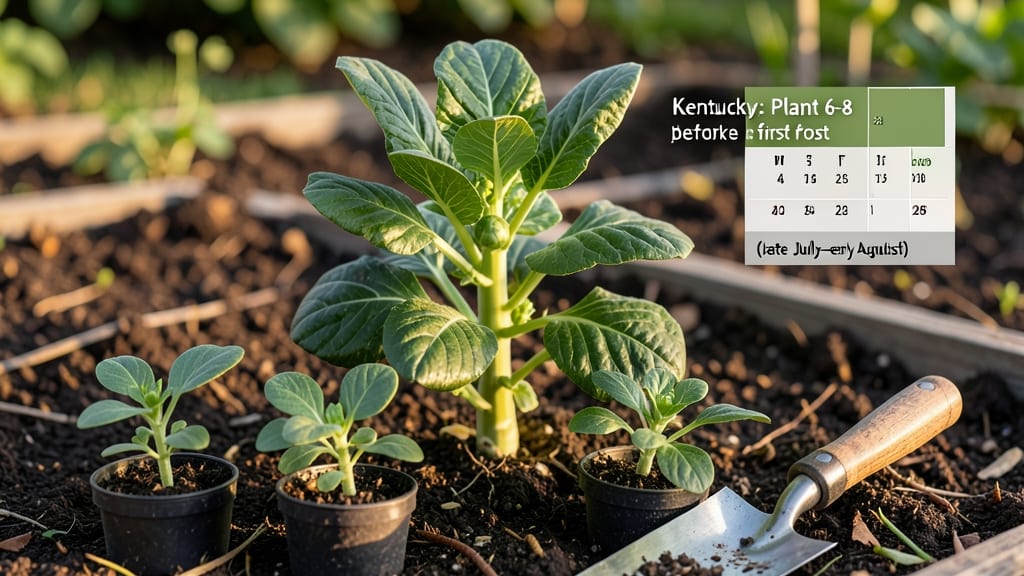
Timing your Brussel sprouts planting in Kentucky can make or break your harvest—get it wrong, and you might end up with bitter, stunted 🥦 or worse, no crop at all.
The key lies in those narrow windows between frost dates, where cool nights and mild days create the perfect conditions for these hardy greens to thrive.
If you’ve ever wondered why some gardeners in Louisville or Lexington swear by early spring plantings while others in Bowling Green prefer fall, it all comes down to USDA Zone 6a’s unpredictable shifts.
The right moment isn’t just about the calendar—it’s about soil warmth, daylight hours, and knowing when to dodge those sneaky late frosts that can nip your seedlings in the bud.
In this guide, I’ll break down the exact planting deadlines for both spring and fall, so you can avoid common mistakes and extend your harvest from October straight through December.
Whether you’re a first-time gardener or a veteran with a few failed batches behind you, these insights will help you plan with confidence.
Ready to turn your Kentucky garden into a Brussel sprouts powerhouse? Let’s dive into the science—and the secrets—behind nailing your planting schedule for a harvest that’ll impress even the pickiest eaters.
Kentucky’s frost-free deadlines for planting Brussel sprouts by Zone (6a-7b)
Kentucky’s USDA Zones 6a-7b create a unique challenge for Brussel sprouts growers—cool nights and warm days demand precise timing. The difference between a 100-day harvest and a failed crop often comes down to knowing your last frost date and adjusting for microclimates.
In Louisville (Zone 6b), you’ve got about 165 frost-free days, while Bowling Green (Zone 7b) enjoys an extra week or two of growing season.
For most Kentucky gardeners, the ideal planting window falls between mid-March to early April for spring plantings and late July to early August for fall. But these dates shift slightly depending on whether you’re starting with direct-sown seeds or transplanting seedlings.
Let’s break down the exact deadlines by zone to ensure your Brussel sprouts get off to the right start.
🌱
If you’re planting direct seeds, aim to sow them 4-6 weeks before your last frost date. This gives seedlings enough time to establish roots before warmer weather arrives. For transplants, wait until soil temperatures hit 45°F (7°C)—a soil thermometer is your best friend here.
In Kentucky, this usually aligns with mid-April for spring and early September for fall.
For fall plantings, the goal is to have 90-100 days of growth before the first frost. This means starting seeds indoors in mid-July or transplanting late July to early August. The Ruby Ball variety, for example, matures in 95 days, making it ideal for Kentucky’s shorter fall season.
One common mistake I see in Kentucky gardens? Planting too early in spring when soil is still cold. Seeds won’t germinate until soil reaches 40°F (4°C), and cool, wet conditions can lead to damping off.
Always check soil temperature with a probe—it’s the surest way to avoid wasted effort.
🌡️
Pro tip: Use row covers or cold frames to extend your planting window by 2-3 weeks in spring or fall. This is especially useful in Zone 6a, where frosts can linger into May.
Just remove covers during the day to prevent overheating and add them back at night for frost protection.
Finally, remember that microclimates matter. A south-facing slope in Bowling Green might be 5°F warmer than a low-lying area in Paducah. Pay attention to where frost collects in your garden—those low spots are the first to freeze, so adjust your planting dates accordingly.
✂️
Best Brussel sprout varieties for Kentucky gardens & their planting timing
Choosing the right Brussel sprouts variety for your Kentucky garden isn’t just about flavor—it’s about matching your planting timeline to the variety’s days-to-maturity. With Kentucky’s USDA Zones 6a-7b, some varieties thrive in early spring plantings while others excel in fall.
Let’s break down the top picks and their ideal planting windows to maximize your harvest.
For spring plantings, focus on varieties with 90-100 days to maturity, like 'Long Island Improved' or 'Ruby Ball.' These work perfectly when seeded 4-6 weeks before your last frost date (typically mid-March to early April).
In contrast, fall plantings benefit from faster-maturing varieties like 'Tasty Purple' or 'Jade Cross,' which can be seeded late July to early August for a harvest before winter sets in.
Here’s how these varieties stack up for Kentucky’s climate:
If you’re aiming for a year-round harvest, consider planting a mix of varieties. For example, start with 'Long Island Improved' in early April for a fall harvest, then follow up with 'Jade Cross' in late July to extend your season into early winter.
This staggered approach ensures you’re always picking fresh, flavorful sprouts while avoiding the risk of bolting (premature flowering) in Kentucky’s heat.
Pro tip: Ruby Ball and Tasty Purple are my top recommendations for Kentucky gardens because they handle our cool nights and warm days better than other varieties. Their deep colors also indicate higher antioxidant levels, making them a nutritional powerhouse for your family’s meals.
Don’t forget to adjust your soil prep based on the variety. All Brussel sprouts prefer well-draining, slightly acidic soil (pH 6.0-7.0), but faster-maturing varieties like 'Jade Cross' can tolerate slightly poorer soil conditions if you’re short on time for amending beds.