
Plants
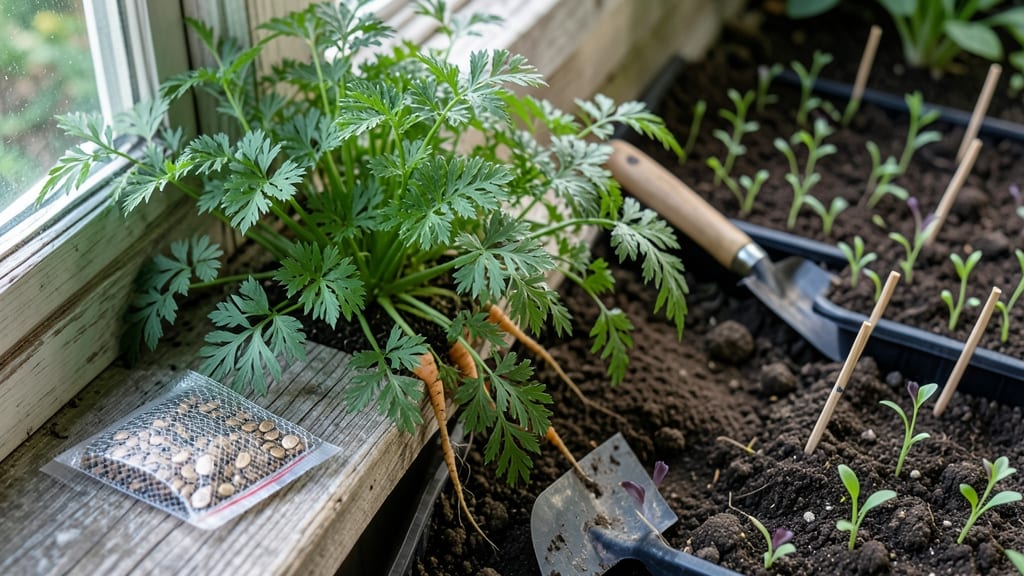
If you’ve ever planted 🥕 carrots in North Carolina only to watch them bolt into bitter greens before you could harvest a single root, you’re not alone.
The perfect planting window isn’t just about the calendar—it’s about understanding your microclimate, whether you’re in the coastal warmth of Wilmington or the cooler Piedmont hills of Raleigh.
Here’s the game-changer: timing your carrots 2–3 weeks before your last frost date (usually mid-April) gives them the head start they need, but that’s just the beginning. Fall plantings in August–September can yield sweeter roots if you time them right to avoid early frost.
The key? Knowing when soil temps hit 50°F and how your county’s frost patterns differ from the next one over.
I’ve broken down the science behind North Carolina’s USDA Zones 7a–8b to show you exactly when to sow seeds for zero bolt risk.
Whether you’re a beginner or a seasoned gardener, these insights will help you skip the guesswork and grow carrots that are crisp, sweet, and ready to harvest by May–June or October–November.
Let’s dive into your county-by-county planting schedule—because in NC, the difference between a stellar carrot crop and a failed one often comes down to just a few weeks of timing.
North Carolina carrot planting calendar by microclimate zone (avoid bolting)
North Carolina’s diverse climate—from the Coastal Plain’s mild winters to the Mountains’ early frosts—means your carrot planting timeline should vary by region. The key is planting when soil temperatures hit 50–60°F and avoiding long summer heat that triggers bolting.
Let’s break it down by zone, so you can plant 2–3 weeks before your last frost for spring crops and 8–10 weeks before first frost for fall harvests.
For Coastal NC (Zones 8a–8b), like Wilmington or Morehead City, your last frost typically lands in mid-February to early March. This means you can start sowing carrots as early as late January under row covers or wait until February 15–March 1 for direct sowing.
The goal? Beat the hot July–August heat that causes bolting. In fall, plant August 1–September 15 for harvests before frost.
In the Piedmont (Zones 7a–7b), including Raleigh and Greensboro, last frosts arrive March 15–April 1. Plant carrots March 1–April 15 for spring, using shade cloth if temperatures spike above 80°F.
For fall, sow July 15–August 15 to avoid bolting. The Piedmont’s humidity also demands well-draining soil to prevent rot.
For Mountain regions (Zones 6a–7a), like Asheville or Boone, last frosts can linger until April 15–May 1. Start sowing as early as February 15 under row covers or wait until March 15–April 1 for direct sowing.
Fall plantings should begin July 1–August 1 to finish before first frost in October. The Mountains’ cooler nights slow bolting but require earlier starts to maximize harvests.
🌱 North Carolina Carrot Planting Calendar by Microclimate
| Region | USDA Zone | Spring Planting Window | Fall Planting Window | Key Tip |
|---|---|---|---|---|
| Coastal Plain | 8a–8b | Late Jan–Early Mar | Aug 1–Sep 15 | Use shade cloth in summer |
| Piedmont | 7a–7b | Mar 1–Apr 15 | Jul 15–Aug 15 | Avoid rocky soil |
| Mountains | 6a–7a | Feb 15–Apr 1 | Jul 1–Aug 1 | Start early under covers |
Pro tip: Use succession planting every 2 weeks in spring and fall to stretch your harvest. For example, in Raleigh (Piedmont), sow a batch on March 15, another on April 1, and a final one on April 15 for continuous carrots through June.
The same logic applies to fall plantings—space them 3 weeks apart to avoid bolting from heat stress.
Soil temperature is your best indicator for planting. Use a soil thermometer to confirm 50–60°F at a 2-inch depth. In Coastal NC, this often aligns with late February, while in the Mountains, it might not happen until mid-April.
If your soil is too cold, carrots won’t germinate—wait until conditions are right to avoid wasted seeds.
Don’t forget about fall planting, which is often overlooked but yields sweeter carrots in NC’s cooler weather. In Asheville (Mountains), aim for July 1–August 1 to harvest before first frost in October.
In Wilmington (Coast), you can push it to September 1 thanks to milder winters. The key is planting 8–10 weeks before frost to ensure mature roots.
For container gardening, adjust your timeline slightly. Containers warm up faster, so plant 1–2 weeks later than in-ground beds. In Raleigh, this might mean March 15–April 1 instead of March 1–March 15.
Use well-draining potting mix and keep soil moist—containers dry out quickly, stressing carrots and increasing bolting risk.
Finally, track your local frost dates using resources like the NC State Extension’s Frost Calculator. Enter your zip code to get precise last-frost dates for your exact location.
5 Proven techniques to prevent carrot bolting in NC’s unpredictable weather
Carrot bolting—when your plants send up bitter flowers instead of sweet roots—is a NC gardener’s nightmare. The culprit? Temperature swings, drought stress, or overcrowded seedlings all trigger this unwanted life cycle.
But with these 5 science-backed techniques, you can outsmart bolting and keep your carrots growing roots instead of flowers.
First, time your plantings to avoid NC’s heat spikes. Carrots bolt when soil temps hit 80°F+. In the Piedmont, that means starting seeds by March 15th for spring harvests, while coastal gardeners can push it to April 1st thanks to milder nights.
For fall crops, sow August 1st–15th to beat early frosts.
Here’s how to lock in success—even with NC’s unpredictable weather:
Use shade cloth in summer
Drop a 30–50% shade cloth over seedlings when daytime temps hit 75°F+. This keeps soil temps 10°F cooler and delays bolting by 2–3 weeks. Remove it once roots are 2 inches long to avoid leggy growth.
Master soil moisture like a pro
Carrots bolt when soil dries out. Use drip irrigation or soaker hoses to deliver 1 inch of water weekly (deep soak, not light sprinkles). Mulch with straw to retain moisture—critical in NC’s drought-prone summers.
Pick bolting-resistant varieties
Skip ‘Nantes’ for summer plantings—it bolts easily. Instead, choose ‘Danvers Half Long’ (heat-tolerant) or ‘Sweet Crunch’ (slow to bolt). For fall, ‘Paris Market’ matures in 50 days, beating frost before bolting.
Extend seasons with row covers
Use floating row covers to push spring plantings 2 weeks earlier or fall harvests 3 weeks later. They protect from frost and heat stress, giving carrots a longer growing window. Remove covers when flowers appear to prevent bolting.
Thin seedlings aggressively
Overcrowded carrots compete for nutrients and bolt faster. Thin seedlings to 2–3 inches apart when they’re 2 inches tall. Use scissors to avoid disturbing roots—this reduces stress and keeps them focused on growing roots, not flowers.
Pro tip: In Zone 7a (Mountains), start seeds indoors 6–8 weeks before last frost to harden off seedlings. This gives them a 2-week head start over bolting triggers in May’s warm nights. For coastal areas, direct-sow in February if soil temps stay below 60°F.
With these techniques, you’ll outsmart NC’s weather and harvest crisp, sweet carrots—not bitter greens. Try one method this season and watch the difference!