
Plants
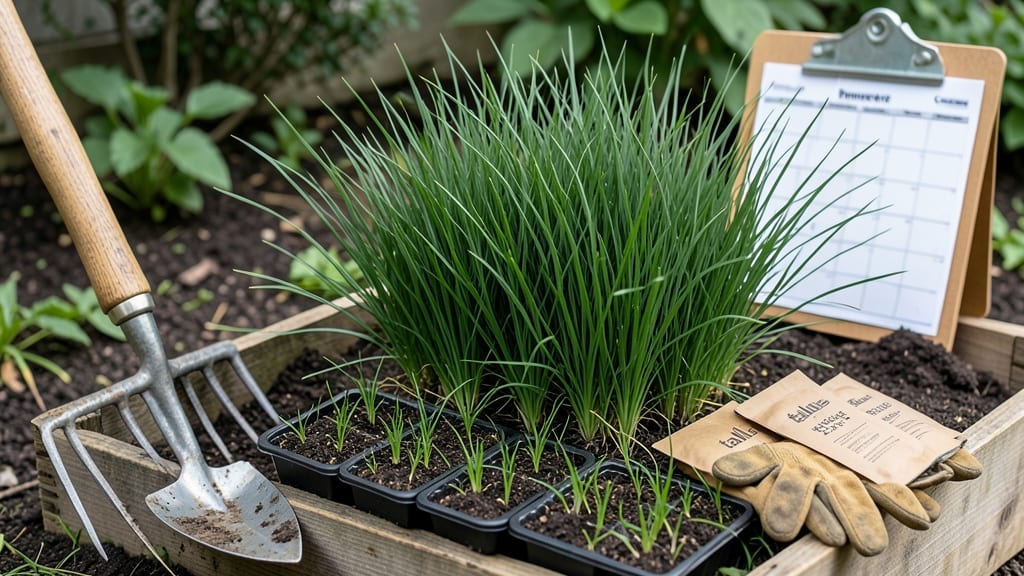
Timing your fescue grass planting in Arkansas isn't just about the calendar—it's about outsmarting the state's tricky frost patterns and soil shifts.
Plant too early, and your 🌱 seedlings could get nipped by an unexpected chill; too late, and you miss the sweet spot for root growth before winter sets in.
Most gardeners in zones 7a-8b swear by late summer to early fall (August-October), but here's the catch: Arkansas' microclimates mean your neighbor's perfect schedule might leave your lawn struggling.
We'll break down exactly when to plant based on your county's last frost dates—so you can skip the guesswork and get it right the first time.
Why does this matter? Because a well-timed planting means stronger roots, fewer patches, and a lawn that stays green when others turn brown. I'll show you how to read your local climate signals—soil temps, rainfall trends, and even elevation—to adjust your schedule like a pro.
Ready to transform your Arkansas lawn from patchy to picture-perfect? Let's dive into the county-by-county planting guide that actually works for your specific growing conditions—no more wasted seed or frustrated weekends spent fixing mistakes.
Arkansas county-by-county fescue planting timeline based on last frost dates
Arkansas’ diverse climate—from the humid Delta to the cooler Ozark Mountains—means frost dates vary drastically by county. Planting tall fescue or fine fescue outside these windows risks frost damage or slow germination.
I’ve broken down the optimal planting months by USDA Hardiness Zones and elevation, using data from the University of Arkansas Extension.
For most of Arkansas (USDA Zones 7a-8a), the ideal planting window is late August through October, giving seeds 4-6 weeks to establish before the first frost.
Northern counties like Benton or Washington (Zone 7a) should aim for September 1-October 15, while southern counties like Chicot or Desha (Zone 8a) can extend to mid-November if soil temps stay above 55°F.
Elevation plays a huge role: Ozark counties like Carroll or Newton (1,000+ ft) may need to delay planting until mid-September to avoid early frosts. Meanwhile, lowland Delta regions like Lee or Phillips can start as early as mid-August due to later frost dates.
Here’s your county-by-county planting timeline, categorized by frost risk:
Pro Tip: Use a soil thermometer to confirm temps are 55–70°F before planting. If your county isn’t listed, check the National Weather Service for local frost predictions—Arkansas’ microclimates can shift frost dates by 2+ weeks!
For overseeding existing lawns, aim for early September to let new grass outcompete weeds before winter. In high-traffic areas, consider slit-seeding to ensure seed-to-soil contact.
Missed the fall window? Late winter planting (February–March) works too, but prioritize weed control first—fescue needs 6+ hours of sun to thrive.
🌱
How to adjust planting time for Arkansas microclimates: soil temperature, rainfall, and elevation factors
Arkansas’ diverse geography—from the humid Delta lowlands to the cooler Ozark Mountains—means your fescue planting timeline should never be one-size-fits-all. Even neighboring counties can have 5°F temperature differences or 2-week frost date variations, so flexibility is key.
Start by checking your local USDA Hardiness Zone (most of Arkansas falls in 7a-8a) and adjust your planting window accordingly.
For lowland areas (e.g., Arkansas Delta), aim to plant 4-6 weeks before the first frost, typically mid-August to early September. These regions stay warmer longer, but soil moisture can become a challenge—monitor rainfall forecasts and water deeply if dry spells hit.
In contrast, high-elevation zones (e.g., Ozark National Forest) may need to delay until late September to avoid early frosts.
- Soil Temperature: Use a soil thermometer—ideal planting temps are 60-75°F at 4" depth. Cooler soils (below 55°F) slow germination.
- Rainfall Forecasts: Check NOAA’s 7-day outlook. Plant when 1-2 inches of rain are predicted in the first 2 weeks to reduce irrigation needs.
- Elevation Adjustments: Add 1 week per 500 ft elevation gain. For example, Mount Magazine (highest point) may need to wait until October.
- Humidity Zones: In high-humidity areas (e.g., Little Rock), plant earlier to avoid fungal risks from prolonged dampness.
- Drought-Proofing: If planting in dry spells, use hydro-mulch or starter fertilizer with wetting agents to retain moisture.
Don’t rely solely on calendar months—soil conditions are your true guide. Test your soil’s moisture and temperature for 3-5 days before planting. If the top 2 inches dry out within 24 hours, delay until rainfall returns.
For sandy soils (common in northwest Arkansas), plant 2 weeks earlier to capitalize on residual summer warmth, while clay-heavy soils (e.g., southeast Arkansas) may need a 1-week delay to prevent waterlogging.
Pro tip: Use Arkansas Cooperative Extension’s frost maps (available [here](https://www.uaex.edu)) to pinpoint your last frost date. For example, Jonesboro averages a November 5 frost, while Fayetteville holds off until November 15. Planting 6 weeks before these dates ensures your fescue establishes roots before winter dormancy.
If you’re overseeding an existing lawn, late August to early September is ideal across most of Arkansas. This window gives seedlings 6-8 weeks of growth before daytime temps drop below 60°F.
For new lawns, stretch your timeline to August through October, but avoid planting after October 15—new grass won’t have time to develop deep roots before winter.
Remember: Arkansas’ microclimates can create 10°F differences within 20 miles. When in doubt, plant on the later side—fescue is more forgiving when established in cooler soil than when rushed in late summer heat. 🌱