
How To
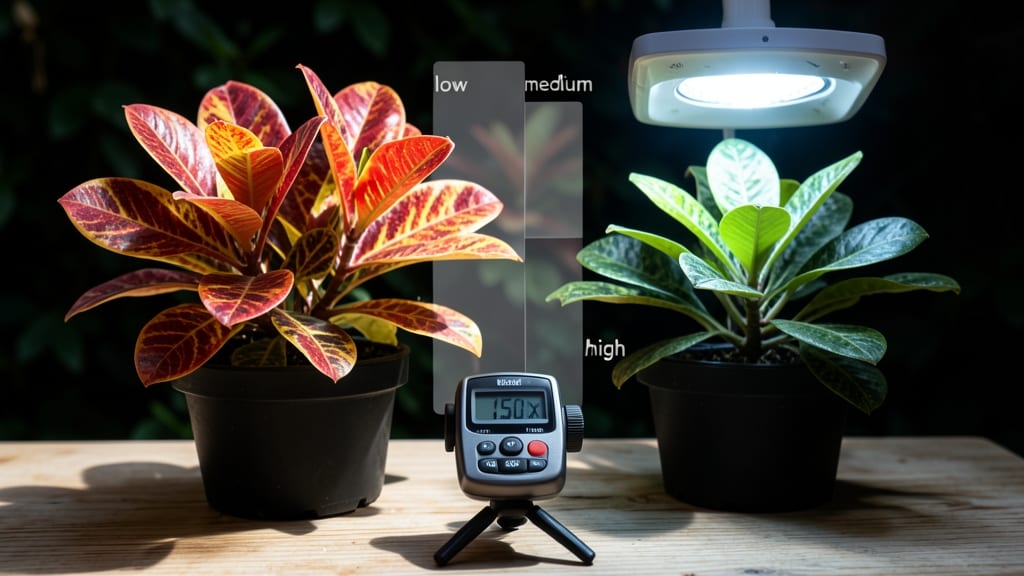
If your Croton 🌺 plant's leaves are losing their vibrant colors or stretching toward the light, you’re clearly asking: how much light does a Croton plant need? This tropical beauty thrives when bathed in gentle, filtered light—think east-facing windows or a spot just a few feet from a south-facing one.
Too little light, and your Croton will become leggy and pale, while too much direct sun can scorch those stunning variegated leaves. The key is finding that sweet spot where your plant gets 4-6 hours of bright, indirect light daily without harsh midday rays.
Don’t worry if your home doesn’t have perfect natural lighting—we’ll show you how to recreate ideal conditions, whether through strategic window placement or supplemental grow lights. With the right light balance, your Croton will reward you with bold, healthy foliage all year round.
Ready to transform your plant’s appearance? Let’s dive into the exact light requirements your Croton needs to stay thriving, along with signs to watch for when adjustments are needed.
 Best Window Placement
Optimal light requirements for Croton plants: bright indirect sunlight explained
Crotons (Codiaeum variegatum) are tropical divas that thrive in bright indirect sunlight, making them perfect for east or north-facing windows. In nature, they grow under the dappled shade of rainforest canopies, which mimics the filtered light you should replicate indoors or outdoors.
The ideal light exposure for crotons is 4 to 6 hours of bright, indirect sunlight daily. This means placing them near a window where sunlight streams in gently—think morning sun or afternoon shade. Too little light, and their stunning variegated leaves lose their vibrant colors and patterns.
Here’s how to visualize bright indirect light: Imagine standing under a sheer curtain on a sunny day. The light feels warm but not harsh, and you can still read a book without squinting. That’s the perfect light intensity for your croton.
Outdoors, position your croton in a spot that gets morning sun and afternoon shade. Harsh afternoon rays (especially between 12 PM and 4 PM) can cause leaf scorch, turning their edges crispy and brown.
If you’re in a hot climate, even morning sun can be too intense—opt for dappled shade under a tree instead.
| Light Condition | Description | Best For |
|---|---|---|
| Bright Indirect Light | Morning sun + filtered afternoon light (e.g., east window, sheer curtain) | Ideal for vibrant foliage and growth |
| Low Light | North window or 10+ feet from a south window | Temporary survival (leads to pale leaves, leggy growth) |
| Direct Sun | South/west window without shade (especially 12–4 PM) | Causes leaf scorch and crispy edges (avoid!) |
| Artificial Grow Lights | LED grow bulbs 6–12 inches above plant (12–14 hrs/day) | Best for indoor crotons in low-light homes |
Seasonal adjustments are key! During winter months, when sunlight is weaker, your croton may need to move closer to the window (within 2–3 feet) to maintain its energy.
Conversely, in summer, if you notice leaves curling or turning yellow, it’s a sign to increase shade—move the plant 1–2 feet back or use a sheer curtain to diffuse the light.
Pro tip: Rotate your croton’s pot quarter-turn weekly to ensure all sides get even light exposure. This prevents one-sided growth and keeps those showstopping variegated leaves symmetrical and lush.
If you’re unsure whether your spot qualifies as "bright indirect," do this quick test: Hold a piece of white paper near your plant’s leaves. If the paper gets lightly yellowed after 1 hour, the light is too intense.
If it stays pure white or barely tinted, you’ve nailed the perfect balance.
Remember, crotons are flexible but finicky. They can tolerate lower light for short periods (like moving to a dimmer room for a week), but chronic underlighting will dull their colors and stunt growth. On the flip side, even a few hours of direct sun can cause irreversible damage.
For outdoor crotons in USDA Zone 10+, treat them like a tropical houseplant—bring them indoors before temperatures drop below 50°F (10°C). Their leaves are sensitive to cold drafts and sudden temperature swings, which can stress the plant and make it more vulnerable to light-related issues.
Signs your Croton isn’t getting enough light (and how to fix it)
Your Croton 🌺 sends clear signals when it’s starving for light. Watch for pale, washed-out leaves that lose their vibrant colors—this is the first warning sign.
The variegated patterns (like yellow, orange, or red streaks) will fade to a dull green, making your plant look like a plain money tree instead of the stunning tropical beauty it should be.
Another dead giveaway? Leggy growth, where stems stretch unnaturally tall and thin as the plant reaches for light. New leaves will be smaller than normal, almost like they’re struggling to unfurl properly.
If you notice these symptoms, your croton is begging for more brightness—now’s the time to act before the damage becomes permanent.
Here’s the quick troubleshooting