
Plants
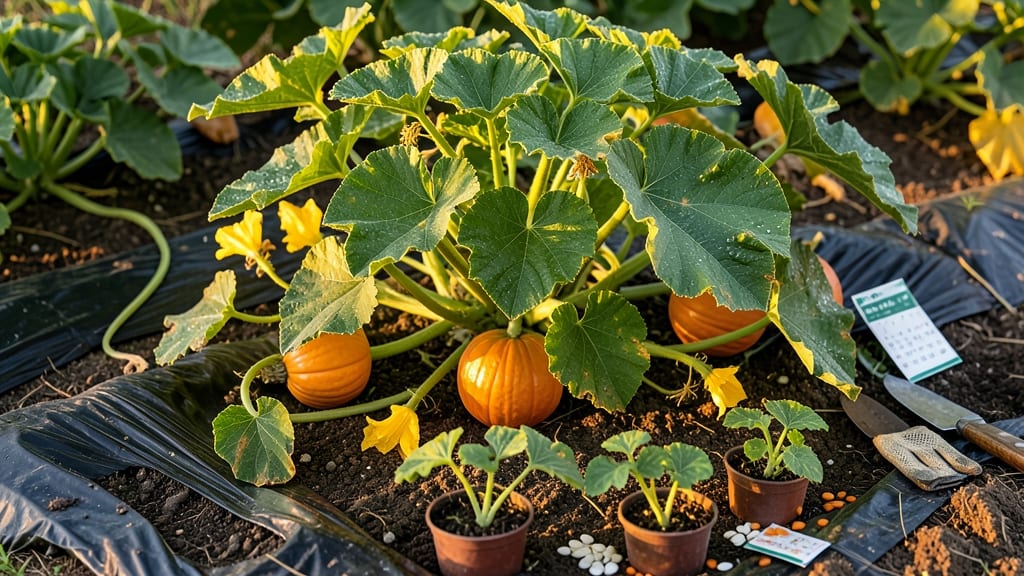
If you’ve ever wondered when to plant pumpkins in Utah without risking frost damage, the answer isn’t as simple as checking a calendar—it’s about reading your local microclimate.
Utah’s varying elevations and frost patterns mean your neighbors’ planting schedule might not work for you, especially if you’re in Salt Lake City’s 7a zone or the cooler highlands of Park City.
Most Utah gardeners aim to plant 🎃 pumpkin seeds between mid-April and early June, but timing depends on soil warmth and frost risk. Lower elevations like St. George can start earlier, while higher areas near Heber Valley should wait until late May to avoid late spring freezes.
The key? Waiting until soil temperatures hit 60°F—that’s when those seeds will finally sprout reliably.
Don’t let Utah’s unpredictable weather derail your harvest. I’ll break down exactly how to align your planting with your specific county’s frost dates, plus pro tips to extend the growing season if frost sneaks in early.
Whether you’re a first-time gardener or a veteran with a few failed pumpkin patches behind you, this guide ensures you’ll know the perfect moment to dig in.
Ready to grow a pumpkin that’s as big as your backyard? Let’s get started with the foolproof schedule that works for Utah’s unique growing conditions—no more guessing games, just bountiful harvests.
Utah’s frost-free planting zones: when to start pumpkin seeds by county
Utah’s diverse geography—spanning from the high deserts of the Wasatch Front to the cooler Eastern Plateau—creates wildly different last frost dates.
In Salt Lake City (Zone 7a), gardeners typically plant pumpkins by mid-May, while St. George (Zone 8a) gardeners can start as early as late March. High-elevation areas like Park City (Zone 5b) face a 2-3 week later planting window to avoid frost damage.
To simplify, I’ve mapped Utah’s key planting zones and their ideal pumpkin planting windows. These deadlines assume you’re using direct-sown seeds—the safest method for Utah’s short season. If you’re transplanting seedlings, adjust by 2-4 weeks earlier (more on this in the next section).
Here’s how to match your county to the right frost-free timeline:
| Region | USDA Zone | Last Frost Date | Planting Window | Harvest Window |
|---|---|---|---|---|
| Wasatch Front (Salt Lake, Ogden, Provo) | 7a | Mid-April | Mid-May to early June | Late Sept–Oct |
| Southern Utah (St. George, Cedar City) | 8a | Late March | Late March–April | Mid-Sept–Oct |
| High Elevation (Park City, Heber Valley) | 5b | Late May | Late May–June | Early Sept |
| Eastern Plateau (Price, Duchesne) | 6a | Early April | Early May–mid-June | Late Sept–early Oct |
🌱 Pro Tip: Check your local Almanac frost dates for the most precise timeline.
For high-elevation gardens like those in Park City or Heber Valley, consider shorter-season varieties like ‘Jack Be Little’ (75-day maturity) or ‘Howden’ (80 days). These can squeeze in before the first frost, which often hits by mid-September at these altitudes.
In contrast, Southern Utah’s longer season allows for larger varieties like ‘Sugar Pie’ (90 days) or ‘Cinderella’ (85 days).
One critical mistake I see Utah gardeners make? Planting too early in cold, wet soil. Pumpkin seeds need soil temperatures of 60°F+ to germinate. Use a soil thermometer (just $10 at garden centers) to confirm readiness.
If your soil is below 60°F, wait—even if the calendar says it’s spring. Cold soil delays germination by weeks, wasting your precious short season.
Another trick for late-planting areas (like high elevation): use black plastic mulch to warm the soil faster. Lay it down 2-3 weeks before planting to give the ground a head start.
This can shave 10-14 days off your planting timeline by raising soil temps by 5-10°F. Just remove the mulch once vines start spreading to prevent overheating.
Finally, don’t overlook microclimates within your area. A spot near a south-facing wall or sunny slope can add 1-2 weeks to your frost-free window.
For example, my garden in Murray (Zone 7a) gets frost 1 week later than the official Salt Lake City average because of our urban heat island effect. Scout your yard for these warm pockets before planting.
To track frost dates like a pro, bookmark the National Weather Service’s Utah frost forecast or use apps like Old Farmer’s Almanac. These tools send late frost warnings so you can cover young plants if needed. With these tim
Direct-sow vs. transplanting pumpkins: Utah-specific timing strategies
Utah’s short growing season forces tough choices: plant pumpkin seeds directly in your garden or start them indoors for a head start. Direct-sowing is simpler but leaves little room for error, while transplanting adds flexibility but risks shock.
For Utah, I recommend a hybrid approach—start seeds indoors 4-6 weeks before your last frost date (typically late March to early April for most regions), then transplant hardened-off seedlings after soil warms to 60°F+.
If you’re planting directly in the ground, wait until mid-April to early May in lower elevations (like St. George) and late May in high-altitude areas (e.g., Park City).
Use a soil thermometer—pumpkin seeds need consistent warmth to germinate. Pro tip: Plant seeds in hills (4-6 seeds per mound) to improve drainage and reduce disease risk.
For transplanting seedlings, harden them off for 7-10 days before moving them outdoors. Utah’s dry winds can stress young plants, so choose cloudy days or transplant in the late afternoon to minimize shock.
Varieties like ‘Jack Be Little’ (compact) or ‘Howden’ (reliable) are ideal for Utah’s shorter season—they mature in 75-90 days, leaving room for late frosts.
Direct-Sow vs. Transplanting: Utah Pros & Cons
- ✅ No transplant shock risk
- ✅ Cheaper (no seed trays)
- ✅ Better root establishment in native soil
Best for: Low-elevation Utah (e.g., St. George, Provo)
- ✅ Earlier harvest (4-6 weeks head start)
- ✅ Controlled conditions (better germination)
- ✅ Ideal for short seasons (e.g., Park City)
Best for: High-elevation Utah or late frosts
If you’re transplanting, time it so seedlings are 3-4 weeks old with 2-3 true leaves when you move them. For direct-sowing, use black plastic mulch to warm soil faster—this can shave 10-14 days off your planting window.
In Utah’s Zone 5b-7b, aim to have pumpkins flowering by early July to ensure fruit matures before frost.
For high-altitude Utah (e.g., Ogden, Heber Valley), consider bush varieties like ‘Sugar Pie’—they mature faster and take up less space. If you’re in Southern Utah (e.g., Moab), you can push planting to early June for late-season varieties, but prioritize drought-tolerant types like ‘Autumn Gold.’
Remember: Utah’s microclimates vary wildly. Check the National Weather Service for your local last frost date, and add 2 weeks of buffer for safety. With the right timing, you’ll go from seed to jack-o’-lantern-ready pumpkins in no time! 🎃