
Plants
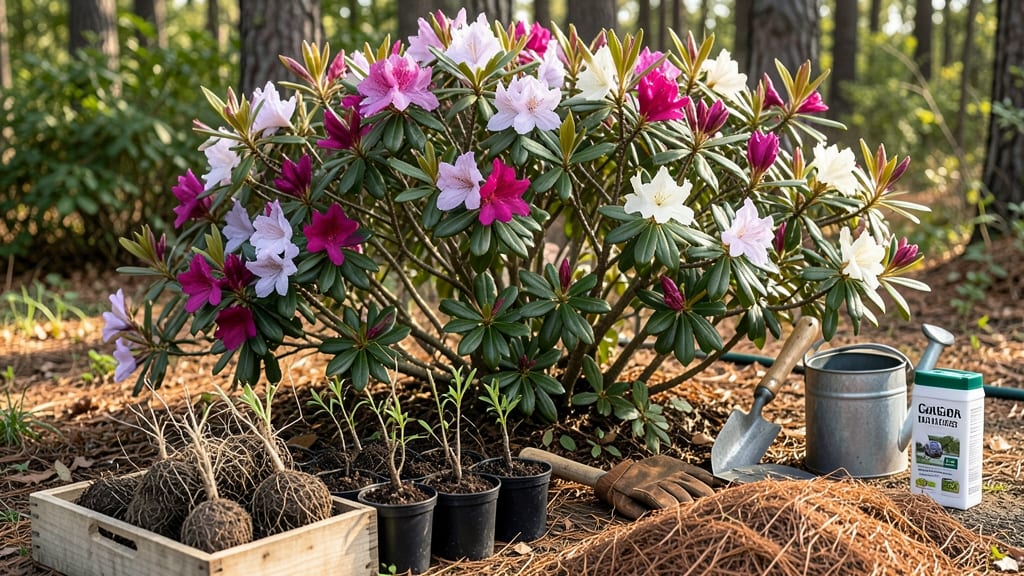
Knowing when to plant azaleas in Arkansas could mean the difference between vibrant blooms and a sad, frost-bitten shrub. With Arkansas' diverse climate—from the humid south to cooler northern zones—timing matters more than you might think.
Plant too early, and your 🌸 azalea could freeze before it takes root; too late, and summer heat might stress it before it establishes.
Most gardeners in USDA zones 7a-8b swear by fall planting (October–November) or early spring (March–April), but Arkansas' microclimates complicate things. Urban areas like Little Rock may have 2-3 weeks more growing time than rural counties, so local frost dates are your real deadline.
Let’s break down the best windows for your specific county to ensure your azaleas thrive.
Why risk waiting too long? A well-timed planting gives your azaleas the 6-8 weeks they need to settle in before extreme heat or cold hits.
Whether you’re in the Arkansas River Valley or the Ozark foothills, we’ll cover soil prep, frost-proofing tips, and even how to stretch your planting season with simple hacks. Ready to get started?
From choosing the right variety for your zone to adjusting for elevation changes, this guide gives you the exact actionable steps to plant azaleas with confidence. No more guesswork—just beautiful, blooming shrubs year after year.
Arkansas azalea planting deadlines by county: avoiding frost zones 6b-8a
Arkansas spans USDA Zones 6b through 8a, which means your azalea planting window varies dramatically from the cooler Ozark Mountains to the warmer Delta regions.
In Zone 6b (e.g., Benton, Washington counties), you have just 4-6 weeks between the last frost and summer heat—while Zone 8a (e.g., Crittenden, St. Francis counties) enjoys a 3-month window for safer planting. Missing these deadlines can leave young roots vulnerable to late spring frosts or summer drought stress.
For most of Arkansas, the ideal planting months are October through November (fall) or March through early April (spring). However, county-specific frost dates can shift these windows by 2-4 weeks.
For example, Northwest Arkansas (e.g., Fayetteville) often sees its last frost around April 15, while Southwest Arkansas (e.g., Texarkana) may wait until March 20.
To avoid guesswork, I’ve broken down planting deadlines by county based on historical frost data from the University of Arkansas Extension. These dates ensure your azaleas establish roots before summer heat or winter freezes hit.
Pro tip: Bare-root azaleas can handle slightly later planting than container-grown varieties, giving you a 2-week buffer in tight windows.
Here’s your county-by-county guide to planting azaleas in Arkansas without frost risk:
Notice how southern counties like Crittenden and St. Francis can plant well into November or even early December without frost risk? Meanwhile, nor
Fall vs. spring planting for azaleas: which works best in Arkansas?
Deciding whether to plant azaleas in fall or spring in Arkansas depends on your county’s frost patterns and soil conditions. Most Arkansas gardeners prefer fall planting (October–November) because cooler temps and consistent moisture give roots a head start before summer heat arrives.
However, spring planting (March–April) works well in southern counties like Chicot or Miller, where frost risks are minimal.
Fall planting allows azaleas to establish roots before winter dormancy, making them more resilient to spring heat. In northern Arkansas (USDA zone 7a), aim to plant by November 15 to avoid early frost damage.
Spring planting, on the other hand, gives you more flexibility in warmer microclimates, but you’ll need to keep soil moist until roots take hold.
The key difference lies in soil temperature. Azaleas thrive when soil stays between 50°F–65°F. Fall planting aligns perfectly with this range, while spring soil can warm too quickly, stressing young plants. In Little Rock or Fayetteville, where nights dip below freezing, fall planting is the safer bet.
Here’s how Arkansas’ climate affects each method:
For gardeners in transition zones (7b–8a), like Pulaski or Saline County, both methods work—but fall planting gives you a 2-week buffer against unpredictable Arkansas weather. If you miss fall, don’t panic: spring planting still succeeds if you water deeply every 3–4 days until roots establish (usually 6–8 weeks).
One final tip: Container-grown azaleas adapt better to late planting than bare-root varieties. If you’re pushing your luck in March or early April, opt for potted plants—they handle transplant shock better and can bloom the same year. For bare-root azaleas, stick to fall or early March to avoid stress.
Ready to pick your planting strategy? Check your county’s last-frost date and soil type—then grab your gloves! 🌸