
Plants
Timing your cantaloupe planting in Virginia could mean the difference between a sweet summer harvest and a bitter disappointment—because those vines hate waiting for warm soil. If you plant too early, your 🍈 might bolt before producing fruit, while late planting risks stunted growth from Virginia’s sweltering heat.
I’ve grown cantaloupes in 6a-8a zones for years, and the key is knowing when to start seeds indoors (as early as March) or when to sow directly (after April 15). The window is tight—get it wrong, and you’ll either freeze out seedlings or watch your plants struggle in the humidity.
What you’ll discover here is the exact heat-loving schedule that works for Virginia’s climate, including soil temperature tricks to prevent bolting and companion plants that boost yields. No more guessing—just a foolproof plan for melons that taste like summer.
Ready to turn your garden into a cantaloupe oasis? Let’s dive into the 10-day window that separates success from frustration—and how to nail it every time.
Virginia’s cantaloupe planting windows: avoiding bolting in hot summers
Virginia’s climate—ranging from USDA zones 5-8—creates a tricky balance for cantaloupe growers. These heat-loving plants bolt (prematurely flower) if planted too early, but also struggle in late-season heat waves. The key? Plant when soil temperatures hit 60°F+ consistently and nighttime temps stay above 55°F.
Northern Virginia (zones 5-6) has last frost dates between March 15–April 15, while southern Virginia (zones 7-8) sees frost-free conditions by March 1–March 15. However, cantaloupe needs warmer soil than most spring crops—waiting for 70°F+ soil temps prevents bolting.
Here’s the critical window: April 15–May 15 for most of Virginia, with late May–early June as a backup for northern regions. Southern Virginia gardeners can also try a second planting in early June for a fall harvest.
| Region | USDA Zone | Last Frost Date | Optimal Planting Window | Soil Temp Threshold |
|---|---|---|---|---|
| Northern VA | 5-6 | April 1–15 | May 1–15 | 70°F+ |
| Central VA | 6-7 | March 15–April 1 | April 15–May 1 | 65°F+ |
| Southern VA | 7-8 | February 15–March 1 | March 20–April 30 | 60°F+ |
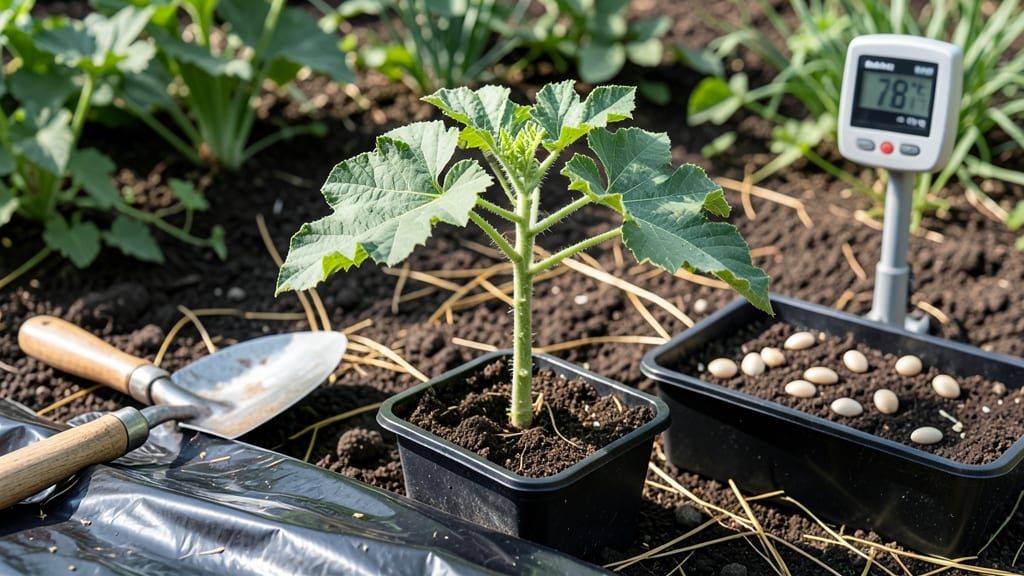
🌡️ Pro Tip: Use a soil thermometer to confirm temps before planting!
For gardeners in cooler microclimates (like mountain regions), consider black plastic mulch or row covers to warm soil faster. These methods can shave 2–3 weeks off your planting timeline by trapping heat near the roots.
One common mistake? Planting cantaloupe too early just because frost is gone. Cool soil temps (below 60°F) cause seeds to rot or sprout poorly. Always test soil with a thermometer for 3 consecutive days before sowing.
Southern Virginia’s longer growing season also allows for succession planting. After your first harvest in July–August, clear out vines and replant seeds for a fall crop, aiming to harvest before first frost (mid-October).
Heat tolerance varies by variety too. ‘Athena’ and ‘Hale’s Best’ handle Virginia’s 90°F+ summers better than ‘Muskett’, which may need afternoon shade in extreme heat. Always check seed packets for heat-tolerant labels.
Finally, monitor nighttime temperatures. Cantaloupe needs warm nights (above 55°F) to set fruit. If nights dip below 50°F, use floating row covers or move plants to a warmer microclimate (like near a south-facing fence).
With the right timing and a few heat-management tricks, Virginia gardeners can enjoy sweet, homegrown cantaloupe from July through September—without the heartbreak of bolting vines. 🍈
Step-by-step planting calendar for Virginia cantaloupe success
Virginia’s 165 frost-free days give cantaloupe just enough time to thrive—but only if you plant strategically. My month-by-month calendar aligns with USDA zones 6a-8a and accounts for Virginia’s humidity spikes and heat waves.
Miss the timing, and you’ll either lose seedlings to cold snaps or watch plants wilt in July’s 90°F+ afternoons.
For gardeners in northern VA (zones 6a-7a), start seeds indoors by March 15 to give them a head start. Transplant outdoors only after May 1, when soil temps hit 70°F+.
Southern Virginia growers (zones 7b-8a) can sow directly April 15–May 15, but protect seedlings with row covers if nights dip below 55°F.
🌱 Pro Tip: Use a soil thermometer—cantaloupe seeds need 60°F+ soil to germinate. If your garden runs cooler, opt for black plastic mulch to warm the soil 2-3 weeks faster.
📅 Virginia Cantaloupe Planting Timeline
-
March 1–15 (Zones 6a-7a)
Start seeds indoors under grow lights (65°F+ soil). Use biodegradable pots to avoid transplant shock. -
April 1–15 (All Zones)
Harden off seedlings (acclimate to outdoors) for 7–10 days before transplanting. Direct sow in southern VA if soil is 60°F+. -
May 1–15 (Critical Window!)
Transplant seedlings or sow directly after last frost (April 15 avg). Space vines 3–4 ft apart—they’ll spread! -
June 1–15
Companion plant with basil or marigolds to repel pests. Thin vines to 2–3 per hill for better air circulation. -
July–August
Harvest time! Watch for creamy rinds and slip stems. Mulch with straw to retain moisture during drought risks.
Virginia’s humidity can turn cantaloupe vines into fungal magnets if you skip spacing. I space my plants 4 ft apart in rows 6 ft apart to improve airflow—this cuts down on powdery mildew by 50%. Pair that with morning watering (never overhead), and your melons will stay disease-free.
For a second harvest, try a late July sowing in southern VA (zones 7b-8a). Use shade cloth during 100°F+ heat waves to protect young plants. Just remember: cantaloupe hates competition—remove weeds within 2 weeks of planting to avoid stunted growth.