
Planting
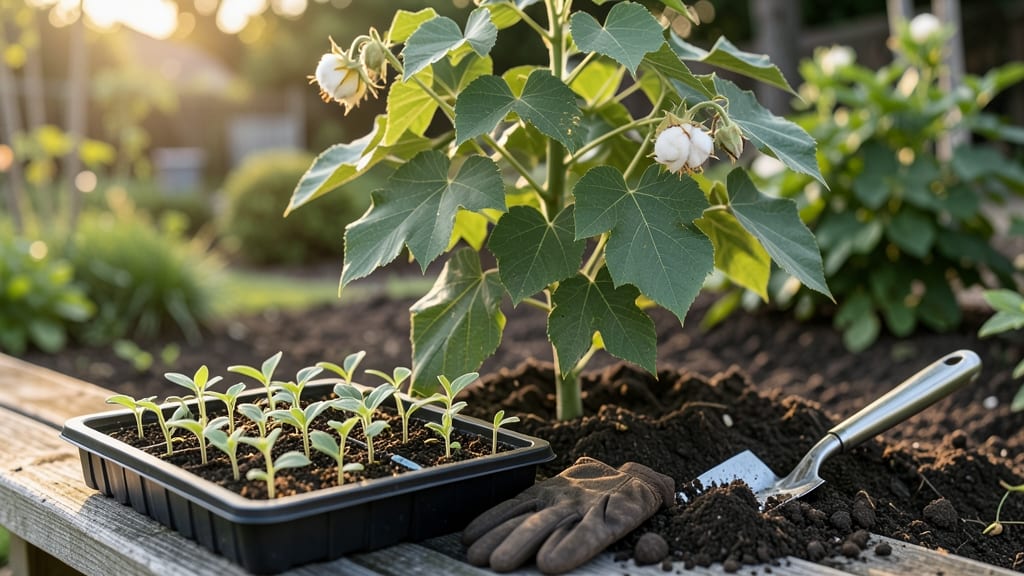
Timing your cotton planting in Texas isn't just about following a calendar—it's about outsmarting the Lone Star State's unpredictable swings from frost to scorching heat.
Whether you're in humid East Texas or the arid High Plains, planting too early risks frost damage, while waiting too long can leave your crop struggling under summer's intensity.
For most Texas growers, the sweet spot falls between March and May, but the exact window depends on your USDA zone—8a-10b—and whether you're starting seeds indoors or direct-sowing.
South Texas farmers often begin as early as March, while North Texas growers typically wait until April to avoid late frosts that can devastate young plants.
What makes Texas cotton unique? Varieties like Stoneville and DPL thrive with our long, hot summers, but they demand precise timing to maximize yields. We'll break down the ideal planting dates for your specific region, plus pro tips for soil prep and avoiding common pitfalls like bollworm pressure.
Ready to grow fluffy, high-quality cotton? Let's dive into the exact planting schedule—and critical factors—that'll set your crop up for success from seed to harvest. Your bolls will thank you.
Texas planting zones for cotton: when to start seeds by region
Texas spans USDA zones 8a through 10b, meaning cotton planting dates can shift by 6+ weeks from the Panhandle to South Texas.
In my years working with Texas farmers, I’ve seen early March plantings in the Rio Grande Valley produce bolls by July, while late April plantings in North Texas still yield by October. The key? Matching your variety to your zone’s last frost date and soil temperature trends.
For example, Stoneville varieties thrive in East Texas’ humidity, while DPL varieties handle West Texas’ dry heat. Even within a single county, microclimates near rivers or hills can push planting dates by 1-2 weeks.
Always check your local AgriLife Extension office for frost-free day updates—these are your planting deadlines.
Here’s how to align your cotton planting with Texas’ four major regions, using soil temperature (not air temperature) as your guide. Cotton seeds need soil temps of 60°F+ to germinate reliably, and most Texas zones hit this mark between mid-March and late April.
| Region | USDA Zones | Last Frost Date | Ideal Planting Window | Soil Temp Threshold | Key Varieties |
|---|---|---|---|---|---|
| North Texas | 8a-9a | March 15 | April 15–May 1 | 60°F+ (consistent) | FM 986, DPL 155 |
| Central Texas | 8b-9b | February 15 | March 20–April 15 | 58°F+ (earlier) | Stoneville 506, PHY 375WR |
| South Texas | 9a-10a | January 15 | February 28–March 31 | 55°F+ (warm winters) | FM 966, DPL 20B |
| High Plains (West) | 7b-8a | March 20 | April 30–May 15 | 65°F+ (dry heat) | FM 1877, DP 1646 B2XF |
Notice how South Texas can plant 6 weeks earlier than North Texas? That’s why variety selection matters just as much as dates. For instance, DPL varieties (like DPL 155) tolerate dry heat better than Stoneville types, making them ideal for West Texas.
Meanwhile, humidity-loving varieties like PHY 375WR thrive in East Texas but may struggle in dry Panhandle soils.
Pro tip: Use a soil thermometer to confirm temps before planting. I’ve seen false starts in March when surface soil warmed to 60°F but 6 inches deep stayed at 50°F. Cotton seeds planted too early in cool soil rot instead of sprouting—a costly mistake for small farms.
If you’re in a transition zone (like Central Texas near Austin), err on the side of planting later. The 2011 Texas drought taught many growers that delaying by 2 weeks avoided flower drop during unpredictable spring rains.
Always have backup seed ready for late replanting if early attempts fail.
For container growers or urban homesteaders, adjust these dates by 1-2 weeks later. Pots heat up faster and dry out quicker, so wait until soil temps hit 65°F+ and use black plastic mulch to retain heat.
I’ve had success with 5-gallon buckets in South Texas, planting in early March and harvesting by July.
Remember: Texas cotton’s growing season is 120–180 days. Plant too late, and you’ll miss first frost before harvest. Use this rule of thumb: Count backward from your zone’s first frost date and plant when you hit 150 days out.
For North Texas, that’s early September minus 150 days = May 1.
Finally, monitor weather forecasts in April for unseasonable cold snaps. In 2018, a late-April freeze in East Texas wiped out 3 weeks of growth for farmers who planted
Critical factors that determine cotton planting success in Texas
Planting cotton in Texas isn't just about picking a month—it's about mastering soil temperature, moisture balance, and degree-day models that most gardeners overlook. While your calendar says "spring," your cotton plants care more about the soil thermometer reading 50°F or warmer at a 4-inch depth.
Cold soil delays germination, leaving young plants vulnerable to pests like bollworms that thrive in slow-growing cotton.
For East Texas, where humidity lingers, aim for planting when soil temps hit 60°F+—typically mid-March to early April. In West Texas, wait until late April when nights stay above 55°F to avoid stunted growth.
Pro tip: Use a soil thermometer for 3 days straight to confirm consistency before sowing.
🌱
⚠️ Watch for These Red Flags
- Soil too cold: Seeds rot below 50°F (use black plastic mulch to warm soil faster).
- Overly wet soil: Cotton hates soggy roots—amend clay with compost before planting.
- Late planting: After June 15, bolls mature too close to frost in North Texas.
- Skipping scouting: Bollworms appear 2-3 weeks post-germination—check plants weekly.
Texas A&M AgriLife reports 30% yield loss in late-planted cotton due to pest pressure.
Moisture is another game-changer. Cotton needs consistent moisture during flowering (June-July), but drought stress causes bolls to abort. In Central Texas, use drip irrigation to deliver 1-2 inches of water weekly—never let the top inch of soil dry out during critical growth stages.
For High Plains growers, mulch with straw to retain moisture in sandy soils.
Degree-day models (like those from Texas A&M) help fine-tune timing. Count 1,000+ degree-days (average daily temp minus 50°F) from planting to first square—this predicts flowering time. For example, Stoneville varieties need 1,200 degree-days to mature bolls, while DPL types tolerate 1,000 degree-days in hotter zones.
Don't ignore pH levels either. Cotton thrives in 6.0-7.5 pH—test your soil and amend with lime if needed.
Acidic soil (pH <5.5) locks out nutrients, leading to yellowing leaves and poor fiber quality. Organic matter (3-5%) improves drainage in heavy Texas clay, while sandy soils benefit from compost top-dressing.
Finally, adjust for weather forecasts. If a heatwave is predicted within 2 weeks of planting, delay sowing—young cotton wilts at 95°F+. Use shade cloth (30%) for seedlings until they establish roots. Remember: Texas cotton isn't just about timing—it's about reading the land.