
Flowers
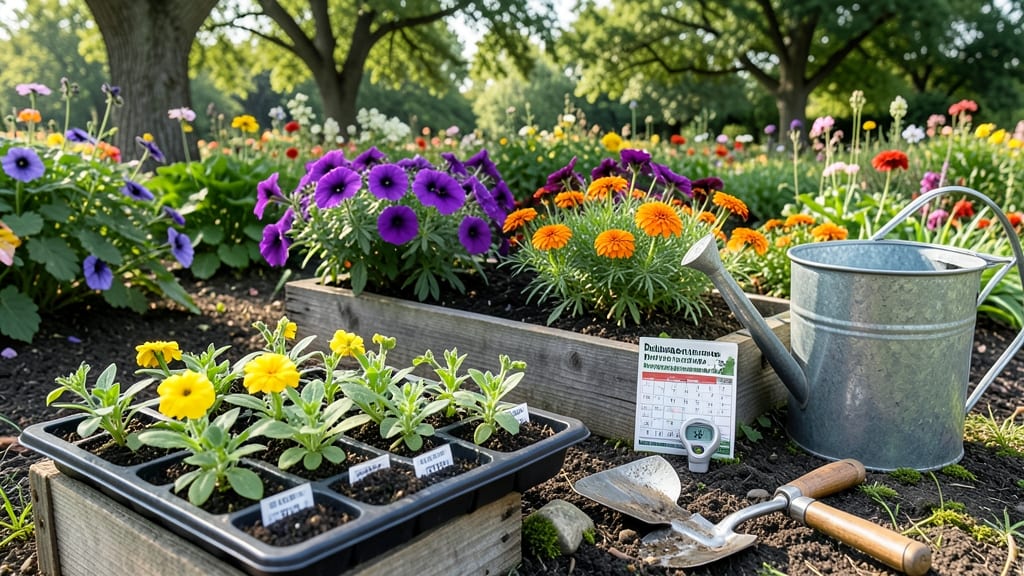
Timing your flower planting in Delaware can mean the difference between a showstopping garden and a sad, frost-nipped disappointment.
With USDA Zone 7a's unpredictable swings from chilly springs to sudden autumn frosts, getting those bulbs and seeds in the ground at just the right moment is the key to vibrant blooms all season.
I've learned the hard way that planting too early can leave your 🌸 flowers struggling in cold soil, while waiting too long risks missing the perfect window for maximum growth.
Delaware's climate demands precision—whether you're sowing annuals in March or planting perennials in September. Let me show you exactly when to make your moves for foolproof results.
From coastal microclimates that stay warmer longer to inland areas where frosts linger, Delaware's planting zones have their own quirks. We'll cover the ideal windows for everything from frost-hardy pansies to heat-loving zinnias, plus how to adjust for your specific corner of the state.
Get ready to transform your garden into a blooming paradise with these science-backed timelines.
You'll discover how to work with Delaware's 180 frost-free days, which varieties thrive in each season, and even how to extend your growing window with simple tricks.
Whether you're a first-time gardener or a seasoned pro, these insights will help you avoid common mistakes and create a garden that bursts with color from spring through fall.
Delaware flower planting calendar by season: exact dates for zero-frost success
Timing is everything in Delaware’s USDA Zones 7a and 7b, where last frost dates average April 15 but can dip back into the 20s°F as late as May.
To avoid frost damage, I’ve mapped out the ideal planting windows for annuals, perennials, and bulbs, adjusted for Delaware’s 180 frost-free days. Whether you’re planting pansies in spring or mums in fall, these dates ensure your flowers thrive.
For spring planting, focus on March through May—this is when soil warms enough for seeds to germinate while avoiding late frosts.
In Zone 7b’s hotter inland areas (like Wilmington), you can push summer annuals like marigolds into the ground as early as mid-April, but coastal areas near Rehoboth Beach may need to wait until May 1 due to cooler maritime air.
Fall planting in Delaware runs from September through October, with first frost risks after October 31. Hardy perennials like black-eyed Susans can go in as early as late August, but tender annuals like petunias should wait until mid-September to avoid heat stress.
Bulbs like tulips need 6-8 weeks before frost, so plant them by October 15 for spring blooms.
| Season | Plant Type | Planting Window | Notes |
|---|---|---|---|
| Spring | Annuals (e.g., petunias, zinnias) | April 15–May 15 | Start seeds indoors by March 1 for earlier blooms. |
| Spring | Perennials (e.g., coneflowers, daylilies) | March 15–April 30 | Divide clumps in early spring for healthier growth. |
| Spring | Bulbs (e.g., tulips, daffodils) | October 15–November 1 (fall) or March 1–April 15 (spring) | Plant bulbs 6–8 inches deep for best results. |
| Summer | Heat-loving annuals (e.g., marigolds, sunflowers) | May 15–June 15 | Zone 7b: Plant 2 weeks earlier than Zone 7a. |
| Fall | Perennials (e.g., black-eyed Susans, asters) | August 15–September 30 | Established plants handle fall frosts better. |
| Fall | Bulbs (e.g., crocuses, hyacinths) | September 1–October 15 | Cooler soil in fall reduces rot risk. |
Delaware’s coastal microclimates (like Lewes) often experience 3–5°F cooler temperatures than inland areas, delaying planting by 1–2 weeks. For example, cosmos seeds can be direct-sown in late April inland but may need to wait until May 10 near the coast.
Always check your local frost-free date—Delaware’s National Weather Service provides updated forecasts.
If you’re growing tender annuals like geraniums, use row covers to extend your planting window by 2–3 weeks in spring or fall. For Zone 7b’s hotter summers, opt for heat-tolerant varieties like celosia or portulaca, which thrive in 90°F+ temperatures that can stress other flowers.
For container gardening, soil in pots warms faster than in-ground soil, so you can plant annuals like begonias 2 weeks earlier than in garden beds. Just ensure containers have drainage holes to prevent root rot—a common issue in Delaware’s clay-heavy soils.
Pro tip: Mark your calendar with Delaware’s key dates—April 15 (last frost), May 1 (safe for heat-lovers), and October 15 (bulb planting deadline). Miss these windows, and you risk wilting blooms or frost-killed plants.
With this schedule, your garden will burst with color from spring tulips to fall mums—without the guesswork!
🌸
How to adjust planting times for Delaware’s microclimates and soil conditions
Delaware’s diverse microclimates—from coastal areas near Rehoboth Beach to inland regions like Wilmington—create unique challenges for gardeners. Coastal zones often enjoy 10-14 warmer days than inland areas, while inland spots face earlier frost risks in fall.
Understanding these variations helps you fine-tune planting times for zero frost-related failures.
For example, Zone 7b’s hotter inland pockets (like Newark) can handle heat-loving annuals like zinnias 2 weeks earlier than coastal Zone 7a areas. Meanwhile, southern Delaware’s sandy soils drain too quickly for moisture-loving flowers, requiring amended beds with compost to retain water.
Let’s break down how to adapt your planting schedule to these conditions.
🌱
Coastal Delaware (Zone 7a)
- ✅ Plant annuals 2 weeks later (May 1 vs April 15 inland)
- ✅ Use windbreaks for delicate flowers like petunias
- ✅ Extend fall with row covers until November 1
Inland Delaware (Zone 7b)
- ✅ Plant heat-lovers (e.g., lantana) by April 1
- ✅ Mulch heavily to prevent soil drying in summer heat
- ✅ Start perennials indoors by March 1 for earlier blooms
Soil Adjustments
- ✅ Amend sandy soil with peat moss for moisture retention
- ✅ Test pH—Delaware’s soil is often slightly acidic (6.0-6.5)
- ✅ Use raised beds for poor drainage areas
Container Gardening
- ✅ Plant in containers to control soil temps
- ✅ Use self-watering pots for summer droughts
- ✅ Move pots to protected spots before first frost
If you’re gardening in containers, remember that pots heat up faster than garden beds—opt for light-colored containers or shade cloth during peak summer to protect roots. For bulbs like tulips, plant them 6-8 weeks before frost (early October for inland areas, late October for coast).
Another pro tip: Monitor your local frost dates using resources like the Delaware State Climate Office. Their weekly frost alerts can help you adjust planting by 1-2 weeks if an early cold snap is forecasted.
For example, if frost is predicted for October 15 instead of November 1, rush to plant cold-hardy annuals like pansies by September 15.
For soil drainage issues, consider building raised beds or amending your soil with compost and perlite. This is especially critical for water-loving flowers like hydrangeas, which can rot in soggy Delaware soil.
Always test your soil’s drainage rate by digging a hole, filling it with water, and timing how long it takes to drain—ideal is 4-6 hours.
Finally, don’t overlook microclimates within your yard. A south-facing wall can create a 5°F warmer zone, perfect for heat-sensitive plants like impatiens. Use these warm spots to extend your growing season by 3-4 weeks in both spring and fall.