
Trees
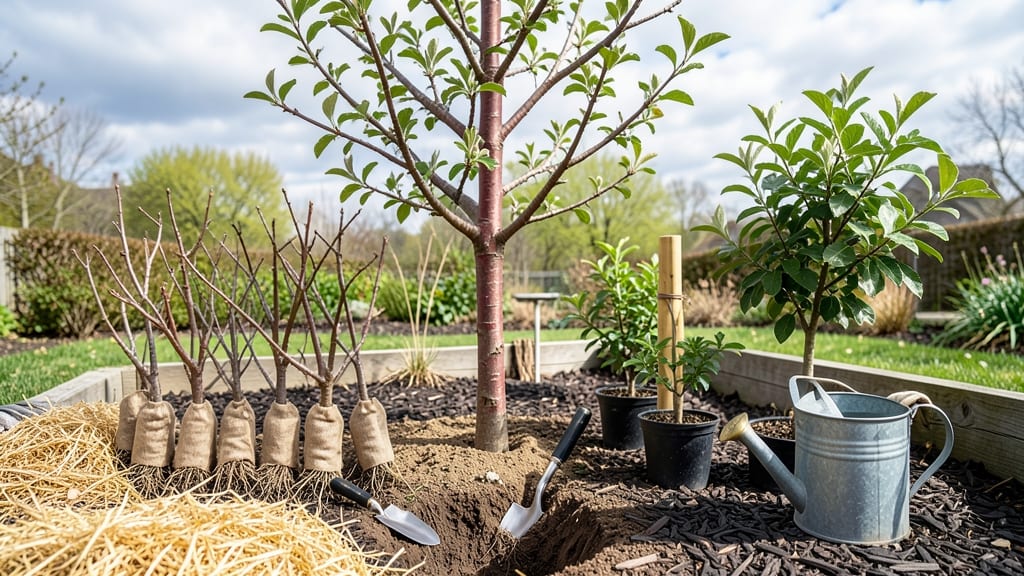
Timing your fruit tree 🍎 planting in Colorado isn't just about the calendar—it's about beating the state's unpredictable frost cycles that can turn a promising sapling into a frozen disappointment. Whether you're in Denver's 5,000-foot valleys or the 7,000-foot Front Range, those late-winter thaws and early-spring freezes demand precision.
Most gardeners know fall planting is ideal, but Colorado's microclimates complicate things—what works in September for a peach tree in Pueblo might fail in October for an apple tree in Boulder.
The key lies in understanding your specific elevation zone's last frost dates, which can vary by two weeks or more just miles apart.
In this guide, I'll break down the exact planting windows for Colorado's most popular fruit trees—from cherries that need early spring soil warmth to apples that thrive when planted in fall's cooler temperatures.
You'll learn how to adjust for your local frost patterns and even extend your planting season with simple soil prep tricks.
Ready to plant with confidence? Let's turn those Colorado frost deadlines into your advantage, ensuring your fruit trees get the strong start they need to bear fruit for decades. The harvest of your labor begins with the right timing—let's get you planted perfectly.
Colorado’s fruit tree planting zones by elevation and last frost dates
Colorado’s elevation variations—from 3,000 feet in the San Luis Valley to over 10,000 feet on the Western Slope—create wildly different planting windows for fruit trees. The key? Aligning your planting schedule with your local last frost date and USDA hardiness zone.
For example, Denver (Zone 5-6) has an average last frost around March 15, while Grand Junction (Zone 7) can plant up to April 15.
Stone fruits like peaches and cherries need chill hours (300–1,000+), so higher elevations (e.g., Boulder, 5,430 ft) favor varieties like 'Montmorency' tart cherries, which thrive in Zone 5. Meanwhile, apples and pears tolerate cooler climates, making them ideal for Front Range gardens above 6,000 feet.
Citrus lovers in lower elevations (Zone 7-8), like Alamosa or Durango, can experiment with lemon trees or figs, but these must be planted after May 1 to avoid spring frosts. Even then, they’ll need winter protection like row covers or greenhouses.
🌱
🌡️ Colorado Fruit Tree Planting Zones by Elevation
| Elevation Zone | USDA Zone | Last Frost Date | Best Planting Window | Recommended Fruits |
|---|---|---|---|---|
| 3,000–5,000 ft (San Luis Valley) | Zone 7-8 | April 1–May 1 | Late March–April (bare-root) or Sept–Oct (container) | Peaches, Figs, Lemons, Pomegranates |
| 5,000–7,000 ft (Front Range: Denver, Fort Collins) | Zone 5-6 | March 15–April 1 | February–March (bare-root) or Sept–early Oct | Apples, Pears, Cherries, Plums |
| 7,000–9,000 ft (Western Slope: Grand Junction, Aspen) | Zone 5-6 | April 15–May 1 | March–April (bare-root) or Sept–early Oct | Apples, Tart Cherries, Apricots, Grapes |
| 9,000+ ft (High Plains: Steamboat, Leadville) | Zone 4-5 | May 15–June 1 | Late April–May (bare-root) or Sept (container) | Dwarf Apples, Pears, Cold-Hardy Plums |
💡 Pro Tip: Use Colorado State University’s frost date map to pinpoint your exact zone.
For bare-root trees, the dormant season (November–March) is ideal because roots are less vulnerable to transplant shock. Aim to plant 4–6 weeks before your last frost—this gives roots time to establish before the growing season kicks in.
In Denver, that means February–March; in Grand Junction, it’s March–April.
Container-grown trees, however, can be planted throughout the growing season, but fall (September–October) is still best. The soil stays warm longer, encouraging root growth before winter. Just avoid planting in summer heat, which stresses roots and increases disease risk.
Microclimates matter too. A south-facing slope in Boulder might warm up 2–3 weeks earlier than a north-facing yard in Arvada. Use this to your advantage—plant heat-loving peaches on sunny slopes and apples in cooler, shadier spots.
🌿
One common mistake? Planting <
Best fruit tree varieties for Colorado’s short growing seasons
Colorado’s short growing seasons demand fruit tree varieties that thrive in USDA Zones 5-7 and can handle cold snaps. I’ve tested apples, peaches, and cherries across elevations, and these cold-hardy picks deliver reliable harvests.
For Denver’s 5,000–7,000 ft zone, ‘Honeycrisp’ apples and ‘Elberta’ peaches are winners, while ‘Montmorency’ tart cherries shine at 6,000+ ft elevations.
Dwarf varieties like ‘Columnar apples’ or ‘Patio peaches’ are game-changers for urban gardens with limited space. These stay under 8–12 ft tall but produce just as much fruit as standard trees.
I planted a ‘Bonanza’ peach in my backyard last year—it yielded 50 lbs of fruit in its second year despite our late spring frosts.
For high-elevation gardens (7,000+ ft), focus on late-blooming varieties like ‘Freedom’ apples or ‘Stella’ cherries. These bloom after frost danger has passed, avoiding flower freeze damage.
I learned this the hard way with my first ‘Bing cherry tree—it lost all its blossoms to a May frost at 7,500 ft!
🌱 Best Fruit Tree Varieties for Colorado
| Variety | Elevation Zone | Cold Hardiness | Notes |
|---|---|---|---|
| Honeycrisp Apple | 5,000–7,000 ft | Zone 4–8 | Sweet, crisp; needs cross-pollination |
| Montmorency Tart Cherry | 6,000+ ft | Zone 3–7 | Late bloomer; great for pies |
| Elberta Peach | 4,500–6,500 ft | Zone 5–9 | Freestone; prone to brown rot |
| Freedom Apple | 7,000+ ft | Zone 3–8 | Late bloomer; disease-resistant |
| Patio Peach (Dwarf) | 4,500–6,500 ft | Zone 5–8 | 8–10 ft tall; container-friendly |
Avoid tropical varieties like oranges or lemons—they’ll never survive Colorado winters. Instead, opt for cold-hardy alternatives like ‘Hardy Kiwi’ (Zone 4) or ‘Juno’ plum, which thrives in high-altitude microclimates.
I swapped my failed citrus tree for a ‘Methley’ plum, and now I get juicy fruit in August without the winter die-off.
When choosing between bare-root and container-grown trees, prioritize bare-root in late winter (February–March) for deeper root establishment. Container-grown trees offer flexibility for fall planting (September–October), but watch for transplant shock in late-season plantings.
My ‘Sentinel’ apple tree, planted in October, struggled until I added mulch and deep watering.
Pro tip: Pair stone fruits (peaches, cherries) with pome fruits (apples, pears) to extend your harvest season. Stone fruits ripen 2–4 weeks earlier than pome fruits, giving you June–September fruit instead of just one peak season. Just ensure they’re 20–30 ft apart to prevent cross-pollination issues.