
Trees
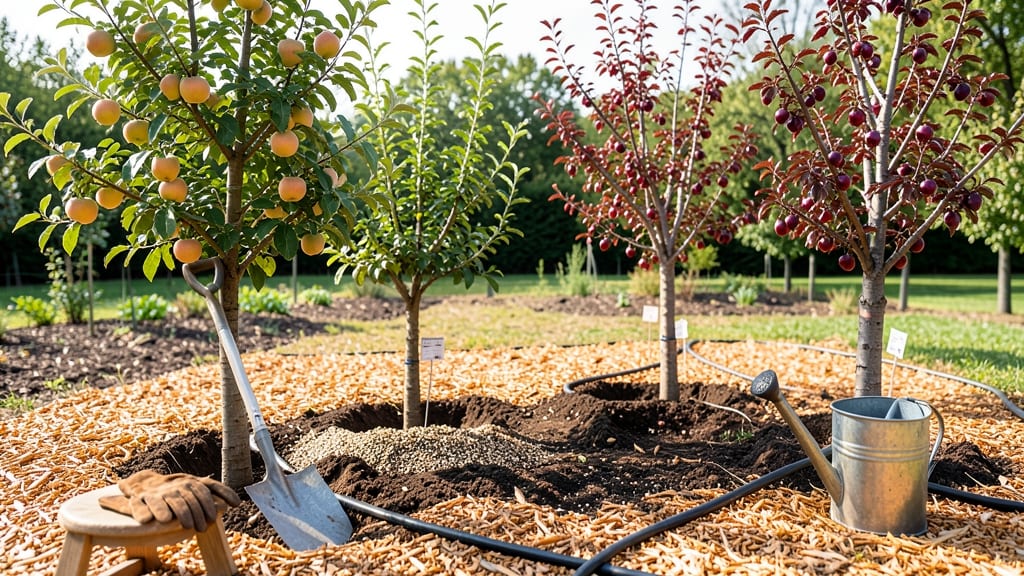
The perfect timing for planting fruit trees in Iowa isn’t just about the calendar—it’s about beating frost, warming soil, and giving your 🍎 a fighting chance to thrive in zones 5a-5b.
Plant too early, and a late frost could wipe out your young sapling before it even takes root. Too late, and your tree might struggle to establish strong roots before winter hits.
Iowa’s unpredictable climate demands precision: aim for early spring (March–April) when soil temperatures rise above 40°F, or fall (September–October) before the first frost. This window ensures your tree’s roots grow deep before extreme weather arrives, setting the stage for years of harvests.
But here’s the catch: not all fruit trees are created equal. Apples and pears play by one set of rules, while peaches and cherries need their own timing tweaks.
I’ll break down the exact schedule for each, plus how to prep your soil to avoid Iowa’s biggest planting pitfalls—like soggy clay or rocky ground.
Ready to plant with confidence? Let’s dive into the step-by-step guide that’ll turn your backyard into a thriving orchard, no matter how many times Iowa surprises you with a late freeze.
Iowa’s ideal planting window for fruit trees by variety
Iowa’s USDA Zones 5-6 demand precise timing for fruit tree planting to avoid late spring frosts that can devastate young trees. The best planting windows are early spring (March-April) or fall (September-October), when soil temperatures are ideal for root establishment.
Stone fruits like peaches and cherries are especially sensitive to frost, while apples and pears have slightly more flexibility.
Timing isn’t just about months—it’s about soil temperature thresholds. For Iowa, roots need 40°F soil temps to thrive, which typically occurs by mid-April in most regions. Fall planting works if done 6-8 weeks before first frost (usually by October 15), giving roots time to harden before winter.
Bare-root trees planted in spring establish faster, while container-grown trees can handle late spring planting.
Here’s how Iowa’s last average frost dates (April 15) and first frost dates (October 15) shape your planting strategy. Stone fruits (peaches, plums, cherries) must be planted after frost danger passes, while apples and pears tolerate slightly earlier spring planting.
Nuts like walnuts and pecans prefer fall planting for deeper root development before winter.
🌱
| Fruit Type | Best Planting Window | Soil Temp Requirement | Key Considerations |
|---|---|---|---|
| Stone Fruits (Peaches, Cherries, Plums) | Early spring (April 15+) or fall (Sept 15-Oct 15) | 40°F+ soil temp | Frost-sensitive; avoid late spring planting |
| Pome Fruits (Apples, Pears) | Early spring (March 15-April 15) or fall (Sept 1-Oct 15) | 35°F+ soil temp | Tolerates earlier spring; needs cross-pollination |
| Nuts (Walnuts, Pecans) | Fall (Sept 1-Oct 15) preferred | 50°F+ soil temp | Deep roots need fall planting for winter hardiness |
| Dwarf Varieties (All Types) | Spring (April) or fall (Sept-Oct) | 35°F+ soil temp | Faster establishment; ideal for small orchards |
For bare-root trees, Iowa’s early spring window (March-April) is critical—plant as soon as soil is workable to prevent root desiccation. Container-grown trees offer more flexibility, allowing planting until early June, but avoid late summer to prevent summer stress.
Fall planting (September-October) gives roots time to establish before winter, but avoid planting too late—6 weeks before first frost is the cutoff.
Iowa’s variable climate means monitoring local frost dates is essential. Check your specific county’s frost data (available through Iowa State University Extension) to adjust timing.
For example, northwest Iowa (Zone 5a) may need to wait until late April for safe planting, while southeast Iowa (Zone 6a) can start in early March. Always plant 2-3 weeks after your last frost date for stone fruits.
Another Iowa-specific tip: Windbreaks are non-negotiable. The state’s prevailing winds can stress young trees, so plant near fences, hedges, or windbreaks to reduce transplant shock. For peach and cherry trees, consider southern exposures to maximize sunlight and warmth.
Mulching with wood chips (3-4 inches) helps retain moisture and regulate soil temperature during Iowa’s temperature swings.
If you’re planting multiple varieties, space them 20-30 feet apart to prevent cross-contamination of pollen (critical for apples and pears). For dwarf varieties, reduce spacing to 10-15 feet.
Always dig holes twice as wide as the root ball but no deeper—Iowa’s clay-heavy soils can suffocate roots if planted too deep.
🌳
How to prepare Iowa soil for fruit tree planting success
Iowa’s heavy clay soils and variable moisture levels can make or break your fruit tree’s success. If you skip soil prep, your tree might struggle with root rot, poor nutrient uptake, or stunted growth—even if you plant at the perfect time.
The key is creating a well-draining, nutrient-rich environment that mimics the tree’s natural habitat.
Start by testing your soil’s pH level (aim for 6.0–7.0) using a simple test kit from your local garden center. Iowa’s native soils often lean acidic, which can lock out essential phosphorus and calcium—critical for root development.
If your pH is too low, add lime (follow package rates) 2–3 months before planting to let it work into the soil.
Next, break up compacted areas with a broadfork or tiller to a depth of 12–18 inches. Iowa’s clay doesn’t drain well when undisturbed, so creating air pockets helps water and roots move freely.
Mix in 3–4 inches of compost or well-rotted manure into the top 12 inches of soil. This boosts organic matter, which improves soil structure and holds moisture without suffocating roots.
🌱 Step-by-Step Soil Prep for Iowa Fruit Trees
- 1. Test Soil pH – Aim for 6.0–7.0; amend with lime if needed.
- 2. Loosen Clay Soil – Use a broadfork to break up compaction to 18" deep.
- 3. Add Organic Matter – Mix in 3–4" of compost or aged manure.
- 4. Improve Drainage – Blend in perlite or coarse sand if soil stays soggy.
- 5. Level the Planting Hole – Fill with native soil mixed with compost.
If your yard floods after heavy rains (common in low-lying areas), raise the planting mound by 6–12 inches above ground level. This simple trick prevents root suffocation during Iowa’s wet springs.
For sandy soils (less common but found in western Iowa), blend in peat moss or coconut coir to retain moisture and nutrients.
Finally, mulch the planting area with 3–4 inches of wood chips or straw, keeping it 3 inches away from the trunk to prevent rot. Mulch conserves moisture, regulates soil temperature, and slowly feeds the tree as it breaks down.
Replenish mulch annually to maintain its benefits through Iowa’s harsh winters and hot summers.
With these steps, your fruit tree will have the perfect foundation to thrive—no matter what Iowa’s weather throws its way. 🌳