
Plants
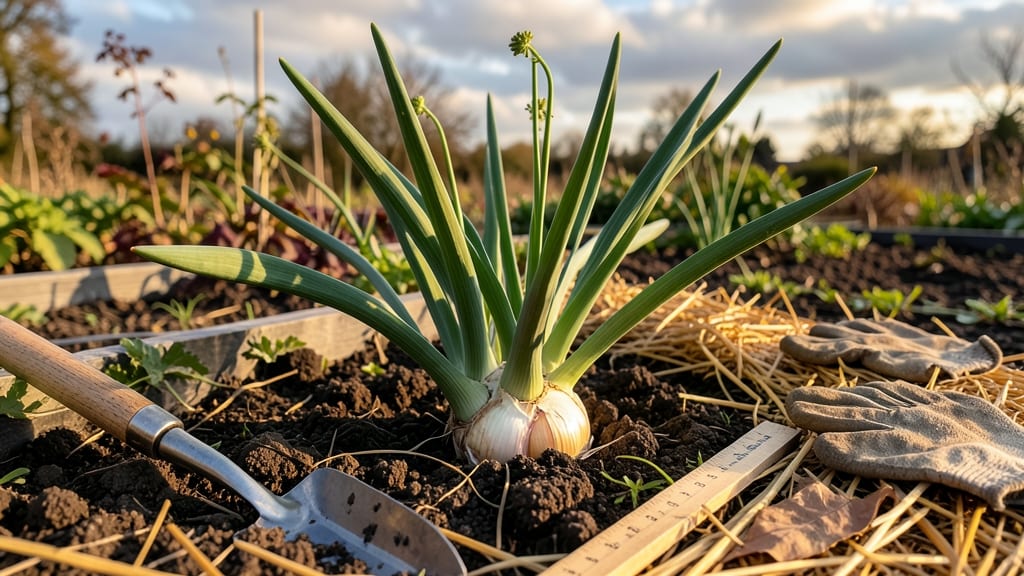
Timing your spring garlic planting in Ohio wrong can mean the difference between a bumper crop and wasted cloves—especially when unpredictable weather throws off your schedule. The 6a zone gives you a narrow window to plant 🧄 before soil warms too quickly, triggering bolting (that bitter, premature flowering).
But get it right, and you’ll harvest plump bulbs by July.
Most Ohio gardeners assume March is the only month to plant, but the truth is more nuanced. The ideal window starts as early as late February in southern Ohio (where last frost hits by April 15) but shifts to early April in colder northern regions.
Soil temperature is the real game-changer—you want it between 40-50°F for roots to establish without rushing growth.
Here’s the secret: Planting too late (after mid-April) risks bolting, while going too early (before soil thaws) can rot cloves.
I’ll break down the exact dates for your microclimate, plus how to adjust for Ohio’s unpredictable spring—because even the best-laid plans need backup when frost lingers or warmth arrives early.
Ready to avoid the most common mistakes? You’ll learn how to prep soil, choose the right varieties (like ‘Music’ or ‘German White’), and time your planting so your garlic thrives—no guesswork, just results. Let’s get those cloves in the ground the right way.
Ohio garlic planting zones: exact dates by microclimate for zero-bolt success
Ohio’s diverse climate—from the humid southern regions to the cooler northern zones—means garlic planting timing varies dramatically. In USDA Zone 5 (northwest Ohio), you’ll need to plant earlier than in Zone 7 (southern Ohio) to avoid bolting.
The key is planting when soil temperatures hit 40-50°F—this triggers root growth without shocking the cloves.
Spring planting in Ohio typically starts 4-6 weeks before your last frost date. For most of the state, this lands in mid-March to early April.
However, gardeners in Zone 5 (like Toledo or Cleveland) should aim for late March, while those in Zone 6-7 (Columbus, Cincinnati, or Dayton) can wait until early April.
Hardneck varieties (like ‘Music’ or ‘German White’) thrive in Ohio’s climate and are best planted in fall or early spring. Softnecks (like ‘Silverskin’) can handle slightly later spring planting but risk bolting if planted too late. Always choose large, plump cloves—they produce bigger bulbs!
Bolting (premature flowering) is your worst enemy. It happens when garlic experiences too much heat too soon. In Ohio, this often occurs if planted after mid-April. To prevent it, use row covers or plant in partial shade if late spring arrives early.
Here’s the breakdown by Ohio region and USDA zone to avoid bolting:
| Region | USDA Zone | Ideal Planting Window | Soil Temp Trigger | Best Varieties |
|---|---|---|---|---|
| Northwest Ohio (Toledo, Cleveland) | Zone 5 | Late March | 40-45°F | ‘Music’, ‘German White’ |
| Central Ohio (Columbus) | Zone 6 | Early April | 45-50°F | ‘Chesnok Red’, ‘Silverskin’ |
| Southern Ohio (Cincinnati, Dayton) | Zone 7 | Mid-April | 50°F+ | ‘Artichoke’, ‘Creole’ |
If you’re unsure about your last frost date, check the Old Farmer’s Almanac or your local Cooperative Extension office. They provide hyper-local data that beats generic online tools. For example, Toledo’s last frost often comes 2 weeks earlier than Cincinnati’s—so adjust accordingly!
Pro tip: Plant a test row 2 weeks before your target date. If the cloves sprout within 7-10 days, you’re good to go. If not, wait another week. This simple trick saves you from bolting disasters!
Finally, hardneck garlic (the type with scapes) performs best in Ohio’s climate. It thrives in cooler springs and produces more cloves per bulb. Softnecks, while milder, are better suited for warmer climates and may struggle with Ohio’s unpredictable spring weather.
Timing isn’t just about the calendar—it’s about soil temperature, microclimate, and variety choice. Get it right, and you’ll harvest plump, flavorful bulbs by July or August—just in time for summer grilling! 🧄
How to adjust planting timing for Ohio’s unpredictable spring weather
Ohio’s spring weather is famously fickle—one day it’s 60°F with sunshine, the next it’s 32°F with frost. That unpredictability makes garlic planting timing a high-stakes game. If you plant too early, cloves rot in cold, wet soil.
Too late, and your crop bolts before harvest. The key is reading Ohio’s microclimate signals, not just following a calendar.
Start by checking your last frost date. In southern Ohio (e.g., Cincinnati, Columbus), the average last frost is around April 15, giving you a wider window. But in northern Ohio (e.g., Cleveland, Toledo), frost can linger until May 1.
Planting 2-4 weeks before your local last frost date is a safe bet—but only if soil temperatures are stable above 40°F.
Here’s my fail-proof method: Use a soil thermometer to confirm temperatures. Garlic cloves need soil between 40-50°F to sprout without bolting. If your soil is colder, wait. If it’s warmer than 50°F, you’re already in the danger zone for bolting.
This is especially critical in USDA Zone 6a, where warm-ups can happen fast.
⚠️ Late Freeze Warning
If frost is forecasted after planting, cover your garlic with row fabric or straw mulch to protect tender shoots. Remove covers when temperatures rise to 50°F to avoid overheating. Never use plastic—it traps moisture and promotes rot.
For extra insurance, consider the moon phase. Planting during the waxing moon (when the moon is growing) encourages root development, while planting during the waning moon can lead to weaker stems. In Ohio, aim for the first quarter moon in March or April for optimal growth.
If you miss the ideal window, don’t panic. You can still plant garlic in early May, but expect smaller bulbs. For a second chance, choose softneck varieties like ‘German White,’ which are more forgiving than hardnecks. Just be prepared to harvest earlier to avoid bolting.
Pro tip: Mark your planting date on a garden journal to track success. Over time, you’ll learn how your specific microclimate behaves—whether it’s a frost-prone valley or a sunny hillside. Adjust your timing each year based on what you observe, not just the averages.