
Plants
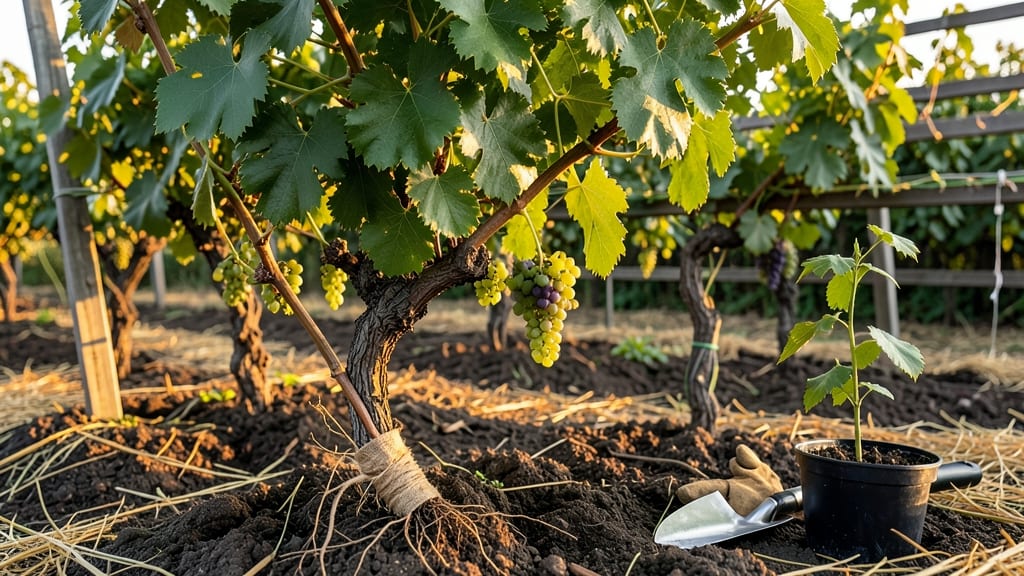
Timing your grape planting in Kentucky isn't just about the calendar—it's about outsmarting the 6a-7a zone's unpredictable frost patterns and heat spikes. Plant too early, and a late frost could turn your tender 🍇 vines into sad, wilted memories. Too late, and your harvest might never reach full sweetness.
I've seen firsthand how a 2-week difference can mean the difference between thriving vines and struggling plants in Kentucky's diverse microclimates. The key isn't just knowing when to plant—it's understanding how your specific location's frost dates and growing season length affect your grape varieties.
Whether you're planting cold-hardy Norton grapes in the Appalachians or heat-loving vinifera in the Bluegrass, we'll cover the exact windows that work for your region. You'll learn how to prepare your soil, protect young plants, and even adjust for container growing in urban areas.
By the end, you'll have a planting schedule tailored to your Kentucky location that maximizes your chances of a reliable harvest from August through October. Let's get those vines in the ground at the perfect time.
Kentucky’s ideal grape planting months by microclimate Zone
Kentucky’s three distinct microclimates—Western, Central, and Eastern—each demand different planting strategies for grapes. The Western region (Louisville, Paducah) enjoys warmer springs and can start planting as early as February, while the Eastern region (Lexington, Corbin) often waits until mid-April due to later frost risks.
Central Kentucky (Bowling Green, Frankfort) falls in between, with March-April being the safest window.
For Vitis vinifera varieties (like Cabernet Franc), Kentucky’s heat summation (growing degree days) is critical. These varieties need 1,800+ GDDs to ripen fully, making fall planting in September a viable alternative in Zone 7a.
Meanwhile, hardier hybrids (e.g., Concord, Niagara) can tolerate cooler conditions and thrive with 1,200-1,500 GDDs, giving you more flexibility.
Your last frost date is the primary factor. In Western Kentucky, average last frosts occur March 15-April 1, while Eastern Kentucky can see frost as late as April 20. Always check your local USDA Zone 6a-7a frost maps before planting.
For container grapes, you can push planting 2-3 weeks later since pots warm up faster and are easier to move indoors if frost threatens.
Here’s how to align your planting with Kentucky’s three key regions:
| Region | USDA Zone | Spring Planting Window | Fall Planting Window | Best Varieties |
|---|---|---|---|---|
| Western | 6b-7a | Late Feb - Early April | Late Sept - Early Oct | Cabernet Franc, Chardonnay, Norton |
| Central | 6a-6b | Mid-March - Mid-April | Mid-Sept - Late Sept | Concord, Niagara, Traminette |
| Eastern | 6a | Late March - Early May | Early Sept - Mid-Sept | Catawba, Elvira, Marechal Foch |
If you’re growing Vitis vinifera in Western Kentucky’s Zone 7a, aim for September planting to give vines time to establish roots before winter. In Eastern Kentucky’s Zone 6a, stick to spring planting and choose early-ripening hybrids like Catawba or Elvira to avoid early frosts cutting harvests short.
For container grapes, urban gardeners in Louisville or Lexington can plant 2-3 weeks later than in-ground vines. Containers warm up faster in spring and can be moved to protected locations if frost threatens.
Just ensure your pots have drainage holes and use a lightweight potting mix to prevent root rot.
Pro tip: Order bare-root vines in late winter (January-February) to give yourself time for soil prep and trellis installation. Kentucky’s clay-heavy soils benefit from amendments like compost or sand to improve drainage.
Test your soil’s pH (ideal: 6.0-6.5) before planting—Kentucky’s soils often lean alkaline, which can stunt grape growth.
Remember, fall planting (September-October) is ideal for dormant vines because they establish roots before winter and burst into growth in spring. Just avoid planting after October 15th, as new roots won’t have time to harden off before Kentucky’s first frost.
For heat-sensitive varieties like Chardonnay, plant in early spring to avoid summer heat stress. In contrast, heat-tolerant hybrids (e.g., Traminette) can handle Central Kentucky’s summer heat and may even benefit from late spring planting.
Finally, track your local microclimate using tools like the Kentucky Mesonet or Almanac’s Frost Calculator. A 3-mile elevation change in Kentucky’s Appalachians can shift frost dates by 1-2 weeks, so always plant based on your specific location, not just your region.
How to prepare grape vines for Kentucky’s unpredictable spring weather
Kentucky’s spring weather is famously fickle—one day brings 60°F warmth, the next delivers a 28°F frost. To protect your grape vines, preparation is key. Start by testing your soil’s pH level (aim for 6.0-6.5) and amending with compost or sulfur if needed.
Kentucky’s clay-heavy soils often need organic matter to improve drainage and root growth.
Next, choose the right rootstock for your grapes. For Kentucky’s USDA zones 6a-7a, cold-hardy varieties like Concord or Catawba thrive, while Vitis vinifera (like Cabernet Sauvignon) need extra frost protection. Order bare-root vines in late winter (January-February) to plant when they’re still dormant but before buds swell.
🌱 Pro Tip: Schedule your planting for early spring (March-April) or fall (September-October) to align with Kentucky’s average last frost date (April 15). If planting in spring, have frost cloth and row covers ready to shield young vines from late frosts.