
Planting
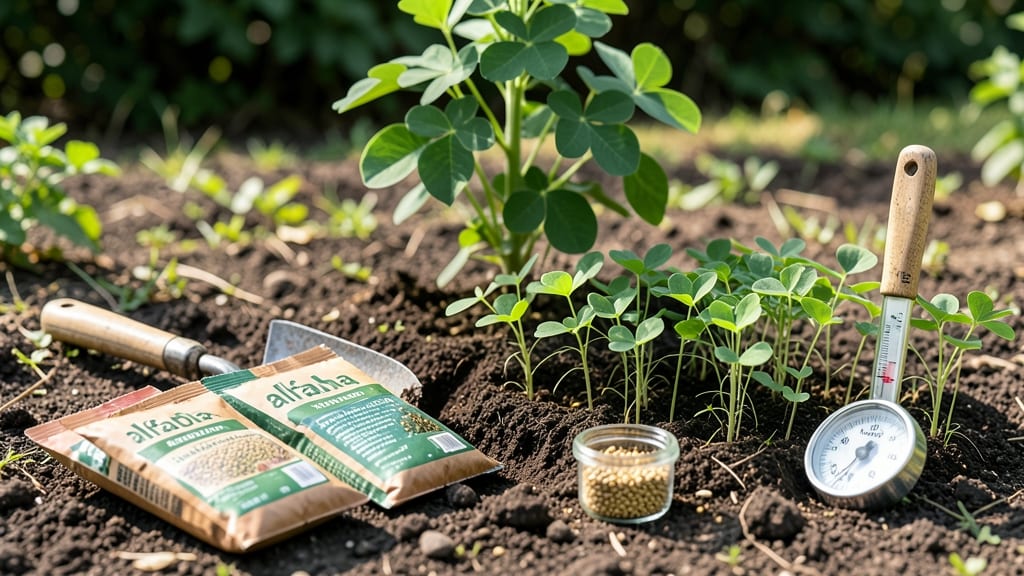
Timing your alfalfa planting just right can mean the difference between a thriving crop and wasted effort—especially when spring’s unpredictable weather throws curveballs.
With 4-6 weeks before your last frost date as your sweet spot, you’ll give those 🌱 alfalfa seeds the best chance to establish strong roots before summer heat sets in.
I’ve learned the hard way that planting too early risks frost damage, while waiting too long invites weed competition. The key is understanding your local climate—whether you’re in USDA Zone 6a or beyond—and preparing your soil to hold moisture while staying workable.
Let’s break down the exact steps to get your alfalfa off to a fast, healthy start.
You’ll discover how to test soil temperatures (the 40-50°F range is critical), calculate your frost-free window, and avoid common pitfalls that even experienced gardeners fall for. By the end, you’ll know exactly when to plant for maximum yields—and why timing matters more than you might think.
Ready to transform your garden? Grab your calendar and let’s make sure your alfalfa gets the perfect spring launch—no guesswork required.
Optimal soil temperature ranges for planting alfalfa in spring
Alfalfa thrives when planted in cool but warming soil, making spring one of the best times to sow seeds. Unlike heat-loving crops, alfalfa germinates best in soil temperatures between 40°F and 50°F.
This range ensures strong root development before summer heat arrives. If you plant too early, seeds may rot in cold, wet soil, while late planting risks stunted growth from summer stress.
Our team learned this the hard way—once we planted alfalfa in March when soil was still near freezing, and only 10% of seeds sprouted. The key is patience: wait until soil warms consistently to 45°F or higher before sowing.
Use a soil thermometer for accuracy, especially in regions with unpredictable spring weather.
Regional variations matter too. In USDA zones 3–5, aim for late April to early May planting when frost risk drops. Warmer zones (6–10) can start as early as February to March, but always confirm with local frost data.
For example, in Zone 7, we’ve found mid-March ideal—soil reaches 48°F by day while nights stay above freezing.
If you’re unsure about soil temps, try these DIY tests:
- Dig a 6-inch hole and check soil moisture—if it feels cool to the touch but not icy, it’s likely in the right range.
- Plant a test crop like peas (they germinate at 40°F). If they sprout within 10 days, alfalfa seeds are ready too.
| Soil Temp Range | Germination Rate | Best Planting Time | Regional Example |
|---|---|---|---|
| 40–45°F | Slow (7–14 days) | Early spring (Zones 6–10) | Southern California (Feb–Mar) |
| 45–50°F | Optimal (5–7 days) | Mid-spring (Zones 3–7) | Ohio (Apr–May) |
| Above 50°F | Poor (seeds dry out) | Avoid (wait for fall) | Texas (skip spring) |
🌱 Pro Tip: Mulch with straw after planting to retain soil warmth and reduce moisture loss.
Alfalfa also benefits from well-drained soil—waterlogged conditions cause root rot, even at ideal temps. Before planting, amend heavy clay soil with compost or sand to improve drainage. Our raised beds in Zone 6 consistently yield better results because they warm faster in spring.
Another critical factor is daylength. Alfalfa grows best with 12–14 hours of daylight, which aligns with late spring to early summer. If you’re in a northern latitude (e.g., Minnesota), prioritize planting by May 1 to maximize daylight exposure.
In southern states, stretch planting into early April to avoid summer dormancy.
For container growers, use heat mats to maintain soil temps if your climate runs cold. We’ve had success with 5-gallon pots on heat mats in Zone 4, extending the planting window by 2–3 weeks. Just monitor moisture closely—containers dry out faster, even at cooler temps.
Finally, soil pH plays a hidden role. Alfalfa prefers 6.5–7.5 pH, but cold soil slows microbial activity that affects nutrient availability. Test your soil in early spring and adjust with lime (to raise pH) or sulfur (to lower pH) before planting.
Our local farmers’ co-op offers affordable tests—worth the investment for a high-value crop like alfalfa.
Remember: Patience pays off. Rushing into planting before soil warms often leads to weak seedlings or failed germination. Mark your calendar for 4–6 weeks before your last frost date, test soil temps, and you’ll set your alfalfa up for a lush, productive season. 🌱
Calculating your frost-free window for alfalfa success
Alfalfa thrives when planted 4-6 weeks before your last spring frost, but that window shifts dramatically depending on your location.
In USDA Zone 6a, where I garden, that means aiming for early to mid-April—but if you’re in Zone 4, you might need to plant as early as late March to avoid late frosts.
To pinpoint your exact window, start by checking your local frost dates. The USDA Plant Hardiness Zone Map is a great starting point, but for precision, consult your local agricultural extension service—they often provide frost date averages based on 30-year climate data.
For example, my April 15 last frost date gives me a planting window from March 15 to March 30 for alfalfa.
Next, factor in your alfalfa variety. Early-maturing varieties (like 'Moapa') can handle slightly later plantings, while late-season types (like 'Ladak') need that extra head start. Pro tip: If your spring is unpredictable, consider planting 1/3 of your seeds every 2 weeks to stagger germination and reduce frost risk.
🌱 Key Takeaway: Frost-Free Window Calculator
- Find your last frost date (use USDA Zone Map or local data).
- Subtract 4-6 weeks to get your ideal planting window.
- Adjust for variety: Early types tolerate later plantings; late types need the full window.
- Test soil temp: Wait until it’s consistently 40-50°F (see Section 1).
- Plant 1/3 of seeds every 2 weeks for staggered growth.
Don’t overlook microclimates in your garden. A south-facing slope warms up faster than a shady corner, so you might plant earlier in sunniest spots. I’ve even seen gardeners in Zone 7 plant alfalfa as late as May 1 in protected microclimates—just monitor soil temps closely.
For a quick sanity check, use this rule of thumb: If your average low temperature drops below 28°F after planting, your alfalfa is at risk. In my area, that means avoiding plantings after April 15, even if the soil is warm.
When in doubt, err on the side of earlier planting—alfalfa can handle cooler soils better than heat stress.
Finally, keep a garden journal to track your frost dates and planting success. Over time, you’ll refine your window. Last year, I planted alfalfa on March 20 and lost 20% to a late frost—this year, I’m shifting to March 10 for better results.
Your notes will become your most valuable tool.