
Trees
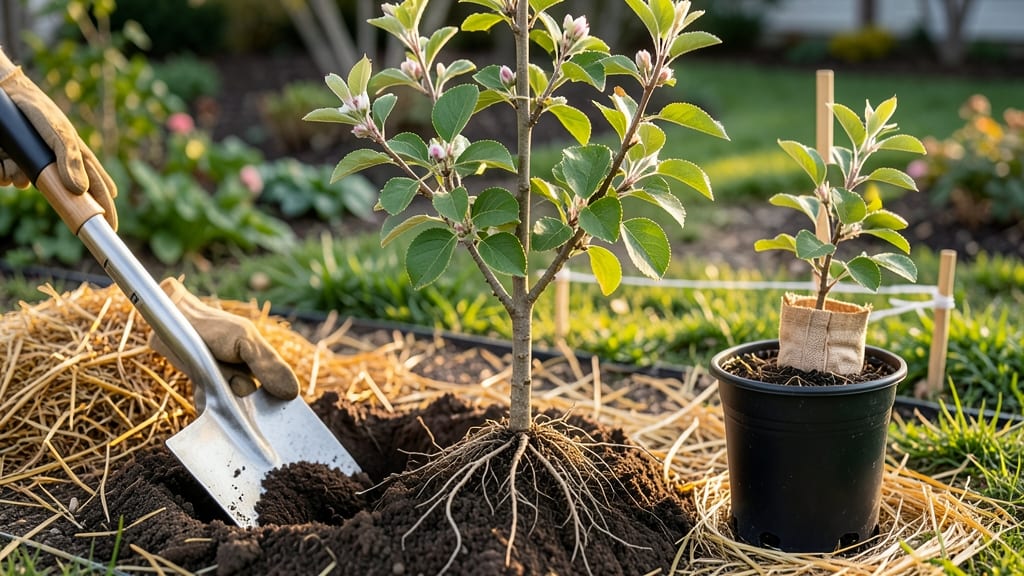
Timing your Apple Tree 🍎 planting in Zone 5 isn't just about picking a month—it's about giving your tree the best shot at thriving through winter's chill and blooming reliably come spring.
Zone 5's short growing season means you have a narrow window to plant before the ground freezes or the heat of summer arrives. Whether you're in the Midwest or Northeast, planting too early or too late can leave your tree struggling to establish roots before winter's first frost.
I'll break down exactly when to plant—whether you prefer the crisp air of fall or the fresh start of spring—and how to choose varieties that match your local chill hours for reliable blooms every year.
From soil prep to avoiding common mistakes, you'll learn how to set your Apple Tree up for success, no matter which planting window you choose.
Best planting months for apple trees in Zone 5 based on chill hours
In Zone 5, where winters are cold and summers are short, timing your apple tree planting correctly is critical. The ideal window is either late fall (October) or early spring (March-April), aligning with the tree’s dormant season.
This timing lets roots establish before winter’s chill or summer’s heat stress sets in.
Apple trees require chill hours—extended periods of cold (below 45°F) to trigger blooming. Most Zone 5 varieties need 300–1,000+ chill hours, so selecting the right type for your microclimate ensures reliable fruit production. For example, Honeycrisp thrives with 500–800 chill hours, while McIntosh needs 600–900 hours.
Fall planting (by late October) gives roots time to harden before winter, while spring planting (by mid-April) avoids frost damage. In colder Zone 5a areas (e.g., northern Midwest), aim for fall planting; in milder Zone 5b (e.g., parts of the Northeast), spring planting works better.
Bare-root apple trees are best planted in fall or early spring when they’re dormant. Container-grown trees can go in slightly later (up to May), but avoid planting after mid-May in Zone 5—new roots won’t establish before winter.
Always check your last frost date (typically mid-May in Zone 5) to time planting.
For Zone 5a (colder areas like Minnesota or upstate New York), prioritize fall planting to let roots acclimate. In Zone 5b (e.g., Chicago or Boston), spring planting is safer. Either way, plant 2–3 weeks before your expected first frost to avoid stress.
Soil temperature matters too—roots need 40–50°F soil to grow. Use a soil thermometer if unsure. In Zone 5, soil warms slowly, so spring planting often works best unless you’re in a sheltered microclimate (e.g., near a south-facing wall).
Pro tip: Mulch heavily (3–4 inches) after planting to insulate roots. Use wood chips or straw, keeping mulch 6 inches away from the trunk to prevent rot. This mimics natural forest conditions and protects against Zone 5’s temperature swings.
If you miss the fall window, don’t panic—just plant in early spring and water deeply every 7–10 days until roots catch up. The key is consistent moisture without waterlogging, which can suffocate roots in Zone 5’s heavy clay soils.
Remember: Apple trees take 3–5 years to bear fruit, so patience pays off. Choosing the right planting time and variety sets the stage for decades of harvests—literally! 🍏🌳
Best planting months for apple trees in Zone 5 based on chill hours
Zone 5’s short growing season and chill hour requirements (300–1,000+ hours) make timing critical for apple tree success. Planting outside the ideal window can delay fruit production by 1–2 years or worse—result in winter dieback.
The two best periods are early spring (March–April) and dormant fall (October–November), with regional tweaks for microclimates.
Spring planting (March–April) gives roots 6–8 weeks to establish before summer heat. Fall planting (October–November) allows roots to harden off before winter, but must finish 4–6 weeks before first frost. In Zone 5’s 5a sub-zone (colder), aim for late October; in 5b, push to mid-November.
Bare-root trees—common for apple trees—thrive when planted dormant. Avoid spring planting after bud break (late April), as new growth is vulnerable to frost. Container-grown trees can plant 1–2 weeks later than bare-root, since their roots are already established.
| Planting Window | Zone 5a Deadline | Zone 5b Deadline | Chill Hours Met | Best For |
|---|---|---|---|---|
| Early Spring (March–April) | Mid-April | Late April | 300–800 hours | Bare-root trees, faster root growth |
| Dormant Fall (October–November) | Late October | Mid-November | 800–1,000+ hours | Container trees, winter hardiness |
| Avoid: Late Spring (May) | N/A | N/A | Risk of frost damage | New growth vulnerable |
Microclimates matter! In southern Zone 5 (e.g., Ohio, Indiana), push fall planting to early December if soil stays workable. In northern Zone 5 (e.g., Minnesota, Wisconsin), plant bare-root trees by mid-October to prevent winter heave. Always check last frost dates—your local Cooperative Extension office has precise data.
For chill-sensitive varieties (e.g., Honeycrisp, needing 800+ hours), prioritize fall planting to maximize winter chilling. Low-chill varieties (e.g., Liberty, 300–500 hours) can plant 1–2 weeks later in spring. Test your chill hours using a home weather station or local records.
Pro tip: Soak bare-root trees for 1–2 hours before planting to revive roots. Amend planting holes with compost and mycorrhizal fungi to boost early growth. Mulch with wood chips (3–4 inches) to retain moisture and insulate roots—critical in Zone 5’s freeze-thaw cycles.