
Plants
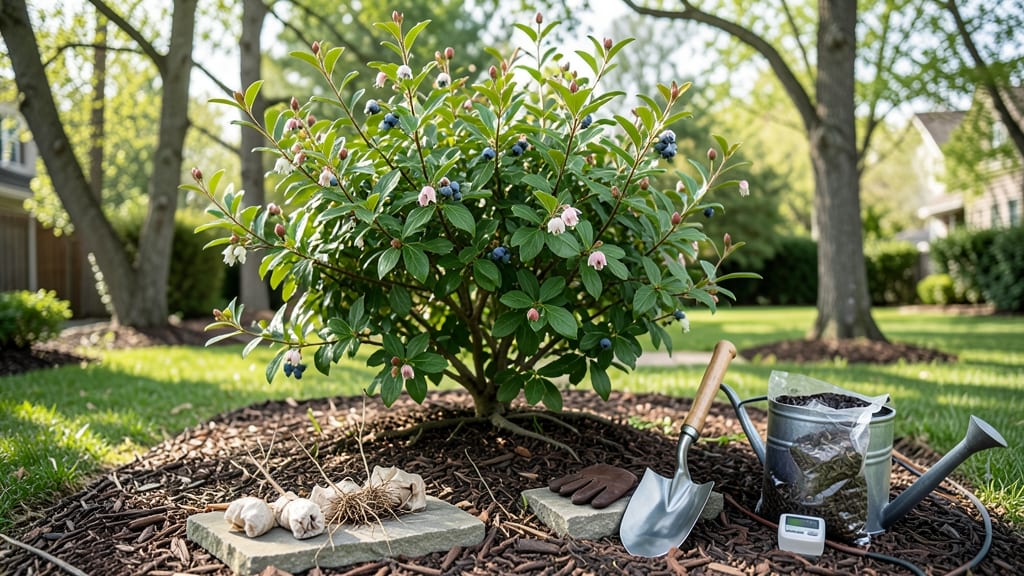
Planting blueberries in Massachusetts isn't just about timing—it's about matching your variety to the state's chill-hour zones and avoiding the 5b-6b frost risks that can sabotage your harvest before it starts.
Whether you're dreaming of homegrown 🫐 or troubleshooting last year's sparse crop, getting the window right makes all the difference.
Most gardeners in Massachusetts swear by fall planting—September through early October—when roots establish before winter's chill, but spring (late April to early June) works too if you act fast after the last frost.
The secret? Choosing varieties like 'Bluecrop' (for 5,000+ chill hours) or 'Patriot' (for 4,000–6,000 hours) ensures your bushes flower and fruit reliably.
Here's what I'll show you: how to sync planting with Massachusetts' 165 frost-free days, whether bare-root or container plants give you an edge, and how urban microclimates might shift your ideal window. No more guessing—just data-driven timing for bushes that thrive.
Ready to turn your backyard into a blueberry powerhouse? Let's break down the exact steps, from soil prep to variety selection, so you can enjoy that first harvest between mid-July and early September—without the stress.
Massachusetts chill-hour zones and best blueberry varieties for each
Massachusetts spans USDA zones 5b-6b, where chill hours—critical for blueberry flowering—range from 4,000 to 8,000 hours. If you plant the wrong variety, you’ll end up with buds that bloom but fail to fruit.
For example, 'Bluecrop' thrives in zones with 5,000+ chill hours (western MA), while 'Patriot' excels in 4,000–6,000 hours (eastern MA).
Here’s the catch: Fall planting (September–October) gives roots time to establish before winter’s chill, but spring planting (late April–June) works if you’re in a milder microclimate. The key is matching your variety to your local chill hours—otherwise, you’re gambling on next year’s harvest.
🌱
| Chill-Hour Zone | Best Varieties | Planting Window | Notes |
|---|---|---|---|
| 4,000–5,000 hrs (Eastern MA) | 'Patriot', 'Duke', 'Jersey' | Fall (Sept–Oct) or Spring (late April) | Low-chill varieties; avoid 'Bluecrop' |
| 5,000–6,000 hrs (Central MA) | 'Bluecrop', 'Earliblue', 'Chippewa' | Fall (Sept–early Oct) preferred | Classic high-yield varieties |
| 6,000–8,000 hrs (Western MA) | 'Bluecrop', 'Jersey', 'Brigitta' | Fall (Sept–Oct) or Spring (May) | Longer chill hours; 'Brigitta' for late harvests |
🌡️ Pro Tip: Check your local chill hours via USDA Plant Hardiness Zone Map or your co-op extension office.
If you’re in western Massachusetts (e.g., Berkshires), you can push the envelope with varieties like 'Brigitta', which handles up to 8,000 chill hours and ripens late—perfect for avoiding early frost. Meanwhile, coastal areas (e.g., Cape Cod) may struggle with 'Bluecrop' unless you plant in containers for mobility.
Another game-changer? Microclimates. A south-facing slope in zone 5b might get 1,000 extra chill hours compared to a valley just miles away. Use this to your advantage—plant high-chill varieties on slopes and low-chill in sheltered spots.
For container growing, stick to dwarf varieties like 'Top Hat' (3–4 ft tall) or 'Peach Sorbet' (for sweet, early fruit). Containers let you move plants to warmer microclimates in winter or cooler spots in summer, giving you more control over chill hours.
🌿
One mistake I see often? Ignoring soil pH before planting. Blueberries need pH 4.5–5.5—any higher, and your plants won’t absorb nutrients, leading to yellow leaves and poor flowering.
Test your soil 6 weeks before planting and amend with peat moss or sulfur if needed. Fall is the best time to prep soil because it gives roots a head start in spring.
Lastly, pollination matters. Most blueberries are self-pollinating, but planting two compatible varieties (e.g., 'Bluecrop' + 'Patriot') can double your yield. Just ensure they have similar chill-hour needs—mixing 'Bluecrop' (6,000 hrs) with 'Duke' (4,000 hrs) might leave one variety struggling.
🫐
Step-by-step planting timeline for Massachusetts blueberries
Timing your blueberry planting in Massachusetts depends on whether you choose bare-root plants or container-grown bushes, but both follow a clear seasonal rhythm. Most experts—including myself—recommend fall planting (September–early October) because it gives roots time to establish before winter’s chill.
However, spring planting (late April–early June) works too if you act quickly after the last frost.
The 165 frost-free days in Massachusetts create a tight window: plant too early, and young roots may freeze; too late, and summer heat stresses the plant. For container-grown bushes, you’ve got a slightly longer window—up to mid-November—since they adapt faster to transplanting.
Here’s my step-by-step timeline to nail the perfect planting window and ensure your blueberries thrive from day one:
Test your soil’s pH (4.5–5.5) and amend with sulfur or peat moss if needed. Loosen soil to 12–18 inches deep for root growth.
Soak roots for 2–4 hours before planting. Dig a hole twice as wide as the root ball and 2 inches shallower than the plant’s base.
Gently remove the plant from its pot and score the root ball if roots are circling. Plant at the same depth as in the container.
Apply 3–4 inches of pine needles or wood chips to retain moisture and acidify soil. Water deeply (1–2 gallons) to eliminate air pockets.
Wait until soil temps reach 45°F+ and all frost risk has passed. Follow the same soil prep and planting steps as fall.
Water every 2–3 days for young plants and fertilize lightly with ammonium sulfate in spring. Prune in late winter to shape the bush.
Pro tip: If you’re in western MA (warmer microclimates), you can push fall planting into early November. For coastal areas (cooler zones), stick to September to avoid early frosts. Always check your local USDA Zone 5b–6b frost dates for precision.
By following this timeline, your blueberries will establish strong roots and start fruiting in 2–3 years—not the 5+ years some gardeners wait for. The key? Plant early in the season and give those roots the time they need to settle in before summer’s heat or winter’s chill hits.