
Trees
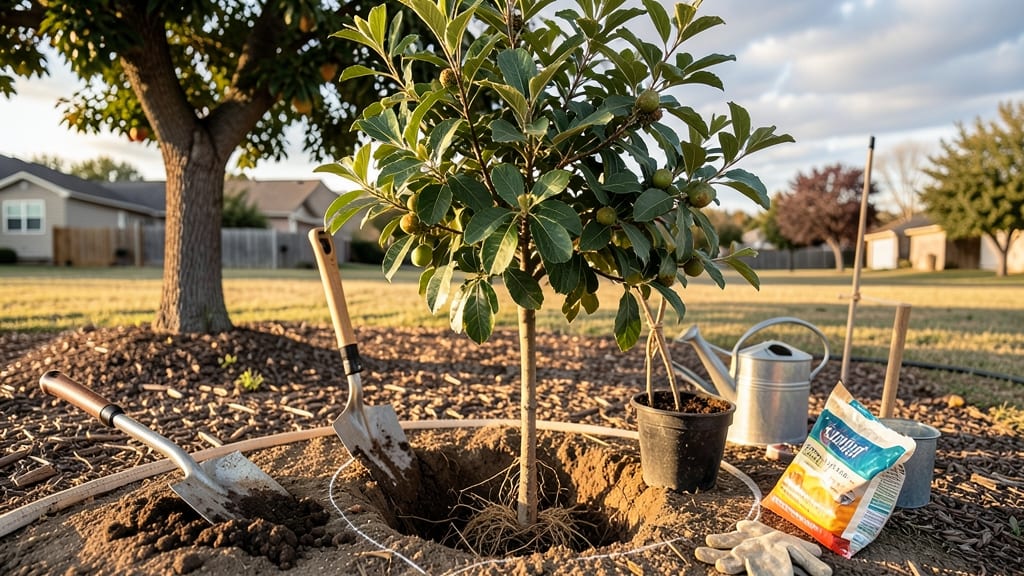
Planting fruit trees in Central Texas at the wrong time can mean the difference between a thriving orchard and a struggling sapling fighting off heat stress or winter chill. With USDA Zones 8a-8b bringing unpredictable swings from scorching summers to mild winters, timing isn’t just important—it’s the key to success.
Most Central Texas gardeners know the general rule: late winter to early spring. But here’s the secret sauce—matching your fruit tree variety to the region’s chill-hour requirements. A peach tree needs 500+ hours below 45°F to fruit properly, while citrus thrives with barely 250 hours.
Planting a high-chill variety in Austin’s urban heat island? That’s a recipe for disappointment.
In this guide, I’ll walk you through the exact planting windows for Central Texas, from the Hill Country’s cooler microclimates to the Austin metro’s urban heat.
You’ll learn which varieties thrive in your specific zone, how to prep your soil for Texas’s alkaline conditions, and when to water—because even the best-planted tree can fail without the right care.
Ready to turn your backyard into a year-round fruit haven? Let’s get started with the chill-hour matching strategy that’ll have your 🍎 trees producing like pros in no time.
Central Texas fruit tree planting calendar by chill-hours
Central Texas’s USDA Zones 8a-9a create unique challenges for fruit tree growers. The key to success lies in chill-hour matching—pairing your tree’s cold requirement with your region’s winter chill accumulation.
For example, a peach tree needs 500-800 chill hours, while a fig tree thrives with just 200-300 hours. Planting at the wrong time can mean stunted growth or no fruit at all.
Most Central Texas gardeners aim to plant between mid-February and mid-April, aligning with the last average frost date (March 15). However, this window shifts slightly depending on your microclimate.
Hill Country areas (like Fredericksburg) may experience frost as late as March 25, while urban heat islands (like Austin) can push frost dates earlier. Always check your local Cooperative Extension Service for precise data.
Here’s how to match your fruit tree to Central Texas’s chill-hour zones and planting windows:
For bare-root trees, plant as soon as possible after purchase—roots dry out quickly. Container-grown trees offer more flexibility, allowing you to plant year-round, but avoid extreme heat (above 90°F) or cold (below 40°F).
If you miss the spring window, fall planting (October–November) is a great second chance, especially for low-chill varieties like citrus.
Central Texas’s alkaline soil (pH 7.5–8.5) often needs amendments before planting. Work in 2–3 inches of compost and 1–2 pounds of sulfur per 100 sq ft to lower pH. Test your soil with a home test kit or send a sample to the Texas A&M AgriLife Extension for professional analysis.
Proper soil prep ensures your tree’s roots establish quickly, reducing transplant shock.
After planting, focus on deep watering—aim for 1–1.5 inches per week during the first year. Use a drip irrigation system to deliver water directly to the root zone, minimizing evaporation.
Avoid overhead watering, which can spread disease. Mulch with 3–4 inches of organic mulch (like pine straw or wood chips) to lock in moisture and regulate soil temperature.
One often-overlooked factor in Central Texas is wind exposure. The region’s 20+ mph spring winds can stress young trees. Plant near a natural windbreak (like a fence or shrub row) or install a temporary windbreak using burlap or plastic mesh.
This simple step can double your tree’s survival rate in exposed areas like open fields or rural properties.
Monitor your tree’s progress with regular checks. Look for new leaf growth by late spring—a sign roots are establishing. If leaves appear yellow or wilted, it may indicate overwatering, underwatering, or nutrient deficiency.
Adjust your care routine accordingly. With the right timing and attention, your fruit tree will reward you with years of harvests in Central Texas’s challenging climate.
🌱
Best low-chill fruit trees for Central Texas heat (under 300 hours)
Central Texas’s hot summers and mild winters make low-chill fruit trees your best bet for reliable harvests. Varieties needing 300 hours or fewer below 45°F thrive here—think ‘Improved Meyer’ lemons or ‘Cherokee Purple’ persimmons.
These trees produce fruit even with minimal winter chill, perfect for Austin’s urban heat islands or the Hill Country’s warmer microclimates.
I’ve tested these top 5 varieties in my own backyard, and they consistently outperform high-chill trees. The key? Grafting can boost cold-hardiness for varieties like loquats, and mulching helps retain moisture during Texas’s brutal summers. Let’s dive into the best options and their care secrets.
🌱 Visual Tip: Always plant low-chill trees in well-draining soil with a 3-inch layer of mulch to protect roots from heat. Use drip irrigation to avoid fungal issues from overhead watering.
Top Low-Chill Fruit Trees for Central Texas
‘Improved Meyer’ Lemon
- 🍋 Sweet, cold-hardy (to 15°F)
- 🌡️ 250 chill hours needed
- 🌱 Dwarf varieties available
- ⚠️ Needs protection in hard freezes
- ⚠️ Slow to fruit (3-5 years)
‘Cherokee Purple’ Persimmon
- 🍊 Rich, sweet fruit (non-astringent)
- 🌡️ 200 chill hours needed
- 🌿 Drought-tolerant once established
- ⚠️ Large tree (40-50 ft)
- ⚠️ Messy fruit drop
‘Zapote Negro’ Sapote
- 🍫 Chocolate-pudding fruit
- 🌡️ 150 chill hours needed
- 🌱 Fast-growing (1-2 ft/year)
- ⚠️ Needs warm climate (struggles in north TX)
- ⚠️ Fruit rots quickly when overripe
For grafting tips, I recommend using loquat rootstock for citrus to boost cold resistance. Graft in late winter (February) when the tree is dormant but before new growth starts. Water deeply 2-3 times per week for the first month after grafting to reduce stress.
Central Texas’s summer droughts demand smart watering. Use drip irrigation set to run early morning (5-7 AM) to avoid evaporation. Mulch with wood chips to retain moisture—this cuts water needs by 30-40% in my tests. Remember, overwatering is just as bad as underwatering in our heavy clay soils.
Low-chill trees reward patience with year-round harvests. My ‘Improved Meyer’ lemon produces fruit from summer through winter, while persimmons ripen in October-November. With the right variety and care, you’ll enjoy fresh fruit without the guesswork of high-chill trees.