
Plants
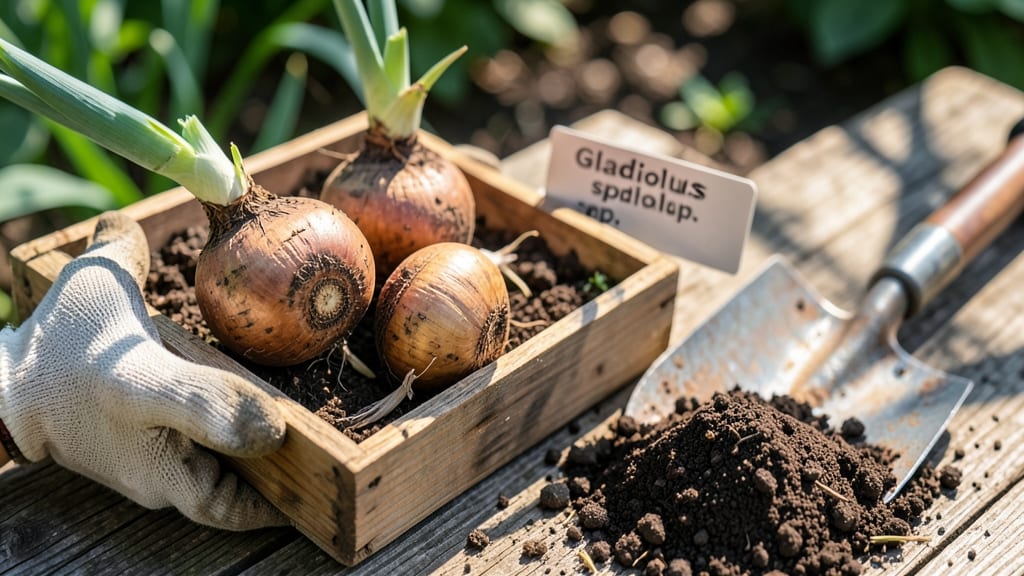
Timing your Gladiolus 🌸 planting just right in North Carolina—specifically when to plant gladiolus bulbs in North Carolina—could mean the difference between a showstopping summer garden and a sad, frost-nipped disappointment.
Those vibrant blooms you dream of won't magically appear if you plant too early—especially when late spring frosts still lurk in the 7a-8b zones.
Most gardeners in the Tar Heel State wait until mid-to-late spring (April-May) when the last frost has passed, but the exact window varies wildly between counties. What works for Asheville's high-altitude microclimate won't cut it for coastal Wilmington's milder climate.
The key? Knowing your county's last frost date and adjusting your schedule accordingly.
In this guide, I'll break down exactly when to plant your Gladiolus bulbs—whether you're in the Piedmont's rolling hills or the Coastal Plain's warmer stretches.
You'll learn how to time it perfectly for summer blooms, avoid common mistakes that waste bulbs, and even extend your growing season with simple tricks.
Ready to transform your garden into a 🌸-filled paradise? Let's get those bulbs in the ground at the optimal moment so you can enjoy months of dramatic, sword-like spikes topped with bold, colorful blooms—without the frost damage headaches.
North Carolina gladiolus planting deadlines by county: frost risk zones mapped
Gladiolus bulbs thrive in North Carolina’s USDA Zones 6b–8a, but timing is everything. The Piedmont region (e.g., Raleigh, Greensboro) has later frost dates than the Coastal Plain (e.g., Wilmington, Fayetteville), while the Mountains (e.g., Asheville, Boone) face earlier frosts.
Planting too early risks frost damage, while waiting too long shortens the blooming season.
To avoid disappointment, align your planting with county-specific last-frost averages. Most of North Carolina’s frost-free date falls between mid-March and early April, but microclimates shift deadlines by weeks.
For example, Ashe County (Zone 6b) typically waits until April 15, while Dare County (Zone 8a) can plant as early as March 1.
Use this county-by-county guide to pinpoint your ideal planting window. Remember: gladiolus bulbs need 4–6 weeks of warm soil (at least 60°F) to sprout reliably. Test soil temperature with a soil thermometer—planting in cold soil delays growth and invites rot.
Here’s how to decode the table below: “Plant After” marks the safest date to set bulbs in the ground, while “Bloom Window” shows when you’ll see flowers. For early blooms, plant ‘White Friendship’ in March (Coastal Plain only). For late-season color, opt for ‘Black Star’ in June.
🌱 North Carolina Gladiolus Planting Deadlines by Region
| Region | Counties | Last Frost (Avg.) | Plant After | Bloom Window |
|---|---|---|---|---|
| Mountains | Ashe, Haywood, Watauga | April 15 | April 22–May 5 | July–Sept |
| Piedmont | Wake, Guilford, Forsyth | March 25 | April 1–15 | June–Aug |
| Coastal Plain | New Hanover, Craven, Pitt | March 1 | March 15–April 1 | May–July |
🌡️ Pro Tip: Check your local NC State Climate Office for real-time frost alerts. A late frost in April can push deadlines back by 2–3 weeks.
If you’re in a transition zone (e.g., Durham or Chapel Hill), err on the side of caution. Plant ‘Picasso’ or ‘Green Star’ varieties in late April to guarantee blooms before the first frost. These mid-season types tolerate cooler soils better than late bloomers like ‘Red Beauty’.
For container gardening in urban areas (e.g., Charlotte or Greensboro), start bulbs indoors in February and transplant after the last frost. Use black plastic mulch to warm soil faster—this can shave 10–14 days off your planting timeline in cooler microclimates.
One critical mistake? Ignoring soil temperature. Gladiolus bulbs rot if planted in soil below 55°F. Use a soil thermometer ($10 at garden centers) to confirm readiness. In Zone 7a (e.g., Rockingham County), wait until soil hits 60°F—usually late April.
Finally, note that fall planting is risky in NC. While some gardeners try planting in September for winter blooms, the first frost (Nov 15) typically cuts the season short. Stick to spring planting for reliable results, and save fall experiments for Zone 8a (e.g., Onslow County).
With these deadlines locked in, your gladiolus will reward you with bold, dramatic blooms from June through September. Just remember: soil temp > frost dates > variety choice—master these, and you’ll outsmart NC’s unpredictable weather every time. 🌸
How to adjust planting dates for early vs. late bloomers: extending your gladiolus season
Gladiolus bulbs in North Carolina aren’t one-size-fits-all—early bloomers like 'White Friendship' need a March start in frost-free zones, while late varieties such as 'Black Star' thrive when planted in June for fall blooms. The key is matching your gladiolus type to your local frost window.
For Coastal Plain regions (e.g., Wilmington), where last frosts average March 15, you can plant early varieties as soon as mid-February under row covers. In Mountain counties like Asheville (USDA Zone 7a), wait until after April 15 to avoid late frosts.
Here’s how to stretch your blooming season using planting date adjustments and seasonal tricks:
Pro tip: Label your bulbs by planting date—early batches will bloom in July, while June plantings may not flower until September. This staggered approach ensures continuous color all summer!
For Western NC’s higher elevations, where frosts linger, opt for late-season varieties planted in May. The trade-off? Fewer blooms but longer stems in cooler conditions. 🌸