
Trees
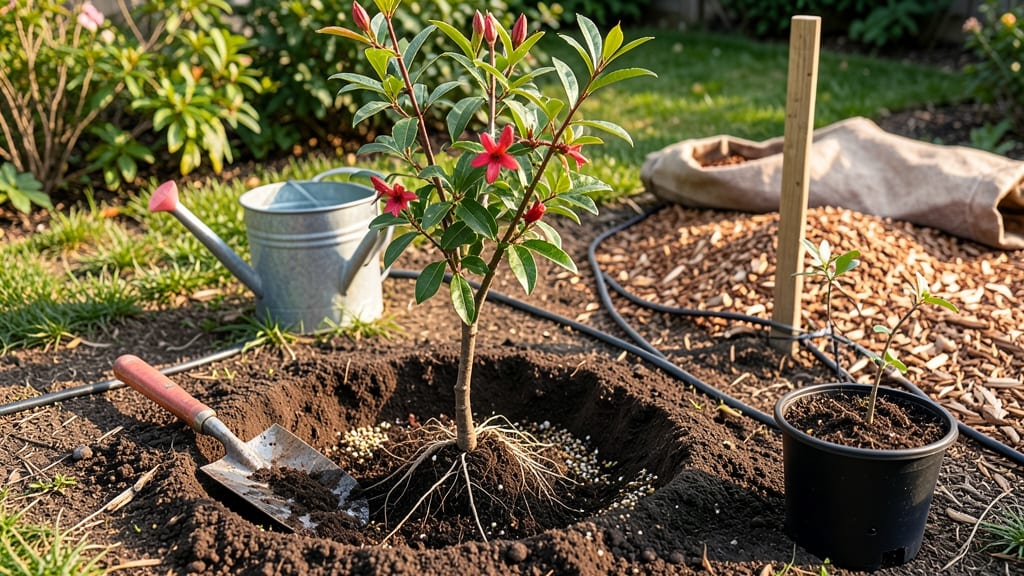
Timing your fruit tree planting in Arizona could mean the difference between a thriving orchard and a sad, wilted investment—especially when the desert sun turns 110°F by spring. The key to success? Planting 🍎 fruit trees between November and February, when cooler temps give young roots a fighting chance to establish before the heat arrives.
Most gardeners assume Arizona’s mild winters mean year-round planting, but that’s a recipe for disaster. Stone fruits like peaches bolt (sprout prematurely) in heat, while citrus struggles to root when temperatures climb above 85°F.
I’ve seen firsthand how a January planting leads to lush, productive trees—whereas summer attempts often result in stunted growth or total failure.
You don’t need a green thumb to master this—just the right timing and prep. In this guide, I’ll break down the exact planting windows for citrus, figs, and stone fruits, plus soil tricks to keep your trees hydrated when the mercury soars.
Let’s get those roots digging before the desert wakes up.
The stakes are high, but the payoff—a backyard full of homegrown fruit—makes it worth the effort. Ready to plant with confidence? Let’s dive into the desert’s best-kept secrets for zero bolt risk and maximum harvest potential.
Optimal Arizona fruit tree planting months by type: avoiding heat stress and bolt risk
Arizona’s desert climate demands precise timing for fruit tree planting—one wrong move can trigger heat shock or transplant failure. The key is planting during cooler months when soil temps stay below 85°F to prevent root burn.
For most fruit trees, this means November through February, but citrus and figs have their own rules.
Your USDA Zone (typically 8-11) and elevation matter too. Low deserts (like Phoenix) can plant slightly later than high deserts (Flagstaff area), where frost risk lingers until late March.
Always check your local last frost date—Arizona’s varies wildly from January 15 in Phoenix to March 15 in Prescott.
Citrus trees (lemons, oranges, grapefruit) are the most forgiving—you can plant them year-round in mild winters, but fall or early spring gives them the best start. Stone fruits (peaches, plums, cherries) and nut trees (pecans, walnuts) are far pickier; they need chill hours (300-600 hours below 45°F) to set fruit properly.
Here’s the breakdown you need to avoid bolt risk (rapid leaf drop) and heat stress in your new orchard:
For container-grown trees, you have more flexibility—plant anytime the soil isn’t frozen (even summer, but provide afternoon shade for the first 2 weeks). Bare-root trees, however, must go in during dormancy (November–February) to minimize transplant shock.
Pro tip: If you’re in the low desert, aim for November planting to beat the spring heat. In high desert areas, wait until February to avoid late frosts. Always acclimate trees gradually if moving from containers to ground—harden them off for 7–10 days before planting.
One common mistake? Planting stone fruits too late. If you miss the November–January window, your tree may bolt (shoot up leaves rapidly) and never recover. The same goes for nut trees—their roots need time to establish before Arizona’s 100°F+ summers hit.
Citrus is the exception—it’s heat-tolerant once established, but young trees still need protection from afternoon sun during their first summer. Use shade cloth (30–50%) until roots spread (6–12 months).
For figs, the opposite is true: they thrive in heat but hate wet feet, so plant on mounds or in raised beds.
Remember: Arizona’s microclimates can vary by just a few miles. If you’re unsure, check with your local Cooperative Extension office for hyper-local advice. With the right timing, your fruit trees will survive—and thrive—in the desert.
Critical pre-planting preparations to survive Arizona’s desert conditions
Arizona’s desert soil is a double-edged sword—it drains fast but lacks nutrients, and your fruit trees need both moisture retention and fertility to thrive. Before you plant, I recommend amending the soil with a 50/50 mix of native soil and compost, plus coarse sand to improve drainage.
This mimics the natural desert wash environment while preventing root rot from summer monsoons.
Most gardeners overlook irrigation setup, but in Arizona, drip irrigation is non-negotiable. Install it before planting to deliver water directly to roots without wetting foliage (which invites fungal diseases). I use soaker hoses for young trees and schedule them for early morning to minimize evaporation.
Shade cloth is another game-changer for young trees. Newly planted citrus or figs can’t handle Arizona’s 115°F+ afternoons, so I cover them with 30% shade cloth during the first summer. Remove it gradually to harden off the trees—this prevents heat shock and bolting in stone fruits.