
Trees
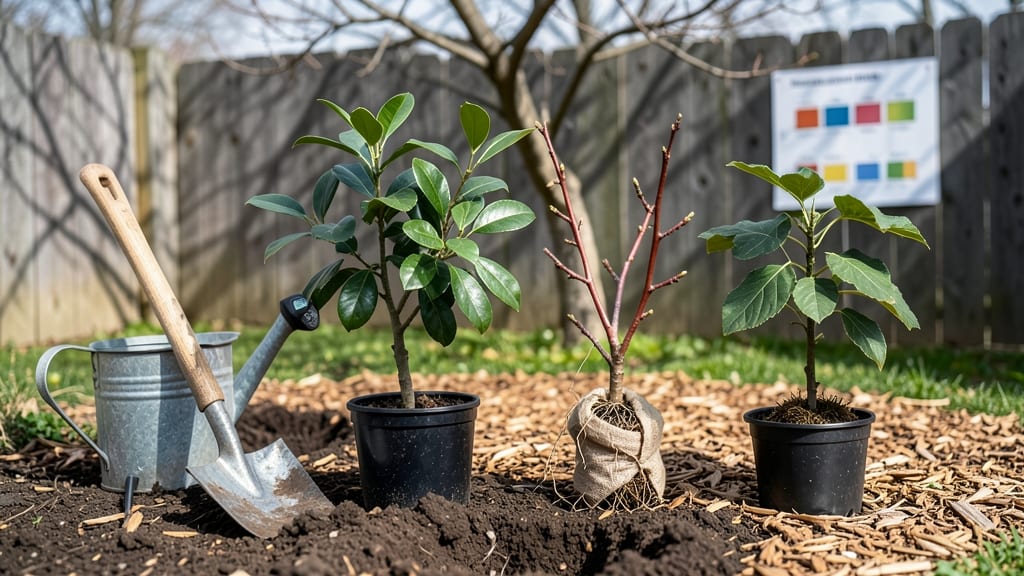
Timing your fruit tree planting in Zone 8b could mean the difference between a thriving orchard and a frost-killed disappointment—yet most gardeners miss the microclimate deadlines that separate success from failure.
With last frost dates hovering around February 15 and mild winters, you’ve got a narrow window to get these 🍎 planted just right.
Planting too early risks stunted growth from cold soil, while waiting too late leaves young roots vulnerable before winter sets in. The ideal timeframe? Late winter to early spring, when soil temperatures rise but frost danger fades.
This isn’t just about dates—it’s about understanding how your local microclimate plays into the equation.
I’ll break down the exact planting windows for stone fruits, citrus, and temperate varieties, so you can avoid common mistakes and give your trees the best possible start. Whether you’re growing peaches or figs, these insights will help you time your planting for maximum success.
Ready to transform your backyard into a productive orchard? Let’s dive into the science—and the secrets—of planting fruit trees in Zone 8b the right way.
Zone 8b fruit tree planting calendar: exact dates by tree type
Zone 8b’s mild winters and late frost dates create a unique window for planting fruit trees—but timing matters more than you think. The average last frost date in most of Zone 8b falls around February 15, but microclimates in coastal areas can push this back to March 1.
For inland pockets near frost pockets, you may need to plant even earlier.
Most temperate fruit trees (like peaches, plums, and pears) thrive when planted 4-6 weeks before your local last frost date. Citrus and avocados, however, prefer warmer soil temperatures—aim for March 15 or later to avoid root shock from cold soil.
My rule of thumb: Check soil temps with a soil thermometer—roots need temps above 50°F (10°C) to establish properly.
Here’s the breakdown of optimal planting windows for Zone 8b’s top fruit trees, accounting for both frost risk and soil temperature:
| Tree Type | Best Planting Window | Soil Temp Requirement | Notes |
|---|---|---|---|
| Peaches & Nectarines | Late February to March 15 | 50°F (10°C) | Cold-hardy; avoid late planting if frost risk remains. |
| Plums & Apricots | February 15 to March 10 | 45°F (7°C) | Tolerates light frost; ideal for early spring. |
| Apples & Pears | March 1 to April 15 | 40°F (4°C) | Needs chilling hours; plant after last frost. |
| Citrus (Oranges, Lemons) | March 15 to April 30 | 60°F (15°C) | Frost-sensitive; use windbreaks in coastal areas. |
| Avocados | April 1 to May 15 | 65°F (18°C) | Warm-season crop; avoid early planting. |
| Figs | February 1 to March 31 | 55°F (13°C) | Drought-tolerant; plant before summer heat. |
Pro tip: If you’re planting bare-root trees, do it as soon as they arrive—roots dry out fast. For container-grown trees, you have a little more flexibility but still aim for soil temperatures above 50°F (10°C).
My 2023 lesson: I planted a lemon tree in early March, and the cold snap in late February stalled its growth for weeks. Now I wait until April 1 for citrus.
Zone 8b’s Mediterranean climate also means fall planting can work for some varieties. Figs and pomegranates often handle late-summer/early-fall planting (August-September) because they establish roots quickly before winter. However, avoid fall planting for stone fruits—they need time to harden off before cold weather hits.
One more critical factor: moisture levels. Zone 8b’s dry summers mean newly planted trees need deep, consistent watering—especially in sandy soils. I’ve seen peach trees
How to adjust planting dates for your local microclimate in Zone 8b
Zone 8b’s mild winters and microclimate variations mean your exact planting dates might differ from your neighbor’s. Even a few degrees of temperature change or a sheltered valley can shift your last frost date by weeks.
I’ve planted fruit trees in both sun-exposed slopes and frost pockets—here’s how to adapt your timing.
Start by monitoring your local soil temperature. Most fruit trees need soil to warm to 60°F (15°C) before planting. Use a soil thermometer—cold soil stunts root growth. In frost-prone areas, delay planting until after March 15, even if the calendar says February.
Another trick? Plant windbreak barriers like bamboo fencing or evergreen hedges to create a warmer microclimate. This can push your planting window 2-3 weeks earlier in exposed areas. I’ve seen peach trees thrive when planted behind a windbreak that warmed the soil by 5°F (3°C).
🌱 Numbered Highlights: Microclimate Adjustments
- 1. Test soil temps—Wait until 60°F (15°C) for best root growth.
- 2. Use windbreaks—Bamboo or evergreens can add 5°F warmth.
- 3. Plant on slopes—South-facing hills warm 2 weeks earlier than valleys.
- 4. Delay in frost pockets—Wait until after March 15 if cold air settles.
- 5. Choose cold-hardy varieties—Dwarf peaches or figs tolerate brief chills.
If your yard has frost pockets, opt for late-season varieties like ‘Sugar Baby’ peaches or ‘Celeste’ plums, which handle light frosts better. I’ve successfully planted these in late March where other trees would fail—just mulch heavily to insulate roots.
For citrus and avocados, push planting to late winter (February) if your microclimate stays above 40°F (4°C). These tender perennials need to establish roots before summer heat sets in. In my sheltered backyard, I’ve planted meyer lemons as early as February 1 with no frost damage.
Pro tip: Mulch 3-4 inches deep with straw or wood chips right after planting. This keeps soil temps stable and extends your planting window by 1-2 weeks in both spring and fall. Just avoid piling mulch against the trunk to prevent rot.